
Auto Insurance RVs: Coverage That Moves With Your Adventures
Your RV is more than a vehicle-it’s your home on wheels. Standard auto insurance won’t cut it because RVs have unique risks that regular policies simply don’t address.
At H&K Insurance Agency, we’ve seen firsthand how inadequate coverage leaves RV owners exposed. The right auto insurance for RVs protects your investment, your belongings, and your peace of mind while you’re out exploring.
What Coverage Do You Actually Need in Your RV Policy
Liability Coverage Protects You on the Road and at Camp
Liability coverage is non-negotiable and often legally required. Most states mandate bodily injury and property damage liability for motorhomes, with minimums typically ranging from 25/50/10 to 100/300/100 depending on your state. These numbers represent thousands of dollars in protection when you cause an accident that injures someone or damages their property. However, we recommend pushing beyond your state’s minimum because a single serious accident can exceed those limits quickly.
If you’re towing a trailer, your tow vehicle’s liability coverage usually extends to the trailer while driving. You’ll want vacation liability coverage that activates when your RV sits parked at a campsite. This coverage protects you if a guest sustains an injury around your RV at a campground, with base limits starting around $10,000 and expandable to $500,000 depending on your risk tolerance.
Collision and Comprehensive Handle Physical Damage
Collision and comprehensive coverage for RVs protects your motorhome or travel trailer from physical damage. Collision pays for repairs after you hit another vehicle or object, regardless of who’s at fault. Comprehensive covers theft, vandalism, weather damage, and animal strikes. If you’re financing your RV, your lender will require both coverages.
For travel trailers, lenders typically require comprehensive and collision if you’re financing. If you own it outright, you can often select comprehensive-only coverage to save money while maintaining protection against theft and weather.
Personal Belongings and Full-Timer Coverage
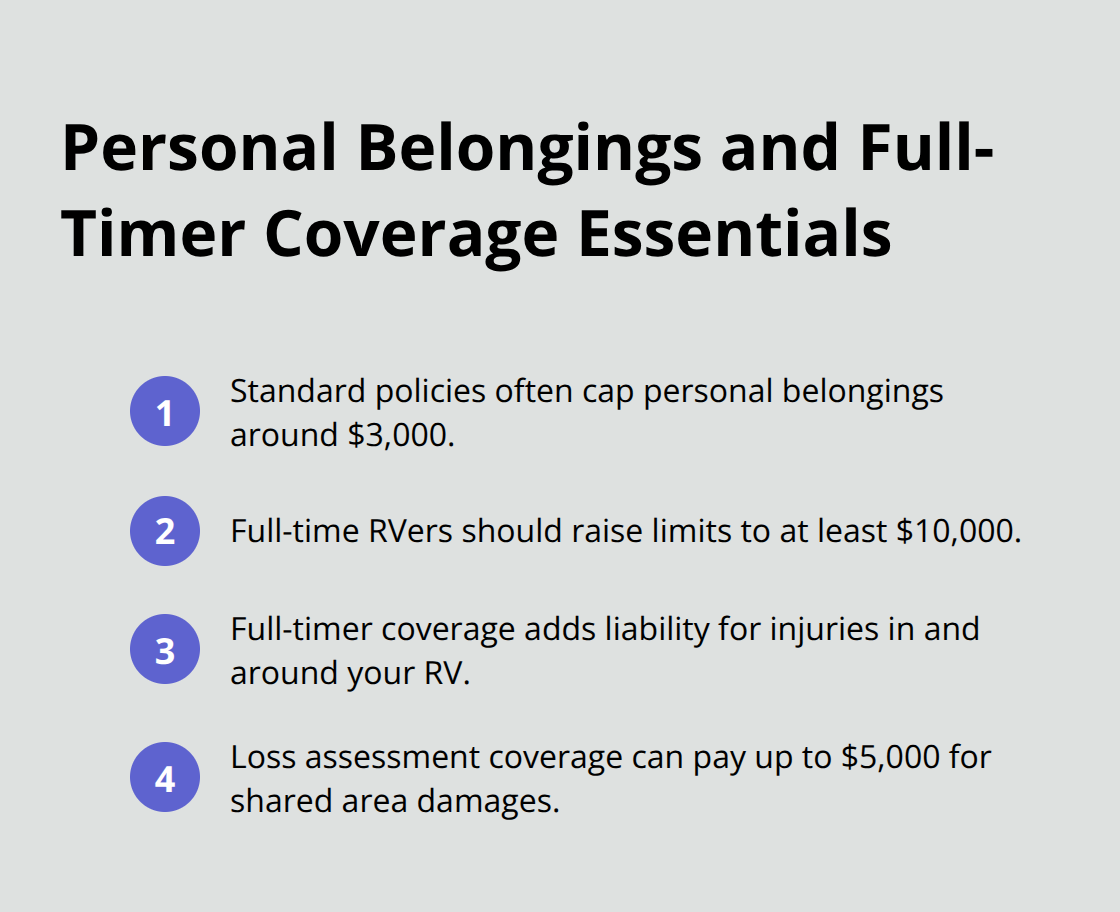
Personal belongings coverage protects the gear inside your RV, usually capped at around $3,000 at original cost under standard policies. Full-time RVers should increase this limit to at least $10,000 because standard homeowners policies won’t cover your belongings while you live mobile.
Full-timer coverage transforms your RV insurance into something closer to homeowners insurance, which matters if you spend more than 150 days annually in your RV. This specialized coverage includes full-timer’s liability, which protects against injuries both inside and around your RV when it’s your primary residence, and loss assessment coverage that can pay up to $5,000 if your RV association charges you for damages to shared areas.
Emergency Expenses and Permanent Attachments
Emergency expense coverage reimburses hotel, meal, and transportation costs if your RV becomes uninhabitable more than 50 miles from home due to a covered loss, typically up to $750 or more per day depending on your policy. This protection matters when breakdowns strand you far from familiar territory.
Permanent attachments coverage deserves serious consideration if you’ve invested in solar panels, satellite dishes, awnings, or other add-ons (since standard policies exclude these upgrades). These upgrades increase your RV’s functionality and value, but they need specific protection. As you evaluate which coverages fit your lifestyle and budget, the next step involves matching your actual travel patterns to the right policy limits.
Why Standard Auto Insurance Leaves You Unprotected
Standard Policies Treat RVs Like Regular Vehicles
Standard auto insurance treats your RV like a regular vehicle, which fundamentally misses what an RV actually is. A motorhome or travel trailer combines the exposure of a vehicle with the complexity of a residence, and your typical auto policy covers neither aspect adequately. The gap between what standard auto insurance provides and what RV owners actually need creates real financial risk. An RV owner who relies on standard auto coverage will face significant out-of-pocket expenses when things go wrong on the road.
Emergency Expenses Drain Your Wallet Without Coverage
Your standard auto policy won’t reimburse hotel costs, meal expenses, or transportation if your RV breaks down 200 miles from home and becomes uninhabitable during repairs. RV repairs take weeks to complete-a transmission failure or major roof leak demands extended shop time. Emergency expense coverage reimburses lodging and meals during the repair period, but standard policies exclude this protection entirely. Without it, a two-week repair stint costs you thousands in expenses that you absorb yourself.
Specialized Equipment Gets No Protection
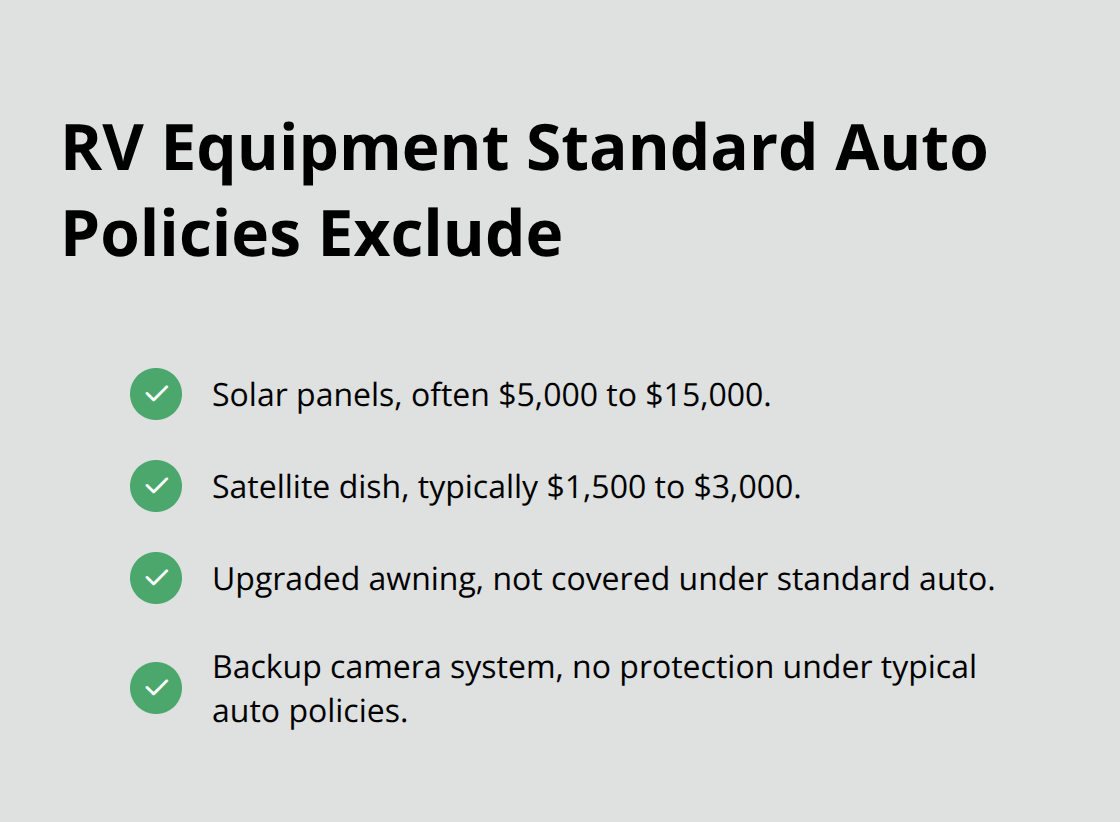
Standard auto policies exclude coverage for specialized RV equipment and permanent attachments. If you install solar panels, a satellite dish, an upgraded awning, or a backup camera system, these upgrades receive zero protection under conventional auto insurance. A quality solar panel system costs $5,000 to $15,000, and a satellite dish runs $1,500 to $3,000. Standard comprehensive and collision coverage simply won’t pay to replace them if weather, theft, or collision damages them.
Roadside Assistance Falls Short for Large Vehicles
Roadside assistance tailored for large vehicles matters because standard auto roadside assistance typically covers towing within 100 feet of a road-fine for sedans but inadequate for 40-foot motorhomes that need specialized heavy-duty towing. An RV tow-out costs $500 to $1,500 if you’re stranded without proper coverage, and standard policies won’t cover fuel delivery, mechanical breakdowns, flat tire replacement, or dead battery service for RVs specifically.
RV-Specific Insurance Closes the Gaps
RV-specific insurance closes these gaps by design, protecting your investment in ways standard auto policies simply cannot match. The right coverage addresses the unique risks that come with living and traveling in your RV, which means you need to evaluate policies built specifically for your lifestyle rather than adapted from standard vehicle protection.
Picking the Right Policy for How You Actually Travel
Match Your Coverage to Your Travel Pattern
Your travel pattern determines everything about which RV insurance policy makes sense for your situation. Full-time RVers who spend 150+ days annually in their RV need completely different coverage than someone who takes their motorhome out for two weeks each summer. Start with tracking how many days you actually spend in your RV over a twelve-month period, because this number directly affects your coverage requirements and your premium. If you’re a full-timer, you’ll need full-timer coverage that functions like homeowners insurance rather than standard auto coverage. Part-time travelers can often get away with standard RV policies that cost significantly less. The difference matters-full-timer policies typically run higher because the RV becomes your primary residence, which increases liability exposure around your living space.
Calculate Your Personal Belongings Coverage Needs
Next, calculate the total value of everything inside your RV, including appliances, electronics, bedding, kitchen equipment, and personal gear. Standard policies cap personal belongings coverage at around $3,000, which covers almost nothing if you own a modern RV with quality equipment. Full-timers should try for $10,000 or higher in personal belongings coverage because you’re protecting an entire household’s worth of possessions. Document what you own with photos and receipts so you can justify your coverage limits to insurers.
Compare Quotes From Multiple Carriers
Comparing quotes from multiple carriers is non-negotiable because RV insurance premiums vary dramatically between companies. Getting a quote takes roughly three minutes once you have your VIN, RV make and model, year, length (if it’s a travel trailer), and your driving history ready. Request quotes from at least three different carriers because premium differences of $200 to $400 annually are common for identical coverage.
Maximize Savings Through Bundling and Discounts
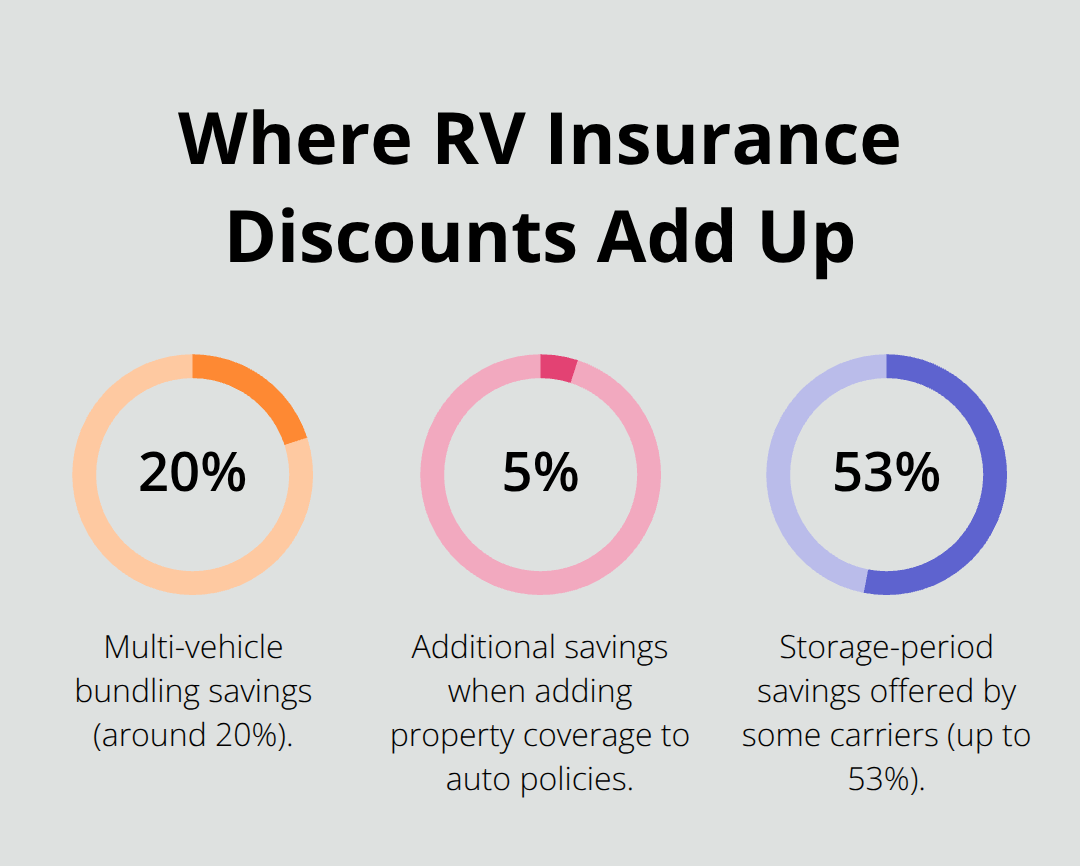
Bundling your RV insurance with your homeowners and auto policies through the same carrier yields substantial savings, typically around 20% on multi-vehicle discounts and an additional 5% when adding property coverage to your auto policies. If you park your RV seasonally, ask about storage discounts that suspend collision and comprehensive coverage while your RV sits parked-some carriers offer savings up to 53% during storage periods while maintaining comprehensive protection against theft and weather.
Ask each carrier specifically about discounts for safety features like backup cameras, anti-lock brakes, and anti-theft systems, since these can reduce your premium meaningfully. Request quotes that show both your current coverage and what happens if you adjust deductibles from $500 to $1,000, since higher deductibles lower premiums substantially for drivers with clean records.
Final Thoughts
Your RV represents a significant investment that demands protection matching its actual value and your travel habits. Auto insurance for RVs isn’t a one-size-fits-all product, which is why the right policy requires honest assessment of your travel patterns, your belongings, and your financial exposure on the road. The coverage gaps we’ve outlined aren’t theoretical-they’re real expenses that hit RV owners every year when standard auto policies fail to cover emergency lodging, specialized equipment, or adequate roadside assistance.
The best RV insurance policy aligns with your specific lifestyle rather than forcing you into generic coverage that leaves you exposed. Whether you’re a full-time traveler living in your motorhome or someone who takes seasonal trips, your policy should reflect those realities with appropriate limits on personal belongings, emergency expenses, and liability protection. We at H&K Insurance Agency work with multiple carriers to compare rates and customize packages that fit your actual needs, representing top local and national carriers so we can show you options that standard online quotes won’t surface.
Contact H&K Insurance Agency to request a quote tailored to your RV and travel patterns. Our team walks you through coverage options, answers questions about what you actually need, and finds competitive rates that protect your investment without overpaying for unnecessary coverage. Your adventures deserve insurance that moves with you.

