

Landlord Property Insurance Kitsap: Securing Your Investment
Rental properties in Kitsap County face unique risks that standard homeowners policies simply don’t cover. We at H&K Insurance Agency know that landlord property insurance in Kitsap requires careful planning to protect both your investment and your liability.
This guide walks you through the coverage types you need, the gaps most landlords miss, and how to find a policy that actually fits your rental business.
What Landlords Actually Need to Cover in Kitsap
Three Core Protection Categories
Landlord insurance in Kitsap County splits into three distinct protection categories that standard homeowners policies completely ignore. Property coverage pays to repair or rebuild the rental structure itself when damage occurs, with limits typically ranging from $100,000 to $500,000 depending on replacement cost.
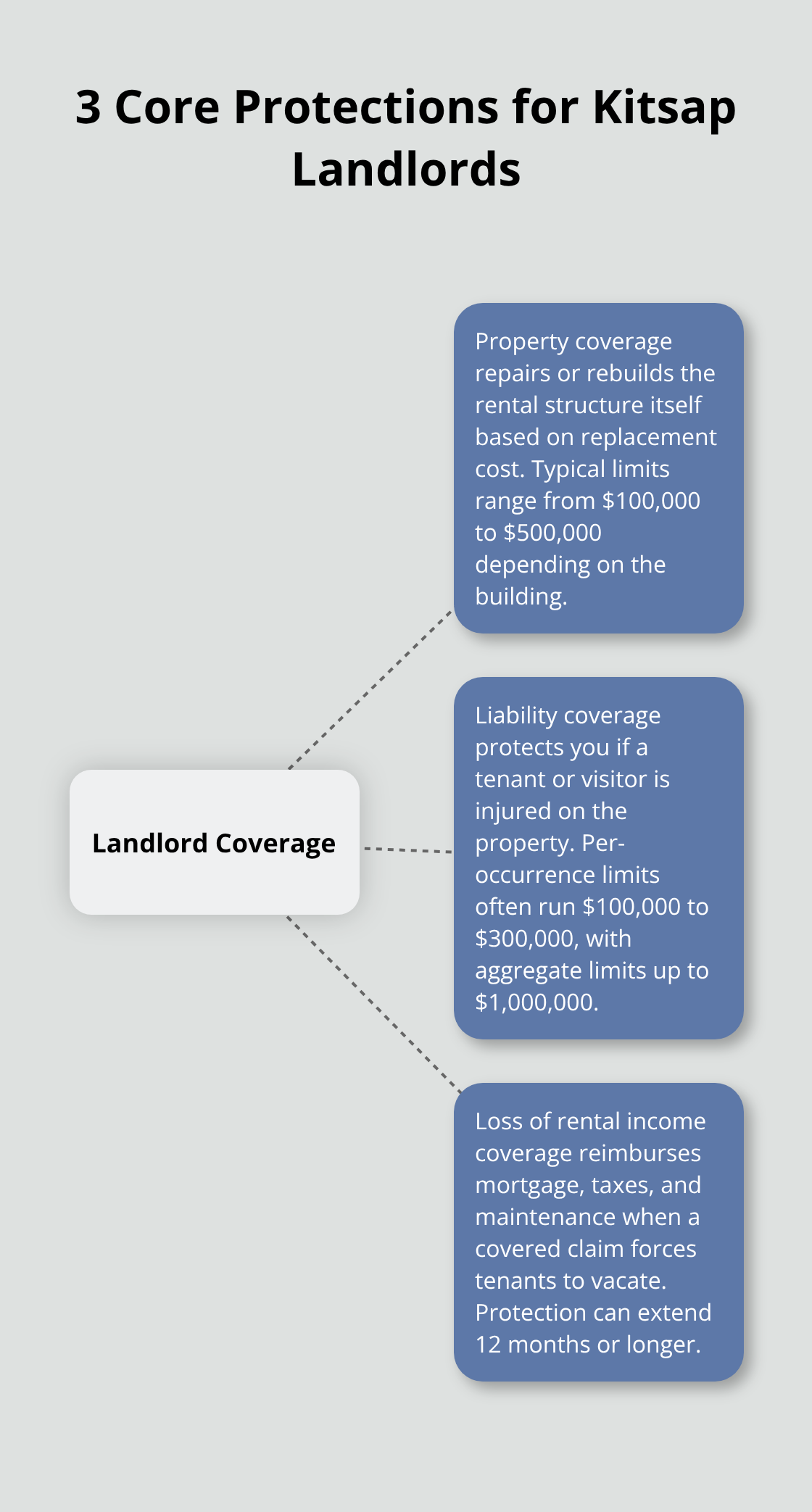
Liability coverage protects you when a tenant or visitor gets injured on the property, with per-occurrence limits running from $100,000 to $300,000 and aggregate limits reaching $1,000,000. Loss of rental income coverage reimburses your mortgage, property taxes, and maintenance costs when tenants must vacate due to covered damage-a protection that can run 12 months or longer.
Calculating Adequate Rental Income Protection
For a $1,200 monthly rent property, you should try for at least $14,400 in annual rental income coverage. This calculation matters because underinsurance creates real financial exposure. If a property has an $85,000 repair but your coverage limit sits at $100,000, you face a $15,000 out-of-pocket loss plus additional structural costs that may exceed the limit. Kitsap County’s eviction timelines of 30 to 60 days from filing to enforcement amplify the need for rental income protection during repairs, since you still owe the mortgage and taxes while the unit sits vacant.
Building Coverage vs. Tenant Belongings
Your policy covers building elements like the roof, structure, and built-in fixtures, while tenant belongings remain their responsibility through renters insurance. This separation prevents coverage disputes and clarifies who pays when damage occurs.
Puget Sound Weather Risks and Premium Pressure
The Puget Sound region presents specific weather and disaster risks that affect both your premiums and coverage decisions. Wind exposure, aging roof conditions, and water damage from plumbing or sprinkler failures drive up insurance costs across Kitsap.
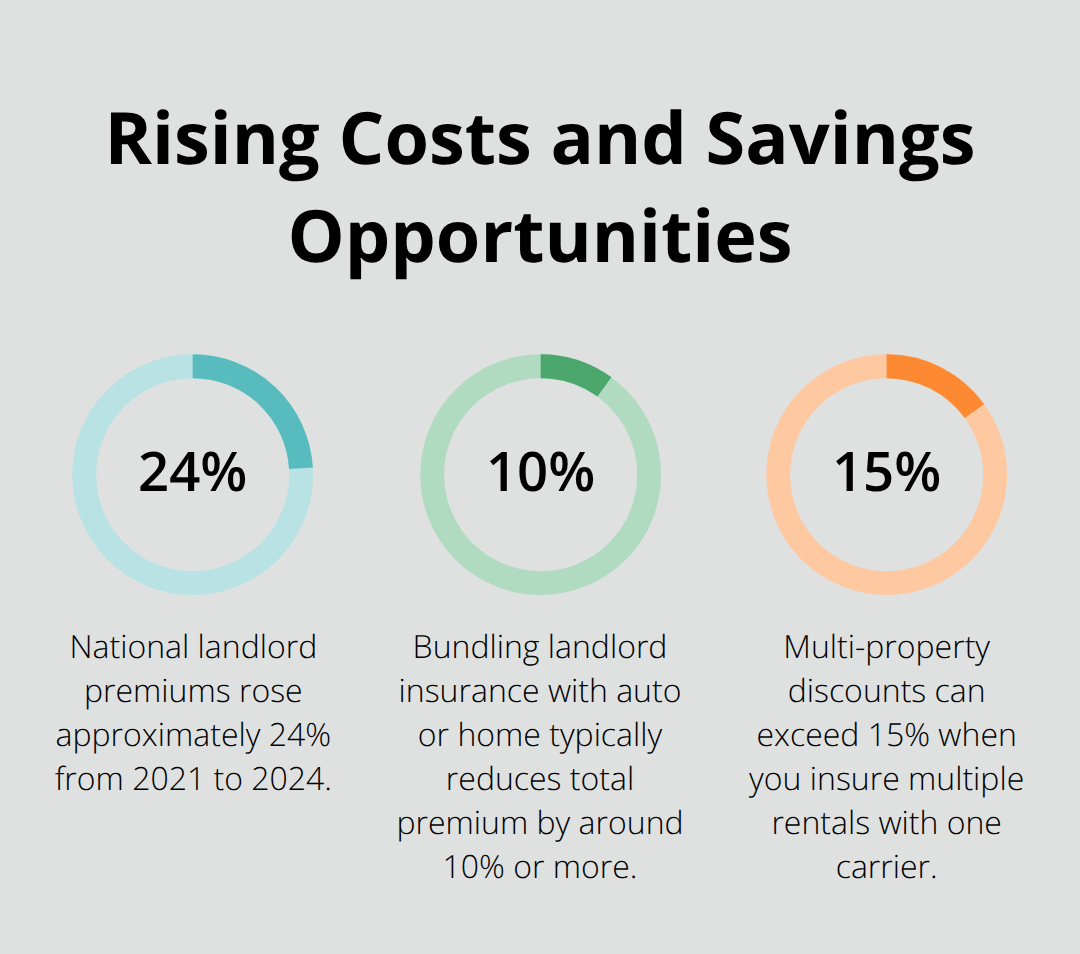
Nationally, landlord premiums rose approximately 24 percent from 2021 to 2024, and Kitsap properties continue facing upward pressure from water exposure and older building stock. Flood damage requires a separate flood insurance policy because standard landlord policies exclude it entirely.
Waterfront Properties and Regulatory Constraints
Waterfront and near-water properties fall under Shoreline Management Act jurisdiction, which introduces additional permitting and setback constraints that can complicate repairs and increase costs. Washington State doesn’t mandate specific landlord insurance requirements by law, but mortgage lenders almost universally require it as a condition of financing. Understanding these local conditions helps you select coverage limits that actually protect your investment rather than leave you exposed when claims happen.
Where Homeowners Policies Leave Landlords Exposed
Standard homeowners policies exclude rental income, leaving your mortgage and property taxes completely uncovered when tenants must vacate due to damage. A $100,000 homeowners liability limit sounds adequate until a tenant suffers a serious injury costing $150,000 to $300,000 in medical expenses and legal fees-then you face a $50,000 to $200,000 personal liability gap. Homeowners policies also contain business exclusions that deny coverage for landlord activities and contractor injuries, meaning a construction worker injured during repairs on your rental property receives no protection under your standard home policy. Kitsap landlords frequently stack multiple rental properties onto a single homeowners policy, only to discover at claim time that insurers reject coverage or demand separate policies for each unit. The core problem is simple: homeowners insurance treats your primary residence as a personal asset, while rental properties operate as business ventures requiring fundamentally different risk assessment and coverage design.
Liability Claims Cost More Than Most Landlords Expect
Tenant and visitor injury claims routinely exceed $150,000 when medical treatment, legal defense, and settlement costs combine. A slip-and-fall injury on icy stairs, a dog bite incident in the hallway, or mold exposure leading to respiratory claims all generate legal expenses that homeowners liability limits cannot absorb. Try liability coverage of at least $300,000 per occurrence for single-family rentals and $500,000 to $1,000,000 for multi-unit or high-turnover properties where exposure compounds with every tenant transition. Umbrella policies add approximately $1,000,000 in additional liability protection for $150 to $300 annually, making them a practical extension when your base policy reaches its per-occurrence limit. Contractors working on your property create additional exposure since homeowners policies typically exclude injuries to non-tenant workers, leaving you personally liable for their medical costs if an accident occurs during maintenance or repairs.
Rental Income Loss During Repairs Strains Cash Flow
Rental income coverage keeps your cash flow steady, helping you cover mortgage payments, taxes, and maintenance without tapping into reserves when covered damage renders the unit uninhabitable. Without it, you continue paying the mortgage while collecting zero rent during the repair period, potentially lasting several months for major water damage or structural issues. A $1,200 monthly rent property generates $14,400 in annual income; if a pipe burst forces a 90-day vacancy, you lose $3,600 in gross rent while still owing the full mortgage payment. Kitsap County’s 30 to 60-day eviction timelines mean you cannot quickly re-lease the unit even after repairs complete, extending your income loss window further. Standard homeowners policies provide zero protection here, making rental income coverage not optional but essential for any landlord carrying a mortgage on the property.
Why Separate Landlord Policies Protect Your Business
Landlord policies address the real rental risks that homeowners coverage ignores: building damage, tenant and visitor liability, and rental income loss with exposure-based limits tailored to your property type. These specialized policies treat your rental as a business operation rather than a personal residence, which means underwriters assess tenant turnover, property condition, and liability exposure differently. A DP-3 (Special Dwelling Property Insurance) policy-the standard landlord form in Bremerton-uses replacement value to cover property damages and includes protections that homeowners policies exclude entirely. When you compare quotes from multiple carriers, focus on coverage details like rental income limits, per-occurrence liability caps, contractor injury coverage, and specific exclusions rather than premium alone. Local carriers familiar with Kitsap conditions often price more accurately than national carriers, which may run 20 to 40 percent higher due to standardized rates that don’t account for regional water exposure and aging roof stock.
Comparing Quotes and Building the Right Coverage Stack
Getting Multiple Quotes Reveals Real Price Differences
Quotes from at least three carriers matter because premiums vary wildly across Kitsap depending on how each insurer weights water exposure, roof age, and local claims history. National carriers often run 20 to 40 percent higher than regional providers because they apply standardized rates that don’t account for Kitsap’s specific conditions, while local carriers familiar with Bremerton and the Puget Sound region price more accurately based on actual risk.
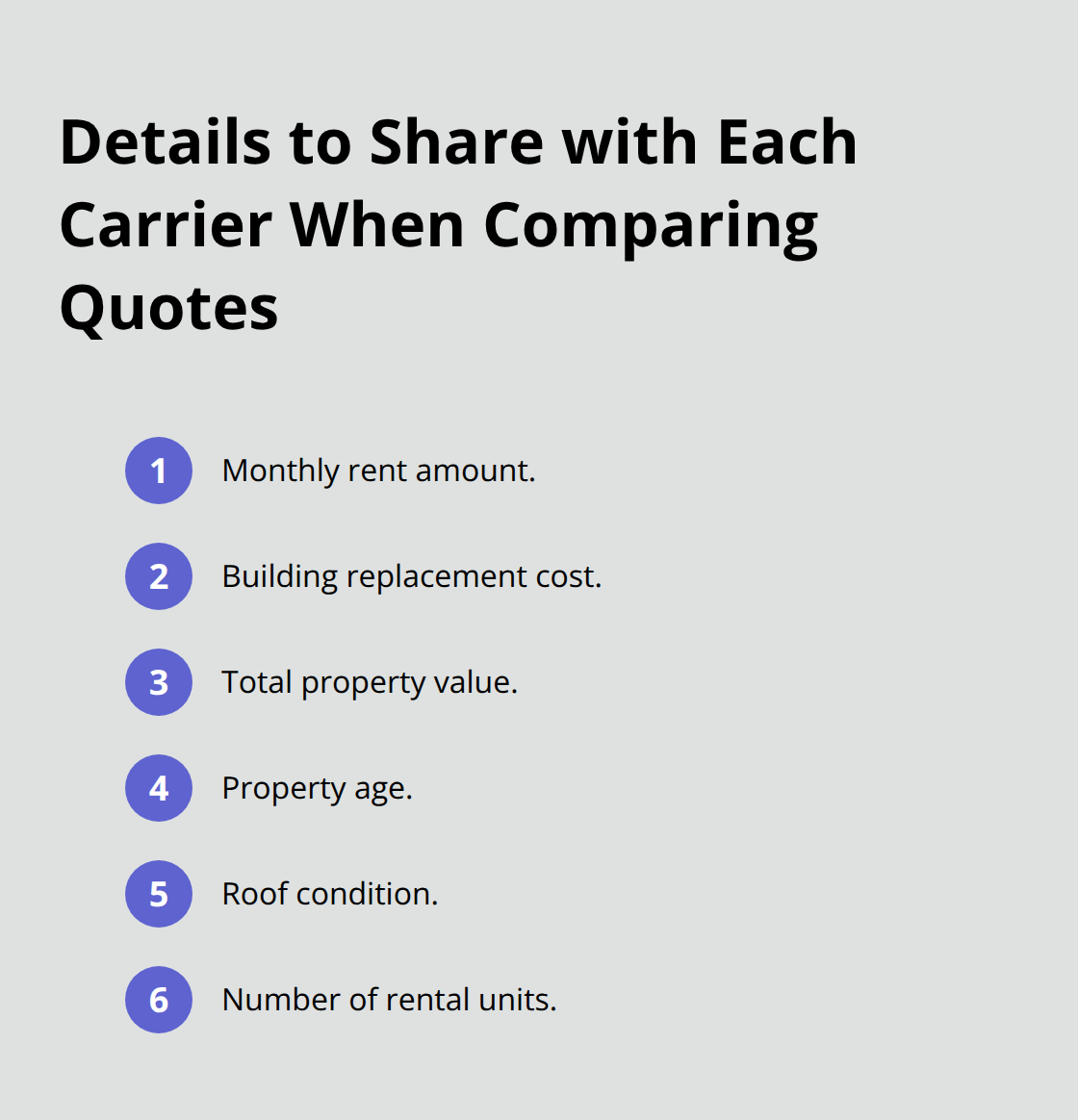
When you compare quotes, provide the same property details to each carrier-monthly rent, building replacement cost, total property value, property age, roof condition, and number of rental units-so comparisons reflect genuine coverage differences rather than incomplete information. The average landlord policy in Bremerton costs $1,300 to $1,400 annually, roughly 20 to 25 percent more than homeowners insurance, but this baseline shifts dramatically based on coverage limits and your specific property profile.
Coverage Details Matter More Than Premium Alone
Focus your comparison on coverage details that actually matter: rental income limits (confirm whether loss of rent is included and for how long), per-occurrence liability caps, aggregate liability limits, contractor injury coverage, and specific exclusions around tenant-caused damage or water loss. A policy quoting $900 annually might exclude rental income entirely, while a $1,500 policy includes 12 months of coverage-making the cheaper option financially devastating when a claim occurs. Understanding deductibles requires matching them to your cash reserves and risk tolerance; a $1,000 deductible saves premium money but means you absorb that cost out-of-pocket when damage happens, while a $500 deductible costs more upfront but reduces your immediate financial exposure during claims.
Bundling and Discounts Reduce Total Costs
Bundling landlord insurance with auto or home policies typically reduces your total premium by 10 to 25 percent, and multi-property discounts can exceed 15 percent if you insure multiple rentals under one carrier. The catch is that bundling only works financially if the combined rate beats what you’d pay shopping carriers individually; some insurers bundle aggressively to win your business, while others charge full rates on each policy regardless of bundling. Obtain individual quotes first, then ask each carrier what bundling savings they offer before making a decision-this prevents you from overpaying for convenience. Security systems, professional management, and claims-free history each unlock additional discounts ranging from 5 to 15 percent, so document these factors when requesting quotes.
Riders and Special Coverage Options
Inflation protection riders cost extra but automatically increase your coverage limits annually, protecting you against replacement cost drift in a market where construction costs have climbed significantly; this rider becomes increasingly valuable on older Kitsap properties where replacement cost exceeds the original policy limit. Short-term rental properties-Airbnb or VRBO operations-require specialized underwriting because standard landlord policies rarely cover rental use; confirm whether a carrier offers short-term rental riders before committing to a quote. Once you’ve narrowed carriers to your top choice, ask about their claims process, whether they offer 24/7 reporting, and how quickly they settle loss-of-rent claims, since speed matters when your cash flow stops during repairs.
Timing Your Purchase Protects Against Rising Costs
Locking in a policy now protects you from the premium increases that continue tracking upward; waiting another year means paying more for the same coverage while your property ages and regional risk profiles shift.
Final Thoughts
Landlord property insurance in Kitsap protects three critical areas: your building structure, your liability exposure when tenants or visitors suffer injuries, and your rental income when damage forces vacancy. Standard homeowners policies fail on all three fronts, leaving you personally liable for medical costs exceeding $150,000, mortgage payments during repairs, and contractor injuries that homeowners coverage explicitly excludes. A $1,200 monthly rent property needs at least $14,400 in annual rental income coverage, and liability limits should reach $300,000 for single-family rentals or $500,000 to $1,000,000 for multi-unit properties where tenant turnover compounds your exposure.
Quotes from at least three carriers reveal real price differences, since national insurers often charge 20 to 40 percent more than local carriers familiar with Kitsap’s water exposure and aging roof conditions. Focus your comparison on coverage details rather than premium alone-confirm rental income limits, per-occurrence liability caps, contractor injury protection, and specific exclusions. Bundling with auto or home policies typically saves 10 to 25 percent, and multi-property discounts can exceed 15 percent, but only if the combined rate beats shopping individually.
Nationally, landlord premiums climbed 24 percent from 2021 to 2024, and regional pressure from water exposure continues pushing costs upward. Contact H&K Insurance Agency to review your current coverage for gaps, request quotes from multiple carriers, and build a landlord property insurance Kitsap policy that matches your property type and replacement-cost needs.
