
Landlord Policy Guidelines WA: Key Rules for Washington Landlords
Running a rental property in Washington comes with legal obligations and financial risks that many landlords underestimate. We at H&K Insurance Agency see firsthand how costly mistakes can be when landlords skip proper insurance or ignore state requirements.
This guide covers the landlord policy guidelines WA landlords actually need, from security deposit rules to the coverage gaps that leave properties vulnerable. You’ll learn what protections matter most and which common oversights could drain your profits.
Washington State Landlord-Tenant Laws You Must Know
Security Deposit Limits and Return Requirements
Washington’s landlord-tenant laws are strict, and violations cost money fast. The state allows landlords to collect security deposits, but only up to the equivalent of one month’s rent according to Washington Revised Code 59.18.260-a $1,500 monthly rent caps your deposit at $1,500. You must return deposits within 30 days of move-out, minus only itemized deductions for unpaid rent or actual damages beyond normal wear. Many Washington landlords lose money fighting tenant claims because they fail to document the property condition at move-in with photos, written descriptions, or video. The WA Department of Commerce provides a standard move-in/move-out checklist form; using this form and having tenants sign it eliminates disputes later. If you withhold any deposit amount, you must provide an itemized statement with receipts or proof of the deduction within that 30-day window, or tenants can sue you for the full deposit plus interest and court costs. One common mistake treats security deposits as operating income; they belong in a separate account, not your general business funds, or Washington law treats the violation as theft of tenant property.
Eviction Requires Proper Notice and Legal Process
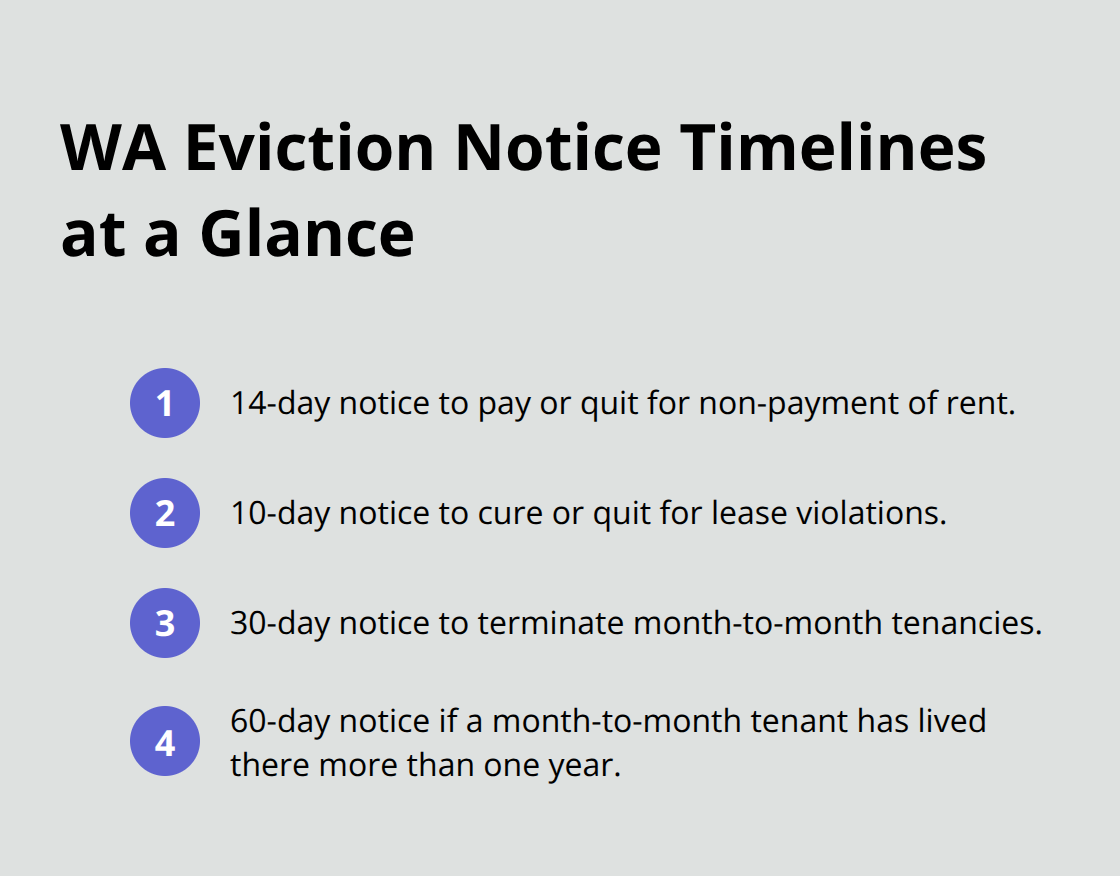
Evicting a tenant in Washington demands strict adherence to notice periods and court procedures. For non-payment of rent, you must serve a 14-day notice to pay or quit under RCW 59.12.030; the tenant has 14 days to pay or vacate. For lease violations like unauthorized occupants or property damage, you serve a 10-day notice to cure or quit. For month-to-month tenancies, you must provide 30 days’ notice to terminate, or 60 days if the tenant has lived there more than one year.
Serving notice yourself or via certified mail is not enough-you must follow Washington’s strict service requirements or the court dismisses your case. If the tenant doesn’t comply, you file an unlawful detainer action in District Court; you cannot lock them out, remove belongings, or shut off utilities. Court proceedings typically take 30–60 days, meaning eviction is slow and expensive. Landlords often skip proper documentation of violations, then lose in court because they cannot prove the lease breach. Photography, email records, and written lease violation notices become critical evidence. Washington’s courts favor tenants when landlords cut corners on procedure, so working with a local attorney familiar with Washington eviction law is worth the cost to avoid dismissals and restarts.
Landlord Duties Go Beyond Collecting Rent
Washington law imposes substantial maintenance and habitability obligations on landlords that many underestimate. Under RCW 59.18.060, you must maintain the property in habitable condition, including working heating, plumbing, electrical systems, and weatherproofing. Tenants have the right to withhold rent or repair-and-deduct if you ignore maintenance requests for more than 30 days, meaning a leaky roof or broken furnace can cost you rent without your consent. You cannot retaliate against tenants for requesting repairs, filing complaints with local health departments, or asserting their legal rights-retaliation claims result in damages and attorney fees awarded against you. Washington’s Paid Sick Leave law requires that any on-site property management staff you employ accrue paid sick leave starting from day one of employment, so you must factor this cost into your staffing budget. Tenant screening and fair housing laws are strict; you must apply the same rental criteria to all applicants and document your decisions. Discrimination based on familial status, disability, race, religion, or other protected classes exposes you to federal Fair Housing Act violations and state civil rights complaints, which carry substantial penalties. The state’s minimum wage of $16.28 per hour as of 2024 affects your labor costs if you employ maintenance staff or resident managers. Strong landlord-tenant relationships and proactive maintenance reduce costly disputes and vacancy losses. These legal obligations set the foundation for your rental operation, but they represent only part of your risk exposure. The financial protection you need comes from proper landlord insurance coverage-which many landlords overlook entirely.
Essential Coverage for Your Rental Property
Your Homeowners Policy Excludes Rental Income
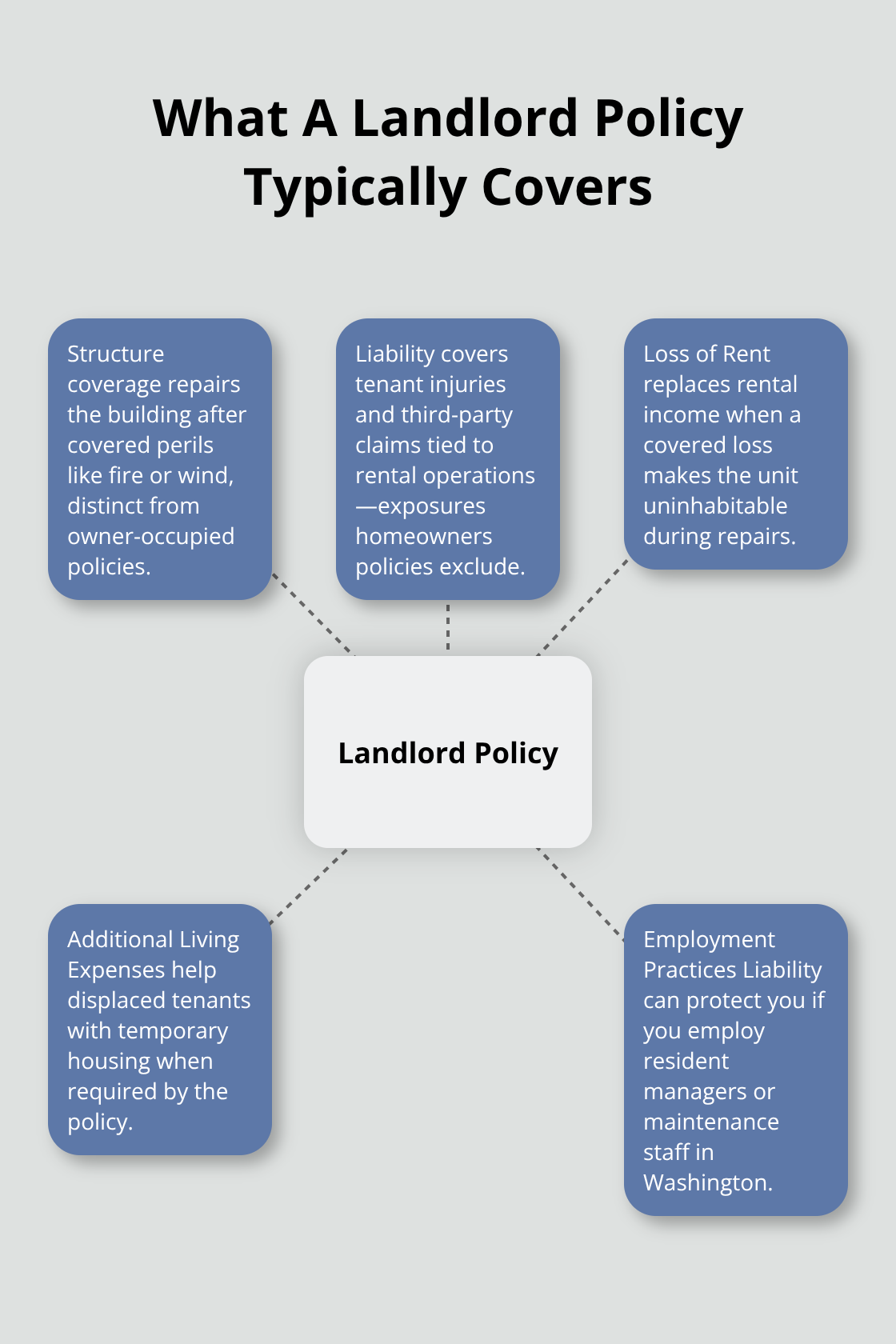
Your standard homeowners insurance policy excludes rental income and liability from tenant-occupied properties, leaving you exposed the moment you rent out a unit. Insurance companies classify homeowners policies as owner-occupied coverage only, and they cancel policies or deny claims when they discover rental activity. Landlords often assume their existing homeowners policy covers their rental property, then face claim denials when damage occurs. A landlord policy, by contrast, covers the building structure, liability from tenant injuries, loss of rental income if the property becomes uninhabitable, and additional living expenses for displaced tenants.
Coverage Limits and Liability Exposure Differ Significantly
Most landlord policies offer liability limits between $100,000 and $300,000, whereas homeowners policies typically max out at similar amounts, but the rental exposure is higher because you face claims from tenant injuries, tenant property damage claims, and third-party liability on your premises. Washington’s relatively high minimum wage of $16.28 per hour as of 2024 means your on-site staff costs are substantial, and you need employment practices liability coverage if you employ resident managers or maintenance workers. Standard homeowners policies do not cover any of this. If a tenant is injured because you failed to maintain the property in habitable condition under RCW 59.18.060, your liability exposure is significant, and your homeowners policy will not cover it because it explicitly excludes rental activities.
Loss of Rent Coverage Protects Your Cash Flow
Loss of rent coverage is critical in Washington’s competitive rental market where vacancy costs mount quickly. If a fire or weather damage makes your property unrentable for three months, loss of rent coverage reimburses your lost rental income during repairs, protecting your cash flow when tenants cannot occupy the unit. Without this coverage, you absorb the full income loss while still paying property taxes, utilities, and mortgage payments. The Seattle metropolitan area has competitive rental markets where vacancy periods cost money fast, making loss of rent protection non-negotiable.
Additional Coverages Address Regional Risks
Water backup and sump overflow coverage matters especially in Western Washington where heavy rainfall and moisture management are constant concerns. Earthquake coverage protects your property if your rental sits in a seismic zone. Document your annual rental income and calculate your coverage needs based on actual rents, not estimates, so your loss of rent limit matches your true monthly revenue. Try coverage limits of at least $300,000 in liability and loss of rent coverage that equals three to six months of gross rental income, depending on your local market conditions and how quickly you can re-lease a damaged unit.
Cost Versus Risk Exposure
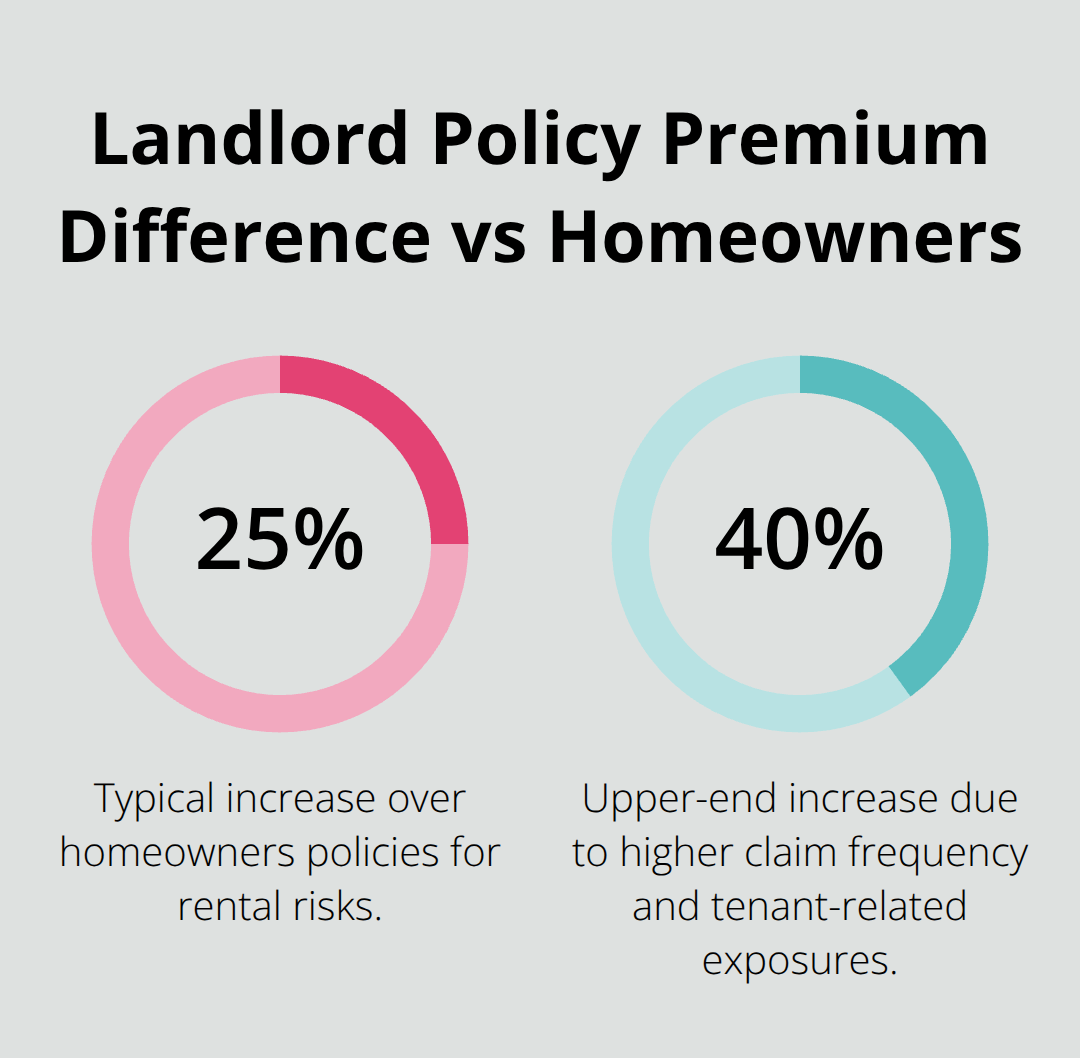
Landlord policies cost roughly 25 to 40 percent more than homeowners policies due to higher claim frequency and tenant-related risks, but the cost is minimal compared to the liability exposure and income loss you face without proper coverage. The distinction between what your homeowners policy covers and what a landlord policy covers determines whether you recover from a loss or face financial ruin. Understanding these coverage gaps sets the stage for identifying which additional protections your specific property needs most.
Common Mistakes Washington Landlords Make
Missing Move-In Documentation Costs You Deposits
Most Washington landlords fail to photograph the property before tenants arrive or create a written condition report describing every wall, appliance, and fixture. Without this baseline record, you cannot prove what damage existed before move-in versus what tenants caused, and courts in Washington side with tenants when documentation is absent. The WA Department of Commerce provides a standard move-in/move-out checklist form specifically for this purpose-use it and have tenants sign off on the baseline condition.
When disputes arise over security deposit deductions, judges compare your photos and written descriptions against tenant claims. If you have neither, you lose the argument and refund the full deposit plus interest. This single mistake costs landlords hundreds or thousands in forfeited deposits annually. Courts require concrete evidence of pre-existing conditions, and your word alone carries no weight against a tenant’s claim of normal wear and tear.
Homeowners Insurance Denies Rental Property Claims
Running a rental property under a homeowners insurance policy exposes you to total claim denial when damage occurs. Your standard homeowners policy explicitly excludes rental activities, and the insurer cancels coverage or denies claims when they discover you collect rent. A fire that destroys your rental unit while covered under homeowners insurance can result in a complete claim denial, leaving you to absorb the full loss with no recovery.
Landlord policies cost 25 to 40 percent more than homeowners policies, but this cost is trivial compared to losing an entire property claim or facing liability exposure without coverage. The distinction between owner-occupied and rental coverage determines whether you recover from a loss or face financial ruin. Many landlords assume their existing homeowners policy covers their rental property, then face claim denials when damage occurs-a costly assumption that leaves properties vulnerable.
Deferred Maintenance Triggers Rent Withholding and Retaliation Claims
Ignoring maintenance requests and assuming tenants will tolerate uninhabitable conditions violates Washington law and costs you rent. Washington law allows tenants to withhold rent or repair-and-deduct if you ignore maintenance for more than 30 days, meaning a tenant can pay a plumber to fix a broken furnace and deduct that cost from their next rent payment without your approval. You cannot retaliate against tenants for requesting repairs, and retaliation claims result in damages and attorney fees awarded against you.
Western Washington’s heavy rainfall and moisture make water damage and mold claims common, so address roof leaks, gutter damage, and drainage problems within days-not weeks-to prevent tenant health issues and expensive remediation. Document every maintenance request in writing, photograph completed repairs, and keep all receipts. This paper trail protects you if tenants later claim you ignored their requests or retaliated against them for asserting their legal rights.
Inadequate Liability Coverage Exposes You to Tenant Injury Claims
Most landlord policies offer liability limits between $100,000 and $300,000, but your actual exposure often exceeds these amounts when tenants suffer injuries on your property. If a tenant is injured because you failed to maintain the property in habitable condition, your liability exposure is significant. Washington’s relatively high minimum wage means your on-site staff costs are substantial, and you need employment practices liability coverage if you employ resident managers or maintenance workers.
Standard homeowners policies do not cover any rental-related liability, leaving you personally responsible for medical bills, legal fees, and damages if a tenant sues. Try coverage limits of at least $300,000 in liability to match your actual exposure in Washington’s competitive rental markets. Underinsuring liability exposes your personal assets to judgment claims that can exceed your policy limits.
Final Thoughts
Washington’s landlord-tenant laws demand strict compliance, and the financial risks of operating without proper protection are substantial. Documentation, landlord policy guidelines WA landlords need, and proactive maintenance form the foundation of your protection-and each element protects you from different types of losses. The 25 to 40 percent premium increase for landlord coverage over homeowners insurance costs far less than absorbing a single claim denial or liability judgment.
Contact H&K Insurance Agency to review your current coverage and discuss landlord policy options that match your specific property and income. Bring your lease, annual rental income figures, and property details so we assess your actual risk exposure and recommend the right protection. Waiting until after a loss occurs leaves you unprotected-proper landlord insurance and legal compliance safeguard your investment today.

