

Kitsap Rental Property Insurance: Essential Landlord Coverage
Owning rental property in Kitsap County comes with real financial exposure. Standard homeowners insurance won’t protect you from the unique risks that come with tenants and rental income.
We at H&K Insurance Agency see landlords underinsured every week. The right Kitsap rental property insurance policy covers building damage, liability claims, and lost rent when tenants can’t occupy your unit.
What Landlord Insurance Actually Covers
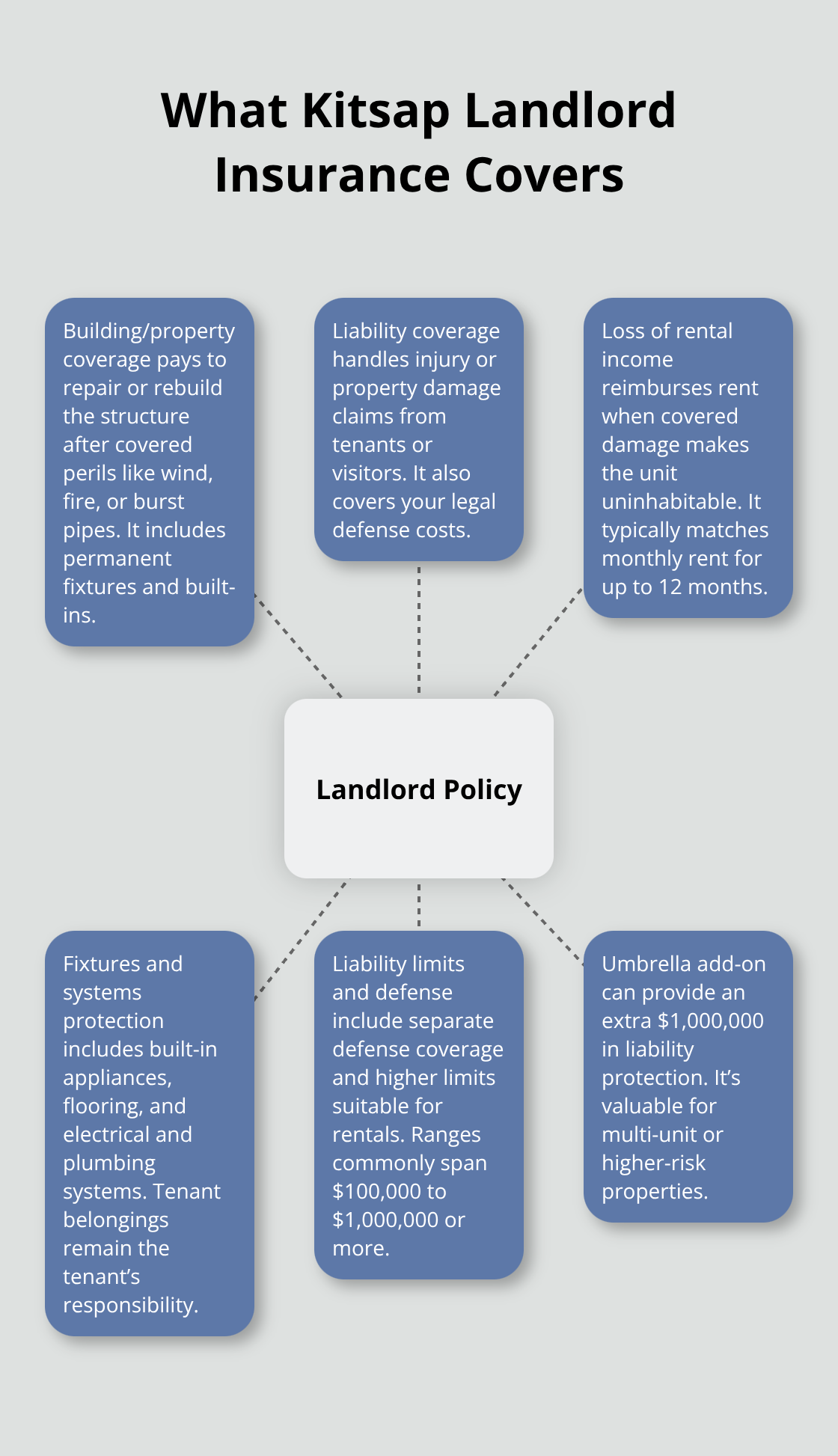
Building damage, liability claims, and lost rental income form the foundation of landlord insurance in Kitsap County, but the specifics matter far more than the labels. A roof damaged by wind, a burst pipe that floods a unit, or fire damage to the structure all fall under property coverage-your insurer pays to repair or rebuild the damaged portions of the building itself. This is separate from tenant belongings, which remain the tenant’s responsibility. The coverage typically includes permanent fixtures like built-in appliances, flooring, and electrical systems. When you review Kitsap landlord policies, confusion often arises about what counts as building structure versus what tenants must cover themselves. A leaking garbage disposal is a structural repair; the tenant’s damaged dishes are not. This distinction becomes critical when move-out disputes arise.
Liability Coverage Protects You from Tenant and Visitor Injuries
Liability protection handles injuries to tenants or guests on your property and covers your legal defense if someone sues. A tenant slips on ice in the entryway, a visitor trips on a broken step, or a contractor is injured during maintenance-these situations expose landlords to significant financial risk. Most Kitsap rental policies include per-occurrence limits ranging from $100,000 to $300,000, with aggregate limits often reaching $300,000 to $1,000,000. Washington state doesn’t require landlords to carry liability insurance, but one injury claim can easily exceed $50,000 in medical costs plus legal fees. The policy covers your legal defense costs separately from the settlement amount, meaning you’re protected even if the claim is found baseless. Umbrella policies add another $1,000,000 in liability coverage for roughly $150 to $300 annually-essential for landlords with multiple properties or higher-risk units.
Loss of Rental Income Replaces Your Cash Flow
Rental income coverage pays your mortgage, taxes, and maintenance costs when tenants must vacate due to covered damage. If fire destroys a unit, your tenant moves out, and repairs take four months, the policy reimburses lost rent during that period. Coverage limits typically match your monthly rent, often capped at 12 months of payments. Washington landlords with $1,200 monthly rent should carry at least $14,400 in annual coverage. This protection is non-negotiable if you have a mortgage-lenders require it, and cash-flow disruption can force costly short-term borrowing. The coverage applies only to damage covered under the property section, so vandalism by a tenant or an eviction won’t trigger payment. Documentation matters here: keep lease agreements, bank records showing deposits, and repair estimates to support claims. Kitsap County evictions take 30 to 60 days minimum from filing to enforcement, and repairs often stretch longer, making this coverage essential for landlords without substantial cash reserves.
Why Coverage Limits Matter More Than You Think
Underinsurance creates real problems when claims happen. A $100,000 property limit sounds adequate until a kitchen fire requires $85,000 in repairs and you still owe $20,000 on structural damage to the walls and ceiling. You pay the difference out of pocket. Liability limits that seemed reasonable five years ago may fall short today-medical inflation and legal costs have risen sharply. A serious injury claim involving surgery, ongoing physical therapy, and lost wages can reach $200,000 to $500,000 quickly. Your policy’s per-occurrence limit must reflect your actual exposure, not just the minimum available. Rental income coverage that covers only six months of rent leaves you vulnerable if major repairs extend longer. Talk with an independent agent who represents multiple carriers to compare what different policies actually cover at different price points.
Why Your Homeowners Policy Won’t Protect Your Rental Business
Standard Policies Exclude Rental Income Entirely
Your homeowners insurance policy covers one scenario: a house where you live. Rental properties operate under completely different rules, and your standard policy reflects that reality. Most homeowners policies explicitly exclude rental income, which means a fire that displaces your tenant for three months leaves you with no coverage for your mortgage or property taxes during repairs. Insurance companies treat owner-occupied and rental properties as fundamentally different risks because they are. An owner walks through their kitchen daily and spots a loose floorboard immediately; a landlord visits quarterly and discovers damage only after a tenant injury claim arrives. That difference in exposure reshapes how insurers calculate premiums and structure policies. We at H&K Insurance Agency see landlords discover these gaps after damage occurs and their claim faces denial.
Liability Coverage Falls Short for Rental Operations
Standard homeowners policies cap liability at levels designed for single-family homes, not rental businesses. Your homeowners policy might include $100,000 in liability coverage-reasonable for owner-occupied property but dangerously inadequate for rentals. A single slip-and-fall injury involving surgery and rehabilitation costs $150,000 to $300,000 in medical expenses and legal fees alone. Rental properties attract far more foot traffic than owner-occupied homes. Tenants, their guests, maintenance contractors, pest control services, and delivery personnel all create exposure points. Each visitor represents a potential injury claim, yet your homeowners policy treats liability as secondary rather than the primary risk it actually is.
Business Exclusions Leave You Unprotected
Homeowners policies exclude business-related losses entirely, which creates a critical gap for landlords. If a contractor suffers an injury during maintenance work you hired, or if a guest is injured because the property operates as a rental business, the policy may deny coverage based on the business exclusion clause. Rental properties in Washington state have no legal requirement for landlord insurance, but that legal permission doesn’t reduce the financial devastation of an uninsured claim. Properties with multiple units or a rental portfolio face even steeper rejection rates from standard homeowners carriers. These landlords end up in the non-standard market where premiums climb 30 to 50 percent higher than standard rates.
Multiple Properties Compound Coverage Problems
Stacking rental properties on a homeowners policy creates compounding problems. Standard carriers simply won’t cover multiple rental units under a single homeowners policy. Each additional property multiplies your liability exposure and property damage risk, yet your original policy remains unchanged. You face a choice: purchase separate homeowners policies for each property (which carriers often refuse) or move to specialized landlord policies that actually account for your business structure. The transition from homeowner to landlord requires a complete policy redesign, not just an add-on to your existing coverage.
Specialized Landlord Policies Address Real Rental Risks
Landlord insurance policies exist because homeowners policies fail rental property owners. These specialized policies cover property damage to the building structure, liability claims from tenants and visitors, and lost rental income when damage forces tenant displacement. Coverage limits reflect actual rental exposure rather than homeowner assumptions. Liability limits start at $100,000 and extend to $1,000,000 or higher for portfolios. Rental income coverage matches your monthly rent and extends across 12 months or longer. The policies account for contractor injuries, tenant disputes, and the business nature of rental operations. Your next step involves comparing what different landlord policies actually cover at different price points.
Selecting the Right Policy for Your Kitsap Rental
Match Coverage Limits to Your Property and Tenant Profile
Your property type and tenant situation determine which coverage limits actually protect you. A single-family rental with one long-term tenant needs different protection than a duplex with higher turnover or a multi-unit complex. Start by documenting your monthly rent, property value, and replacement cost for the building structure itself-not the land value, just what it would cost to rebuild. If your unit rents for $1,500 monthly, you need at least $18,000 in annual rental income coverage. If your building would cost $250,000 to rebuild, carrying only $150,000 in property coverage leaves you exposed to a $100,000 loss.
Properties with older systems-outdated electrical wiring, original plumbing from the 1970s, or aging roofs-face higher damage frequency and should carry coverage limits at 100 percent of replacement cost, not 80 percent. Tenant turnover matters too. High-turnover rentals mean more move-in and move-out inspections, more contractor visits for maintenance, and more opportunities for injury claims. Your liability limits should reflect this exposure. A single-unit rental with stable, long-term tenants can operate with $300,000 in liability coverage; a four-unit complex with annual tenant turnover needs $500,000 to $1,000,000 minimum.
Compare What Carriers Actually Cover, Not Just Premiums
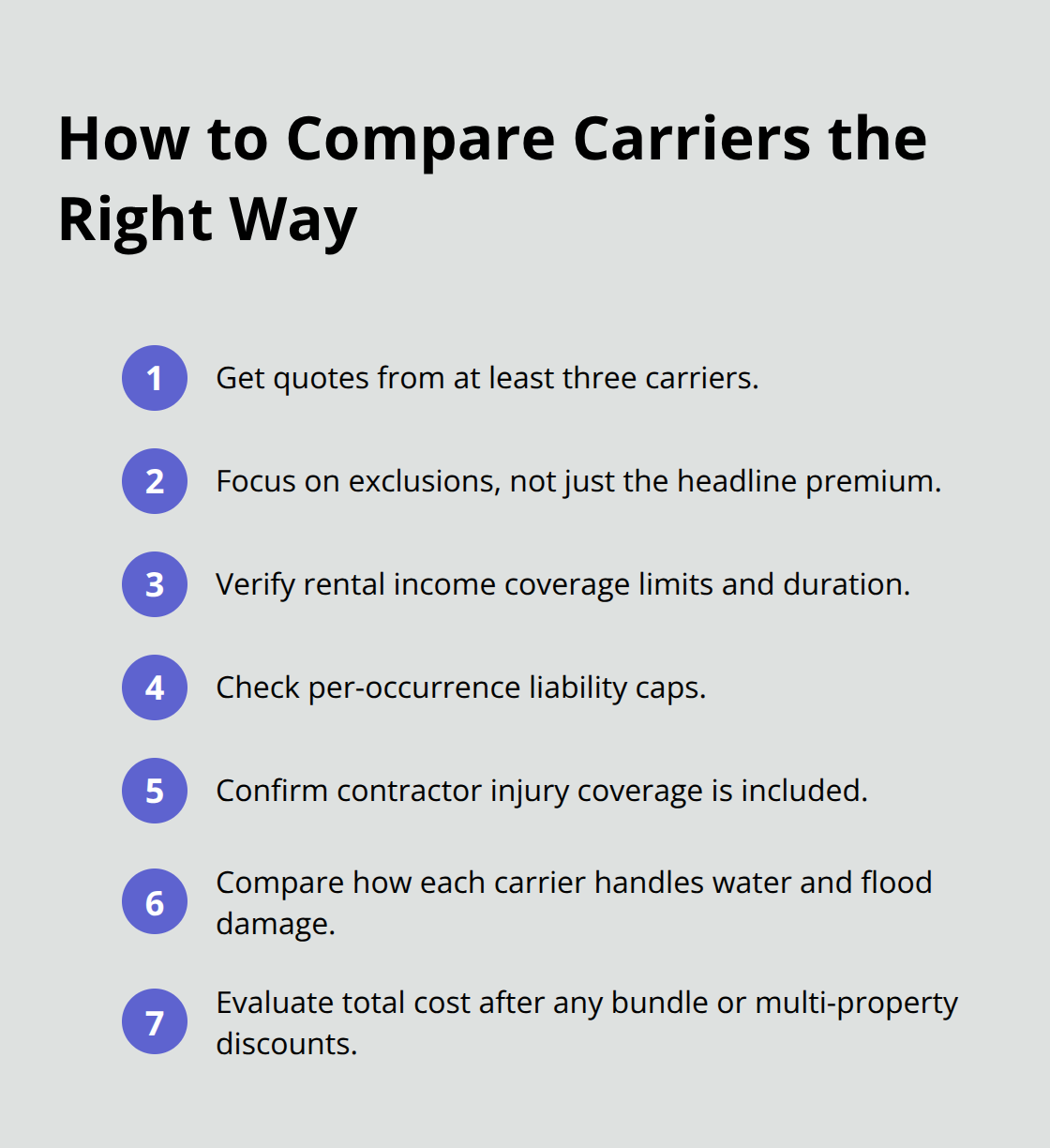
Comparing carriers reveals dramatic differences in what policies actually cost and cover. National carriers like State Farm and Allstate often charge 20 to 40 percent premiums above independent agents because they apply standardized rates without accounting for local Kitsap County conditions. A local carrier familiar with Washington’s 30 to 60-day eviction timelines and the region’s weather patterns can price your risk more accurately. Get quotes from at least three carriers before deciding.
When comparing, ignore the headline premium and focus on what each policy excludes. One carrier might cover water damage from burst pipes but exclude flood damage from heavy rain; another reverses this. Ask each carrier their specific limits on rental income coverage, their per-occurrence liability caps, and whether they cover contractor injuries on your property.
The $250 difference between a $1,200 annual premium and a $950 premium might reflect better coverage or worse protection depending on your property.
Leverage Bundling and Multi-Property Discounts
Bundling your landlord policy with auto, home, or other coverage typically reduces your total premium by 10 to 25 percent. If you own your primary residence and rent out a property, bundling the homeowners policy with the landlord policy costs less than purchasing both separately. Some carriers offer multi-property discounts when you insure two or more rentals with the same company, sometimes reducing premiums by 15 percent or more.
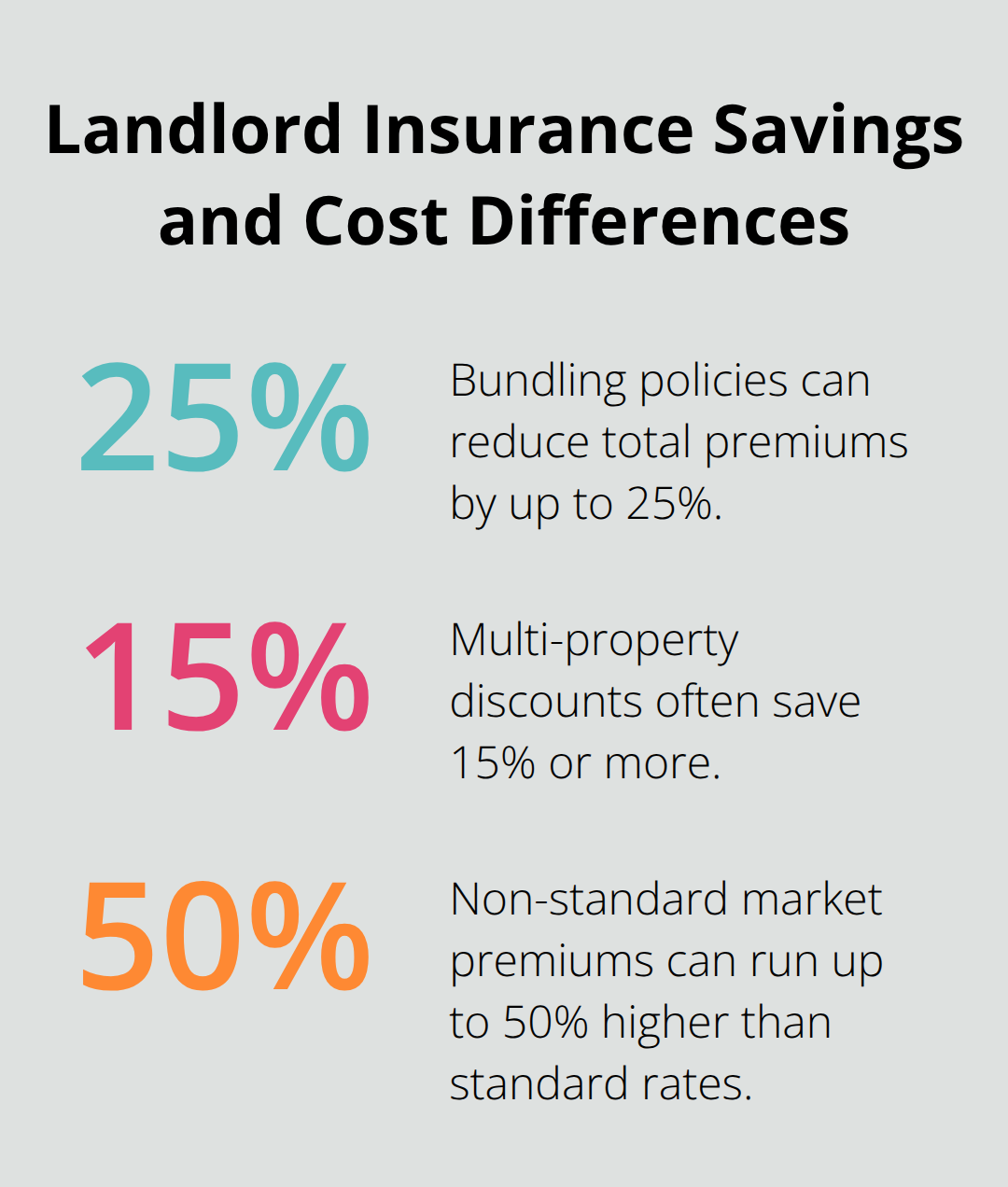
However, bundling only makes financial sense if the bundled rates remain competitive against standalone quotes. A carrier offering a 15 percent bundle discount on an overpriced policy still costs more than a competitive standalone quote elsewhere. Compare your total cost across all policies before committing to any bundle.
Final Thoughts
Kitsap rental property insurance protects your building, your liability exposure, and your rental income when damage forces tenant displacement. Standard homeowners policies fail to cover these rental-specific risks, leaving landlords financially exposed to property damage claims, injury lawsuits, and months without rental income. The right policy matches your property type, tenant situation, and actual replacement costs rather than relying on minimum coverage limits that sound adequate until a claim arrives.
Document your monthly rent, building replacement cost, and current liability exposure, then request quotes from at least three carriers. Compare what each policy actually covers beyond the headline premium, and ask about rental income limits, liability caps, contractor injury coverage, and exclusions specific to your property. If you own multiple rentals or bundle with other policies, ask about multi-property and bundling discounts that can reduce your total cost by 15 to 25 percent.
Contact H&K Insurance Agency to review your current coverage and identify gaps before a claim exposes them. Our team understands Kitsap County’s rental market, Washington’s eviction timelines, and the specific risks that rental properties face. Securing adequate landlord insurance takes one conversation and protects your rental business for years.

