

Earthquake Insurance Washington: Regional Tips For Homeowners
Washington sits on one of the most seismically active regions in the country, with the Cascadia Subduction Zone and several other fault lines posing real risks to homeowners. Standard homeowners insurance won’t cover earthquake damage, leaving many Washington residents dangerously underprotected.
At H&K Insurance Agency, we help homeowners understand their earthquake insurance options and find coverage that matches their actual risk. This guide walks you through what you need to know about protecting your home and family.
How Seismic Activity Shapes Insurance Needs in Washington
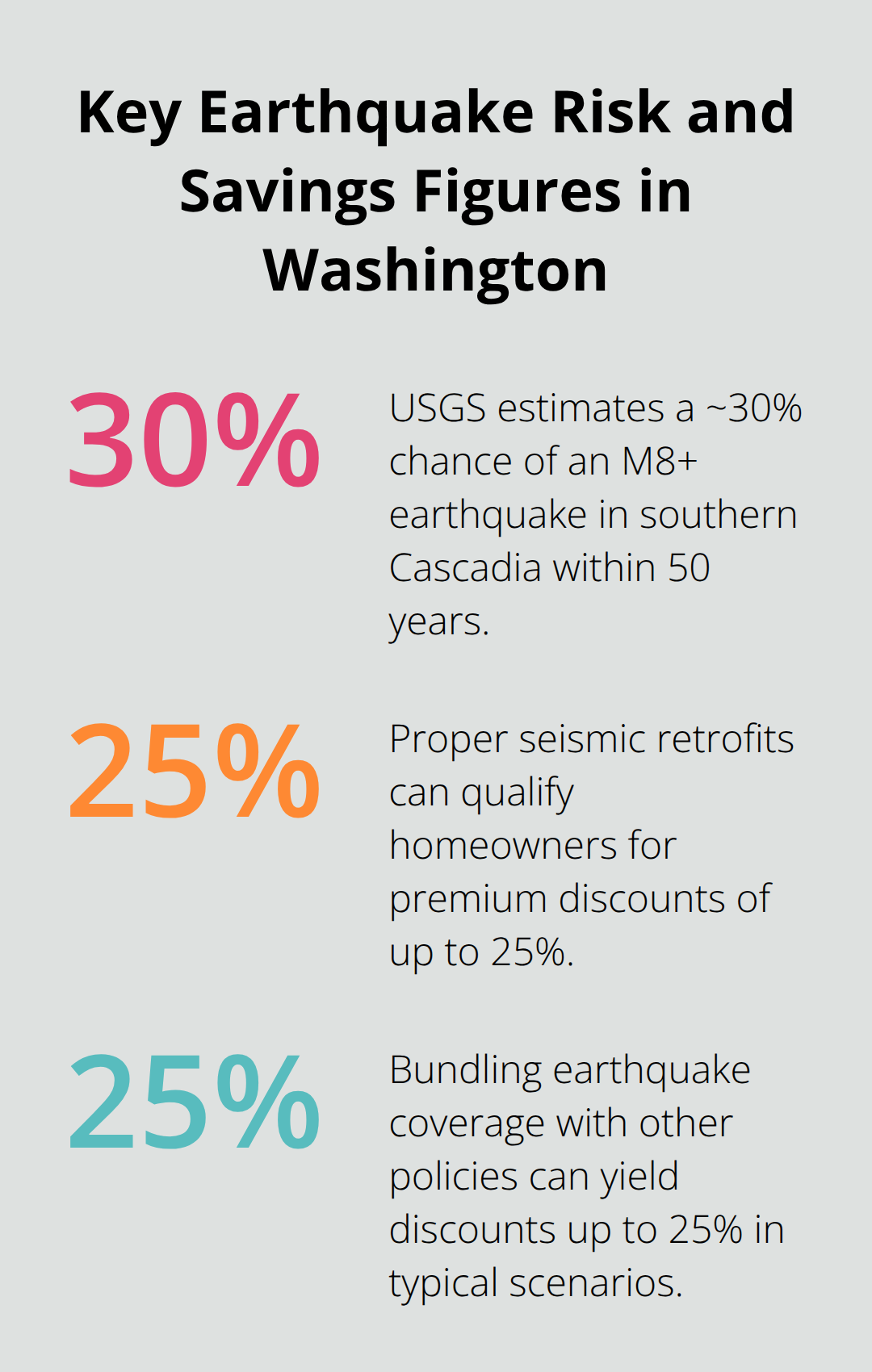
Washington sits above the Cascadia Subduction Zone, a 700-mile fault line running along the Pacific Northwest coast that poses real earthquake threats to homeowners. The U.S. Geological Survey estimates an ~30-percent chance of an M8+ earthquake occurring in southern Cascadia in the next 50 years. The Seattle Fault and numerous smaller fault lines add to the state’s seismic activity. The Pacific Northwest Seismic Network recorded over 1,000 earthquakes in Washington during 2023, though most remained minor.
This geological reality means homeowners in Washington face genuine earthquake exposure that standard homeowners policies completely ignore.
Where Risk Concentrates Across the Region
The Puget Sound area carries the highest earthquake vulnerability in Washington. Seattle, Tacoma, Bremerton, and surrounding communities sit directly above or near active fault lines, making them particularly susceptible to significant damage. The 2001 Nisqually earthquake measured 6.8 magnitude and centered near Olympia, causing over 250 million dollars in damage across the region. Communities in King County experience the most frequent seismic activity, while Pierce and Kitsap Counties face comparable risks. Homes built before 1980 in these areas suffer greater vulnerability because older construction standards didn’t account for seismic forces the way modern building codes do.
How Location Determines Your Insurance Premiums
Your home’s distance from fault lines directly impacts both your earthquake risk and your insurance premiums. Insurers use detailed seismic hazard maps developed by the Washington State Department of Natural Resources to assess risk at your specific address. Homeowners in high-risk zones pay substantially more for earthquake coverage than those in lower-risk areas (sometimes double or triple the premium). A home in Seattle typically costs more to insure against earthquakes than an identical home in rural Eastern Washington. Understanding your specific risk level helps you evaluate whether earthquake insurance makes financial sense and what coverage limits you actually need for your property’s replacement value.
What This Means for Your Coverage Strategy
Your location determines not just cost but also which coverage options make sense for your household. High-risk areas require more aggressive protection strategies, while moderate-risk zones allow for more flexibility in deductible selection. The combination of your address, home age, and construction type creates a unique risk profile that shapes your insurance needs. As you move forward with evaluating coverage options, understanding what earthquake insurance actually protects becomes essential to making the right decision for your family.
What Earthquake Insurance Actually Covers
The Gap in Your Standard Homeowners Policy
Standard homeowners policies exclude earthquake damage entirely, which means the coverage you think protects your home simply doesn’t. Your typical homeowners insurance handles fire, theft, wind, and hail, but when the ground shakes, you’re on your own. This gap exists because earthquake risk concentrates geographically, making it impossible for insurers to spread risk the way they do with other perils. In Washington, this omission creates serious financial exposure for homeowners in the Puget Sound region.
What Earthquake Coverage Actually Protects
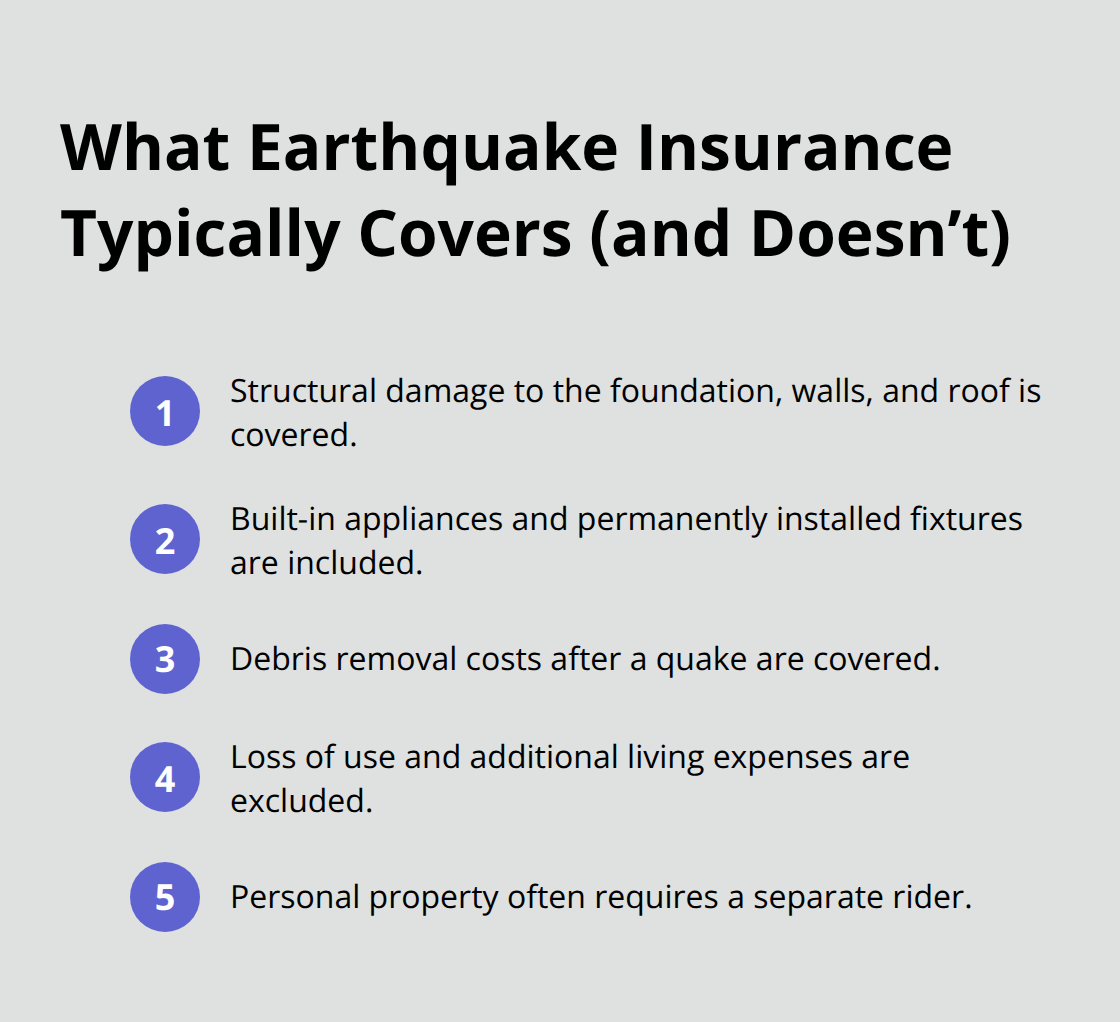
Earthquake insurance fills this specific gap by covering structural damage to your home’s foundation, walls, and roof caused by seismic activity. The coverage also protects built-in appliances, permanently installed fixtures, and debris removal costs. However, earthquake policies don’t cover loss of use or additional living expenses if you’re forced to relocate during repairs. Personal property inside your home typically requires a separate rider, since standard earthquake coverage focuses on the structure itself.
Understanding Deductibles and Their Real Impact
Deductibles for earthquake insurance run substantially higher than other homeowners coverage, typically ranging from 10 to 25 percent of your home’s replacement value rather than the standard 500 or 1,000 dollar fixed deductible. A home valued at 400,000 dollars with a 15 percent deductible means you’d pay 60,000 dollars out of pocket before insurance kicks in. This percentage-based structure reflects the concentrated nature of earthquake risk and the potential for widespread claims across a region simultaneously.
Matching Coverage Limits to Actual Replacement Costs
Coverage limits should match your home’s actual replacement cost, not its market value, since rebuilding after an earthquake costs what reconstruction requires, not what you could sell the property for. In the Puget Sound area, where the 2001 Nisqually earthquake caused approximately $2 billion in total damage, underestimating replacement costs leaves homeowners dramatically underinsured. Square footage estimates and comparable sales prices often fall short of what you’ll actually spend to rebuild (especially in high-demand markets where labor and materials spike after major disasters). A professional replacement cost estimate for your specific home provides the accuracy you need to select appropriate coverage limits.
Moving Forward With Your Coverage Decision
Your location in Washington determines not just which coverage options make sense, but also how much protection you actually need. Understanding what earthquake insurance covers and what it excludes allows you to evaluate whether your current financial situation can absorb a large deductible or whether you need lower percentage-based deductibles despite higher premiums.
How to Strengthen Your Protection and Lock in Better Rates
Foundation Retrofits Reduce Damage and Lower Premiums
Retrofitting your home’s foundation stands as the single most effective way to reduce earthquake damage and lower your insurance premiums. Homes built before 1980 in the Puget Sound region face serious vulnerability because they lack the seismic bracing that modern building codes require. Foundation bolting and cripple wall bracing seismic retrofit costs can qualify you for premium discounts of up to 25% when properly retrofitted. Foundation bolting, which anchors your home’s sill plate to the foundation with bolts spaced every six feet, costs between $3,000 and $7,000. Cripple wall bracing (reinforcing the short walls between your foundation and first floor) adds another $2,000 to $5,000 but provides additional premium reductions. Soft-story reinforcement, which addresses weak points where garages or large windows create structural vulnerabilities, requires a structural engineer’s assessment but typically costs $8,000 to $15,000 depending on your home’s specific weaknesses.
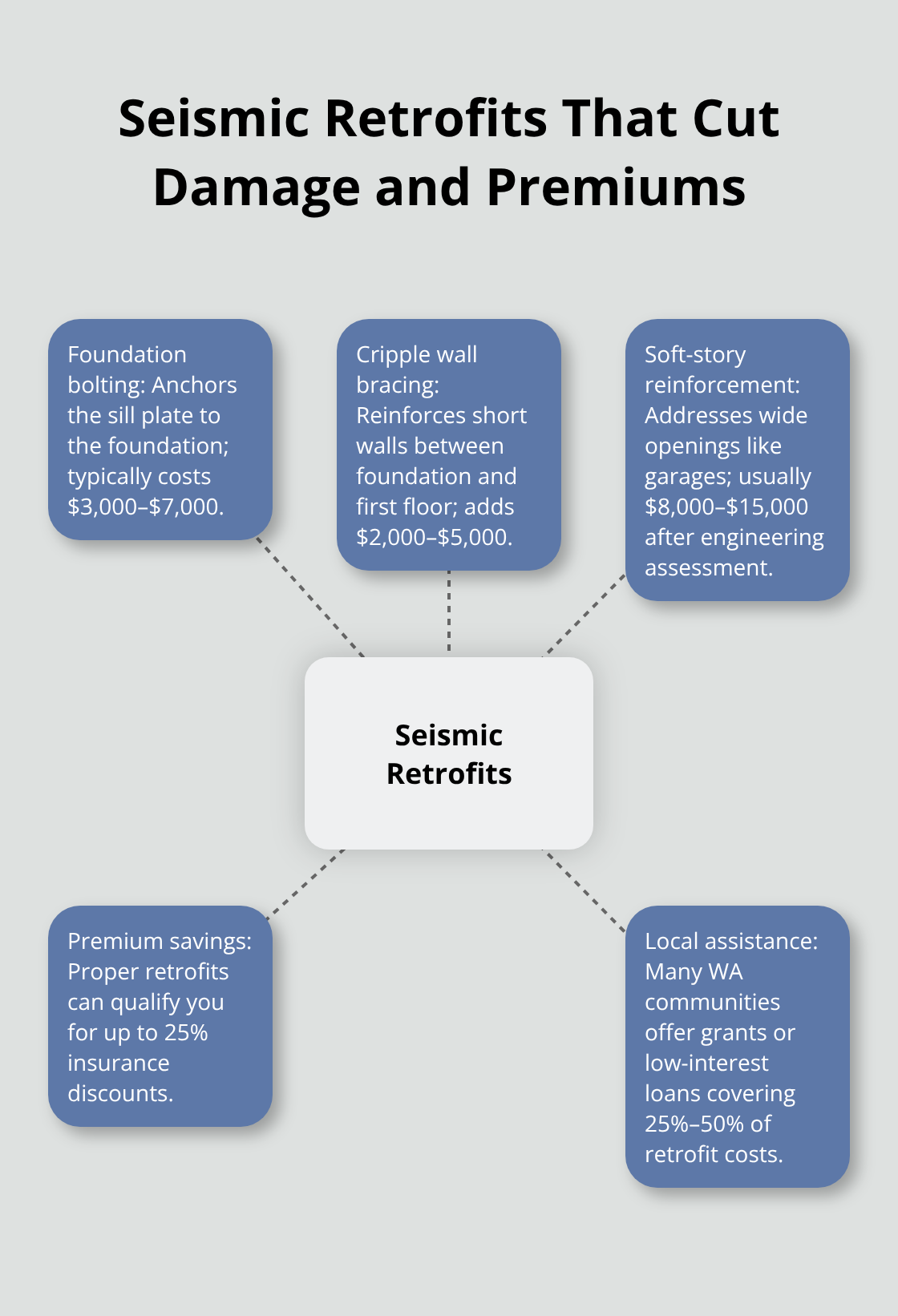
These improvements meaningfully reduce the actual damage your home would suffer during a significant earthquake. Contact your local building department about available seismic retrofit programs; many Washington communities offer grants or low-interest loans that cover 25 to 50 percent of retrofit costs for qualifying homeowners.
Evaluate Your Coverage Based on Location and Home Characteristics
Your coverage needs depend entirely on your specific location within Washington and your home’s construction characteristics, not on generic formulas or broad recommendations. Homes within five miles of the Seattle Fault or in downtown Seattle require substantially more aggressive coverage than properties in suburban areas or rural Eastern Washington, where seismic risk drops significantly. Request a professional replacement cost appraisal specific to your property rather than relying on tax assessments or online estimates, since reconstruction costs in high-demand Puget Sound markets often exceed what general calculators predict.
Bundle Coverage to Access Significant Discounts
Bundling earthquake insurance with your homeowners policy, auto insurance, or other coverage typically generates 10 to 25 percent discounts compared to purchasing earthquake coverage separately, making it financially sensible even if you’re uncertain about coverage levels. Working with a local independent agent who represents multiple carriers allows you to compare how different insurers price earthquake coverage for your specific address and home characteristics-something you cannot do shopping with a single company. An agent who understands Puget Sound geography and seismic risk helps you avoid both over-insuring (paying for protection you don’t need) and under-insuring (leaving yourself exposed to catastrophic losses).
Act Now Before Rates Continue Rising
Your coverage decision matters most in the next few years; rates continue rising as more homeowners recognize their earthquake exposure, and waiting delays both the protection your family needs and the premium advantages available today.
Final Thoughts
Washington homeowners in the Puget Sound region face genuine earthquake risk that standard insurance simply doesn’t address. The combination of the Cascadia Subduction Zone, the Seattle Fault, and frequent seismic activity means your home’s protection depends on taking action now rather than waiting for the next significant event. Earthquake insurance Washington policies fill the gap that standard coverage leaves open, but only if you secure protection before rates continue climbing.
Your specific location determines both your risk level and the coverage strategy that makes financial sense for your household. Homes within five miles of active fault lines require more aggressive protection than properties in lower-risk areas, and your home’s age and construction type shape which retrofits deliver the biggest premium reductions. Foundation bolting and cripple wall bracing investments pay dividends through lower premiums while meaningfully reducing actual earthquake damage.
The financial exposure from waiting extends beyond just premium increases-every month without earthquake insurance leaves your family vulnerable to catastrophic losses that could exceed hundreds of thousands of dollars. Contact H&K Insurance Agency to compare earthquake coverage options across multiple carriers and customize a package that matches your actual risk and budget. As a locally owned independent agency in Bremerton, we understand the specific seismic challenges facing our region and help you avoid both over-insuring and leaving dangerous gaps in your protection.
