
Classic Boat Insurance Kitsap: Insuring Your Vintage Vessel
Your classic boat is more than transportation-it’s a piece of history and a significant investment. Standard boat insurance policies simply don’t account for the unique value and specialized needs of vintage vessels.
At H&K Insurance Agency, we understand that classic boat insurance in Kitsap requires a different approach. This guide walks you through the coverage options designed specifically for your collector boat.
Why Classic Boats Need Their Own Insurance Category
Classic boats sit in a completely different insurance category than modern vessels, and treating them like standard recreational watercraft costs collectors thousands. Your vintage boat has appreciated in value over decades, often reaching $50,000 to $500,000 or more depending on rarity and condition. A standard boat policy values your vessel using actual cash value, which means depreciation strips away 30 to 50 percent of what you’d actually need to rebuild or restore it. Progressive data from 2023-2024 shows average boat insurance in Washington runs about $400 per year, but that baseline assumes a newer recreational boat, not a collector vessel that requires specialized underwriting.
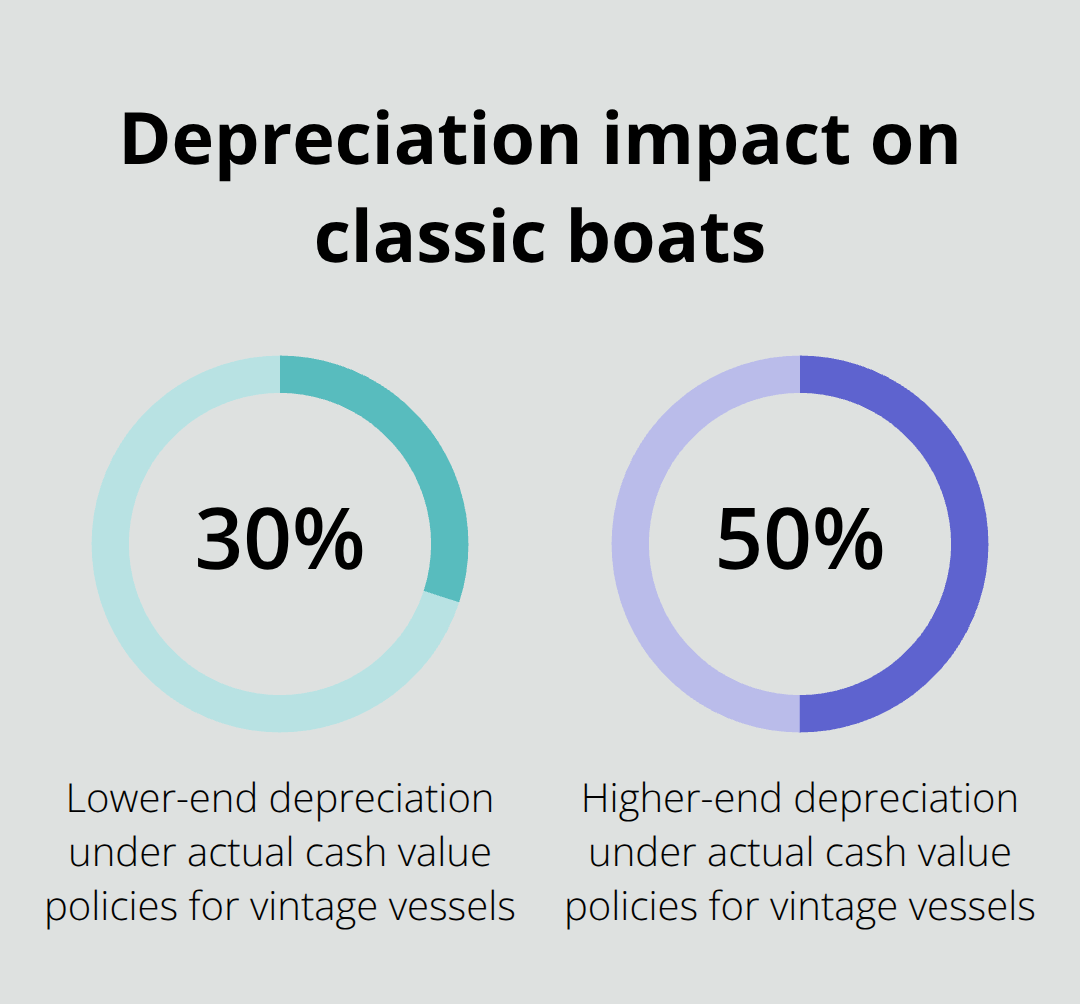
The moment you insure a classic boat under a generic policy, you accept a payout formula designed for a fishing boat worth $15,000, not your restored 1960s cruiser or vintage sailboat worth far more.
Collector Value Demands Agreed Value Coverage
Agreed value coverage is non-negotiable for classic boats in Kitsap County. This coverage type guarantees you receive the full insured amount in a total loss, which eliminates depreciation entirely. Standard actual cash value policies calculate what your boat is worth at the moment of loss, factoring in age and condition-a calculation that becomes devastating in saltwater environments like Puget Sound. Saltwater corrosion costs boat owners thousands annually, with engine repairs alone running $5,000 to $15,000 and fiberglass hull repairs ranging from $3,000 to $8,000. If your classic boat suffers a major loss, actual cash value won’t cover these repair costs, let alone the premium you paid for authenticity and condition. An independent agent who works with multiple carriers can match your coverage to what your boat would actually cost to restore or replace.
Vintage Vessels Require Specialized Maintenance Coverage
Classic boats demand repair approaches that modern insurance doesn’t anticipate. Restoration parts for vintage vessels cost significantly more than factory replacements, and finding skilled marine technicians who understand older systems adds labor expenses that standard policies don’t account for. Limited use patterns separate classic boats from everyday recreational vessels-you might operate your vintage boat only three months per year, store it in a climate-controlled facility, and take it out for specific events or short cruises. Standard policies often impose usage restrictions or fail to recognize that stored, lightly-used boats face different risks than boats in constant operation. Fire, theft, and vandalism threaten parked vessels more than collision risk, yet generic policies treat all boats identically.
Coverage Must Match Your Actual Usage
Your classic boat insurance should reflect actual usage patterns, not assume you operate a charter service or tow water-skiers. Seasonal operation creates unique exposures that year-round recreational policies miss entirely. A boat that sits in storage for nine months faces different hazards than one that runs constantly, and your coverage should account for this reality. When you shop for classic boat insurance, you need a carrier and agent who understand that your vintage vessel operates under completely different conditions than modern boats. This specialized approach to coverage sets the foundation for the specific protection options that work best for collector boats in Kitsap County.
What Coverage Actually Protects Your Classic Boat
Agreed Value Coverage Locks in Your Boat’s True Worth
Agreed value coverage stands as the only rational choice for classic boats in Kitsap County, and any agent who suggests otherwise doesn’t understand collector vessels. This coverage type locks in a predetermined amount that you’ll receive in a total loss, eliminating the depreciation trap that destroys standard boat policies. When your 1965 wooden sailboat or restored 1970s cruiser suffers catastrophic damage, actual cash value policies calculate what the boat is worth on the loss date, not what it cost to restore or what you’d need to replace it. In saltwater environments like Puget Sound, this gap becomes massive fast. Engine rebuilds run $5,000 to $15,000, fiberglass hull repairs cost $3,000 to $8,000, and custom restoration work for vintage vessels exceeds these amounts significantly. Agreed value eliminates this calculation entirely and guarantees your payout matches reality.
You work with an independent agent to establish the insured value upfront, typically supported by a professional marine survey or appraisal that documents your boat’s actual condition and replacement cost. This approach costs slightly more than actual cash value but saves thousands when a loss occurs, making it non-negotiable for any collector boat worth more than $30,000.
Liability Coverage Protects You From Waterway Accidents
Liability coverage for classic boats operates differently than hull protection, and Bremerton marinas commonly require at least $500,000 in coverage per occurrence before they’ll issue a slip agreement. A single collision with another vessel, a swimmer, or waterfront property generates six-figure claims in seconds on Puget Sound’s crowded waterways. Your classic boat liability policy covers damages you cause to other people and their property, including medical expenses for injured parties, and this protection extends even to people on or around your vessel illegally.
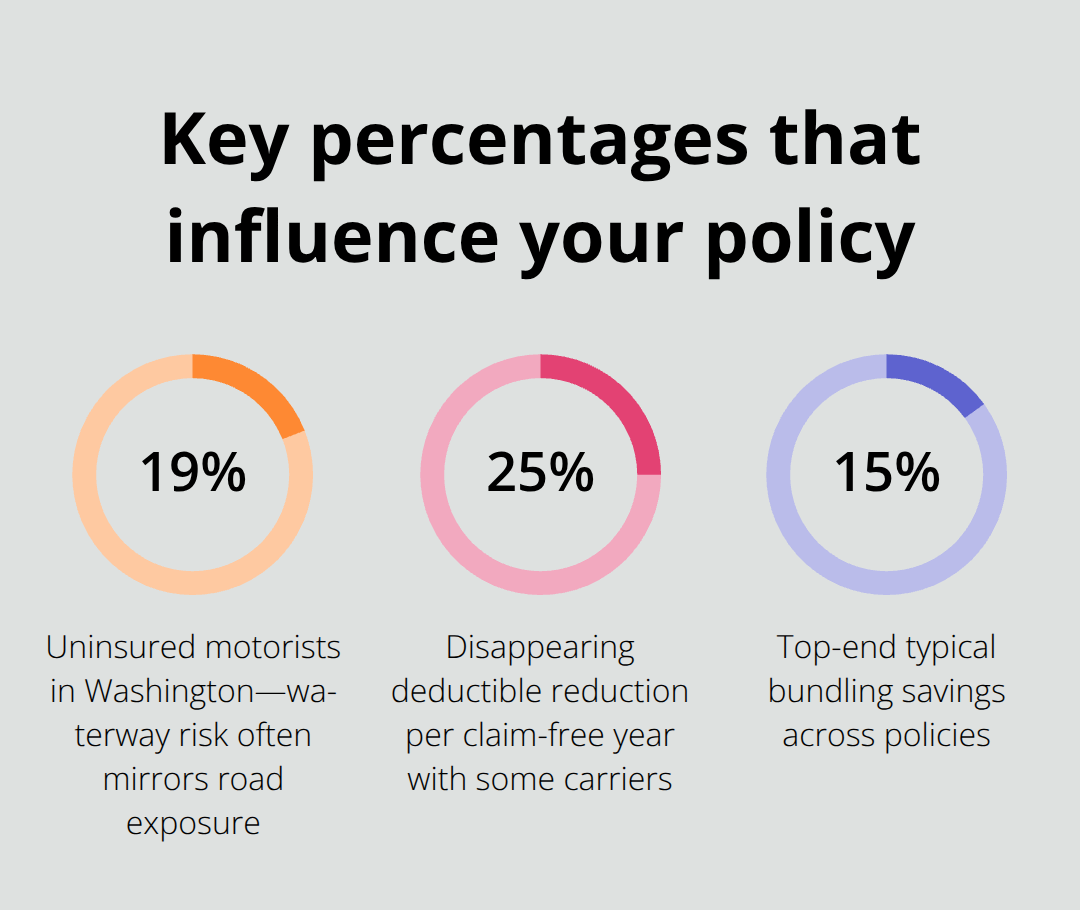
Standard homeowners policies exclude boats entirely or cap coverage around $1,000 to $1,500, leaving you personally liable for anything above that limit. Uninsured boater coverage protects you if another operator hits you and lacks sufficient insurance, a real risk since roughly 19 percent of motorists in Washington are uninsured and waterway exposure mirrors road risk. Medical payments coverage pays hospital bills for you and your passengers after an accident regardless of fault, covering water-skiers, tubers, and crew without requiring proof of negligence.
Specialized Add-Ons Complete Your Protection
Restoration coverage and specialized add-ons separate genuine classic boat policies from generic recreational coverage. Physical damage coverage pays to repair or replace your boat’s motor, permanently attached equipment, and trailer after a covered loss or theft, but standard policies often exclude or undervalue restoration parts that cost three times factory replacements. Personal effects coverage reimburses clothing, cell phones, fishing gear, and other items aboard that fall outside standard homeowners protection.
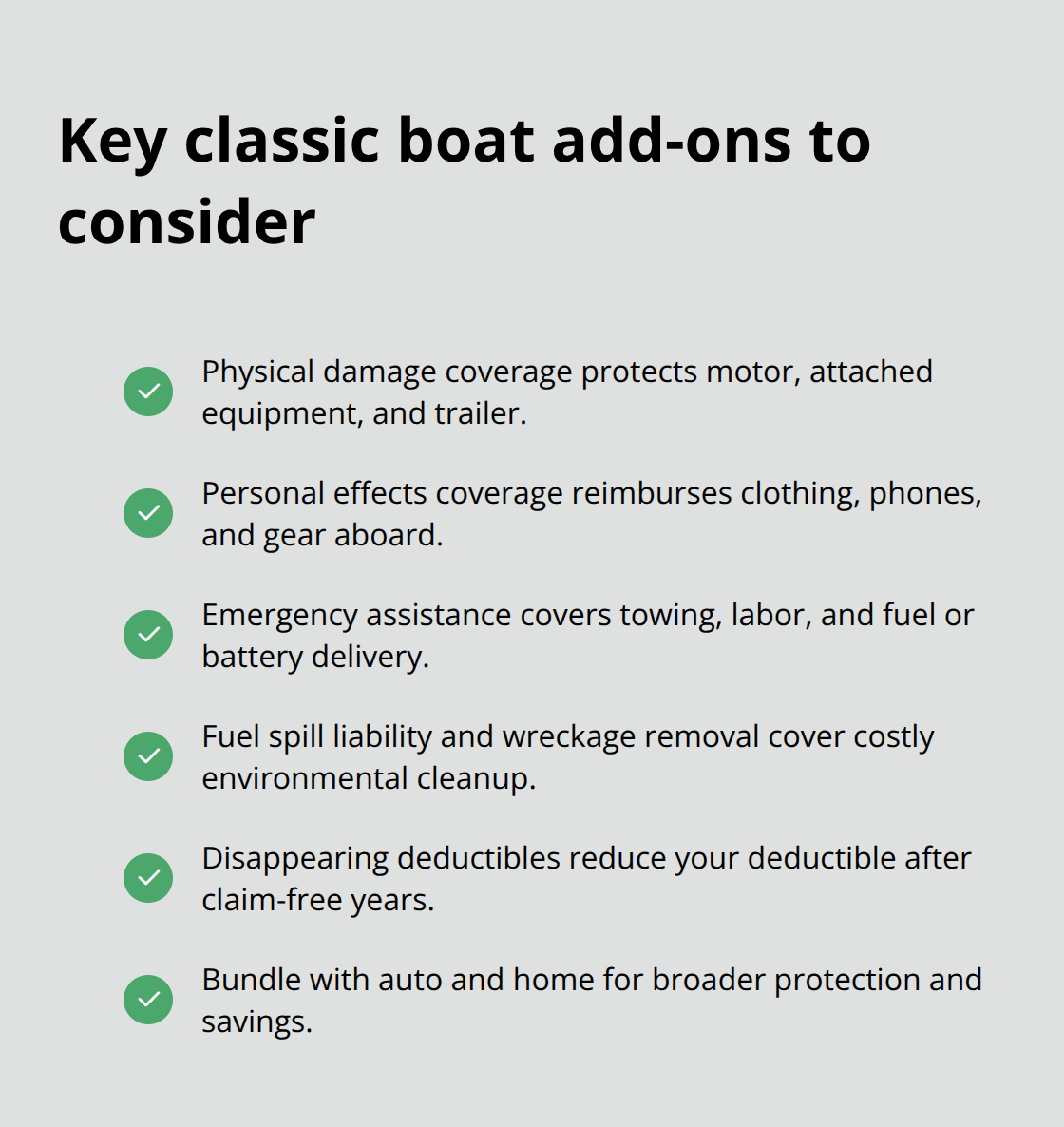
Emergency assistance coverage provides 24/7 towing, labor, and fuel or battery delivery if your boat breaks down on the water, a practical necessity for vintage vessels that may strand you far from shore. Fuel spill liability and wreckage removal coverage handles cleanup costs if your boat sinks or leaks fuel, protecting you from environmental liability that can exceed $50,000 easily. Some carriers offer disappearing deductibles that reduce your comprehensive or collision deductible by 25 percent after each claim-free year, potentially reaching zero after four years of clean operation.
An independent agent who represents multiple carriers can match your specific classic boat needs to the right combination of add-ons and deductible structures. This access to different carriers creates real value for your vintage vessel, especially when you factor in bundling opportunities with your auto and home policies.
Why Standard Policies Fail Classic Boats
Standard boat insurance is engineered for recreational vessels that lose value predictably and operate under consistent usage patterns. Your classic boat doesn’t fit either assumption. A generic policy uses actual cash value calculations that depreciate your vintage vessel, which means a $200,000 restored 1960s cruiser might receive only $100,000 to $140,000 in a total loss claim. This depreciation trap exists because standard policies assume boats are transportation tools that deteriorate with age, not collector assets that appreciate or maintain value through careful restoration.
Depreciation Destroys Your Payout
When you insure a classic boat under a recreational policy, the insurer applies depreciation schedules designed for fishing boats and modern cruisers, not vintage vessels with specialized restoration costs. Puget Sound’s saltwater environment amplifies this problem dramatically. Engine rebuilds run $5,000 to $15,000, fiberglass hull repairs cost $3,000 to $8,000, and custom restoration parts for vintage boats cost three times what factory replacements would. A standard policy’s actual cash value payout stops far short of these real repair expenses, leaving you to cover the gap personally.
Coverage Gaps Leave You Exposed
Standard policies often exclude or severely limit coverage for custom upgrades, original equipment replacements, and restoration work that defines your classic boat’s value and authenticity. Most recreational policies impose usage restrictions that assume year-round operation, which creates coverage gaps for boats that sit in climate-controlled storage nine months annually. Your vintage vessel faces different risks than boats in constant use-fire, theft, and vandalism threaten parked boats more than collision risk-yet standard policies treat seasonal storage the same as active boating.
Carriers Reject Older Vessels
Many standard carriers won’t even quote classic boats over $100,000 or decline to cover vessels older than 40 years without significant restrictions. This rejection forces you into inadequate coverage or leaves you uninsured entirely. Independent agents who work with multiple carriers can match your vintage vessel to policies built specifically for collector boats rather than forcing you into recreational coverage that doesn’t fit your needs. H&K Insurance Agency represents multiple top carriers, allowing us to find specialized classic boat coverage that standard recreational policies simply cannot provide.
Final Thoughts
Your classic boat represents decades of craftsmanship and personal investment that standard recreational insurance cannot protect adequately. Independent agents who work with multiple carriers can match your vintage vessel to policies built specifically for collector boats, while single-carrier templates force you into coverage gaps and depreciation formulas designed for fishing boats. Classic boat insurance in Kitsap requires an agent who understands that your vessel operates under completely different conditions than modern recreational boats, and H&K Insurance Agency specializes in customized coverage for boats and specialty vehicles across the Puget Sound region.
Contact H&K Insurance Agency with your vessel’s year, make, model, length, and current condition to receive a free quote that compares options across multiple carriers. Their local Bremerton team understands Kitsap’s waterways and moorage requirements, and they can structure agreed value coverage, liability limits, and add-ons that fit your specific boat and budget. Bundling your classic boat policy with auto and home coverage typically yields 10 to 15 percent savings across all policies, making the conversation even more valuable.
Stop accepting depreciation formulas designed for boats you don’t own. Your vintage vessel deserves protection built specifically for collector boats, and getting started takes only minutes with no cost or obligation.

