
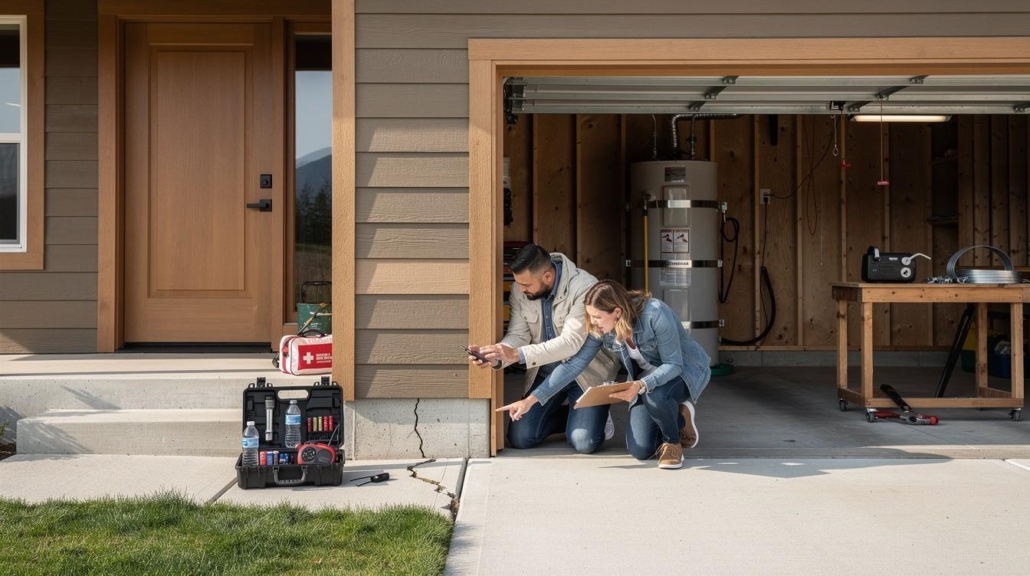
Understanding Earthquake Risk Kitsap Homeowners: Protecting Your Home And Family
Kitsap County sits in one of the most seismically active regions in the United States. The Puget Sound area experiences frequent earthquakes, and earthquake risk for Kitsap homeowners is real and measurable.
At H&K Insurance Agency, we help homeowners understand what they’re facing and how to protect what matters most. This guide covers everything from home reinforcement to insurance options that actually work.
Why Kitsap County Faces Serious Earthquake Danger
Kitsap County sits directly in the crosshairs of multiple seismic threats. The Puget Sound region hosts several active fault lines, and the county’s location makes it exceptionally vulnerable to both local earthquakes and massive subduction zone events. According to the Kitsap County Department of Emergency Management, a major earthquake could injure hundreds, kill people, leave many homeless, and cause millions of dollars in infrastructure and private property damage. This isn’t speculation-it’s based on geological mapping and historical patterns. The Pacific Northwest Seismic Network and USGS data confirm that earthquakes occur regularly in and around Kitsap County, proving that seismic activity here is constant and measurable.
Ground shaking creates immediate dangers
When an earthquake hits Kitsap County, ground shaking causes injuries from falling debris and disrupts essential services like water and sewer mains. The Kitsap County Department of Emergency Management reports that widespread effects include downed electric lines, damaged bridges, cracked roadbeds, and disrupted telecommunications and transit infrastructure. Secondary hazards follow quickly-fires, chemical spills, ruptured gas and oil pipelines, and potential dam issues compound the initial damage. Older buildings, especially non-reinforced masonry structures built before modern building codes, face far greater risk than newer construction. Homes built before 1985 lack the structural reinforcement required by today’s standards, making them substantially riskier in a major quake. Newer structures built to code perform better, but soil conditions still affect their performance during intense ground shaking.
Your home’s foundation determines its vulnerability
Homes built on raised foundations or crawl spaces face greater risk than those on concrete slabs. Homes built on hillsides with raised foundations experience the most severe failures due to structural framing differences. Garage door openings create particularly vulnerable areas-the walls on either side of a garage door must resist earthquake forces, especially if living space sits above the garage. If your pre-1985 home has living space above a garage, a licensed structural engineer should assess your home’s resilience. The Kitsap Department of Emergency Management offers public retrofit programs like Bolt It, Brace It, Do It to help homeowners address these vulnerabilities.
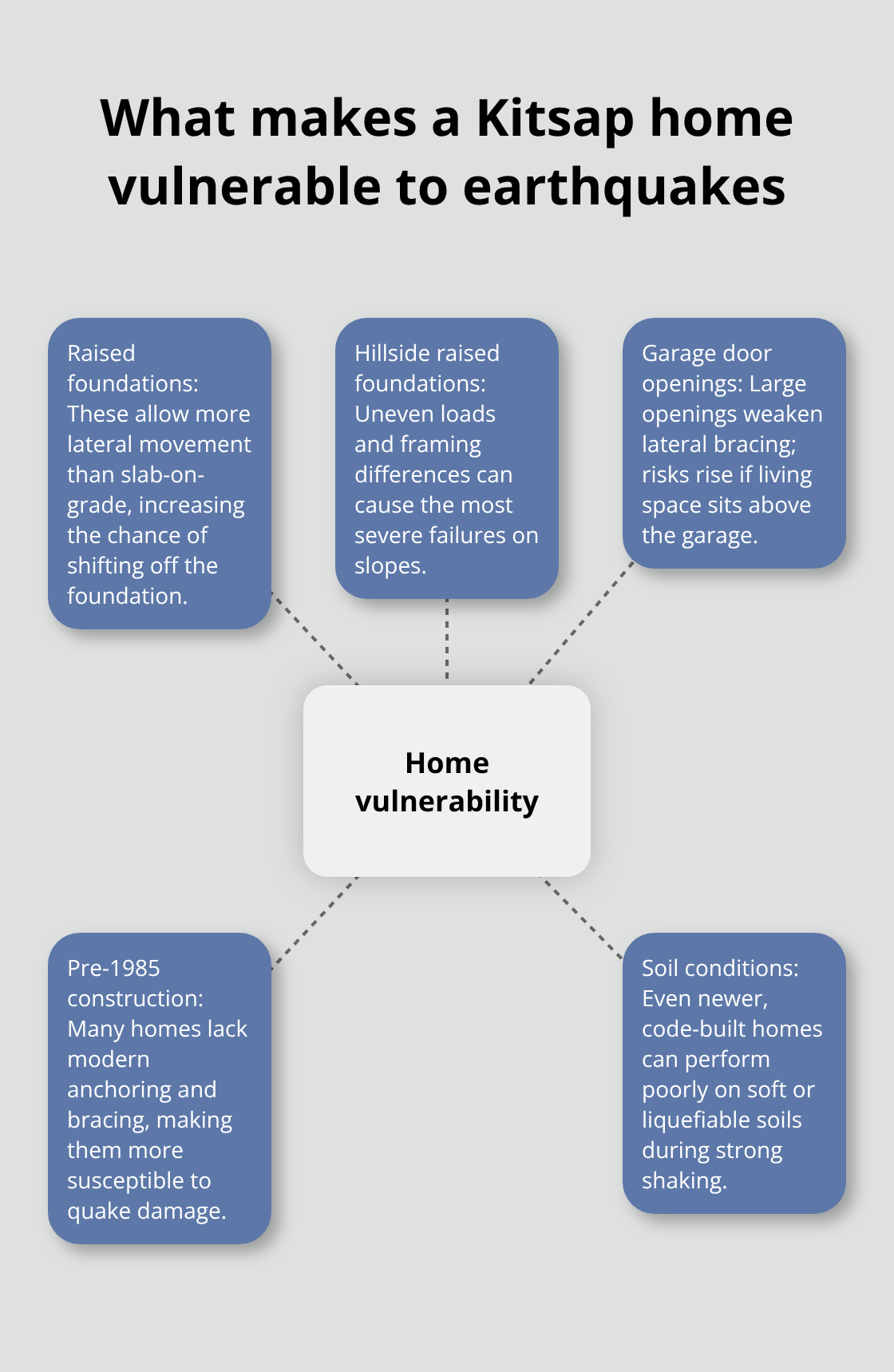
These programs teach foundation bolting, tie-downs, and bracing techniques that meaningfully improve earthquake resilience.
Retrofitting your home requires professional guidance
Foundation anchoring and structural reinforcement work best when a qualified engineer evaluates your specific home. The retrofit process involves securing your foundation to the sill plate, bracing cripple walls (if present), and reinforcing connections between structural elements. These improvements reduce the risk of catastrophic failure during ground shaking. Homeowners who act now on retrofits protect their families and preserve their property value. The next section covers how to secure the contents inside your home and prepare your family for what comes after the shaking stops.
How to Physically Protect Your Home from Earthquake Damage
Start with foundation reinforcement
Retrofitting your foundation stops the worst outcomes when the ground shakes. Contact a structural engineer first-they assess your specific foundation type, identify weak points, and recommend targeted reinforcement. Foundation anchoring typically costs between $3,000 and $7,000 per home, depending on the foundation size and condition. The Kitsap Department of Emergency Management offers the Bolt It, Brace It, Do It program, which teaches homeowners the fundamentals of foundation bolting, tie-downs, and cripple wall bracing. These techniques directly reduce the risk of your home sliding off its foundation or collapsing during ground shaking.
If your home was built before 1985 on a raised foundation or crawl space, retrofitting moves from optional to essential. Homes with living space above garages face particular risk because the garage opening weakens lateral bracing. A structural engineer determines whether reinforcing the walls beside the garage door is sufficient or whether more extensive work is needed. Post-1985 homes built to modern code standards perform better, but they still benefit from professional inspection to verify that connections between foundation, sill plate, and framing meet current standards. The Washington Department of Natural Resources provides the Homeowners Guide to Earthquakes with localized retrofit guidance specific to our region. Many Kitsap homeowners delay retrofits because they assume the cost is prohibitive, but the alternative is catastrophic loss.
Anchor furniture and appliances to prevent injuries
Heavy furniture, water heaters, refrigerators, and televisions must be anchored to wall studs or floor joists so they don’t tip or fall during ground shaking. Water heaters present a dual risk: they can fall and injure someone, and they can rupture gas lines or cause fires. The Washington State Department of Health recommends securing water heaters with metal straps or cables rated for earthquake forces. Bookcases, shelving units, and cabinets should be braced to walls at multiple points, not just at the top. Move heavy objects to lower shelves and secure cabinet doors so contents don’t scatter across the floor when ground shaking occurs.
Assemble an emergency supply kit your family can access
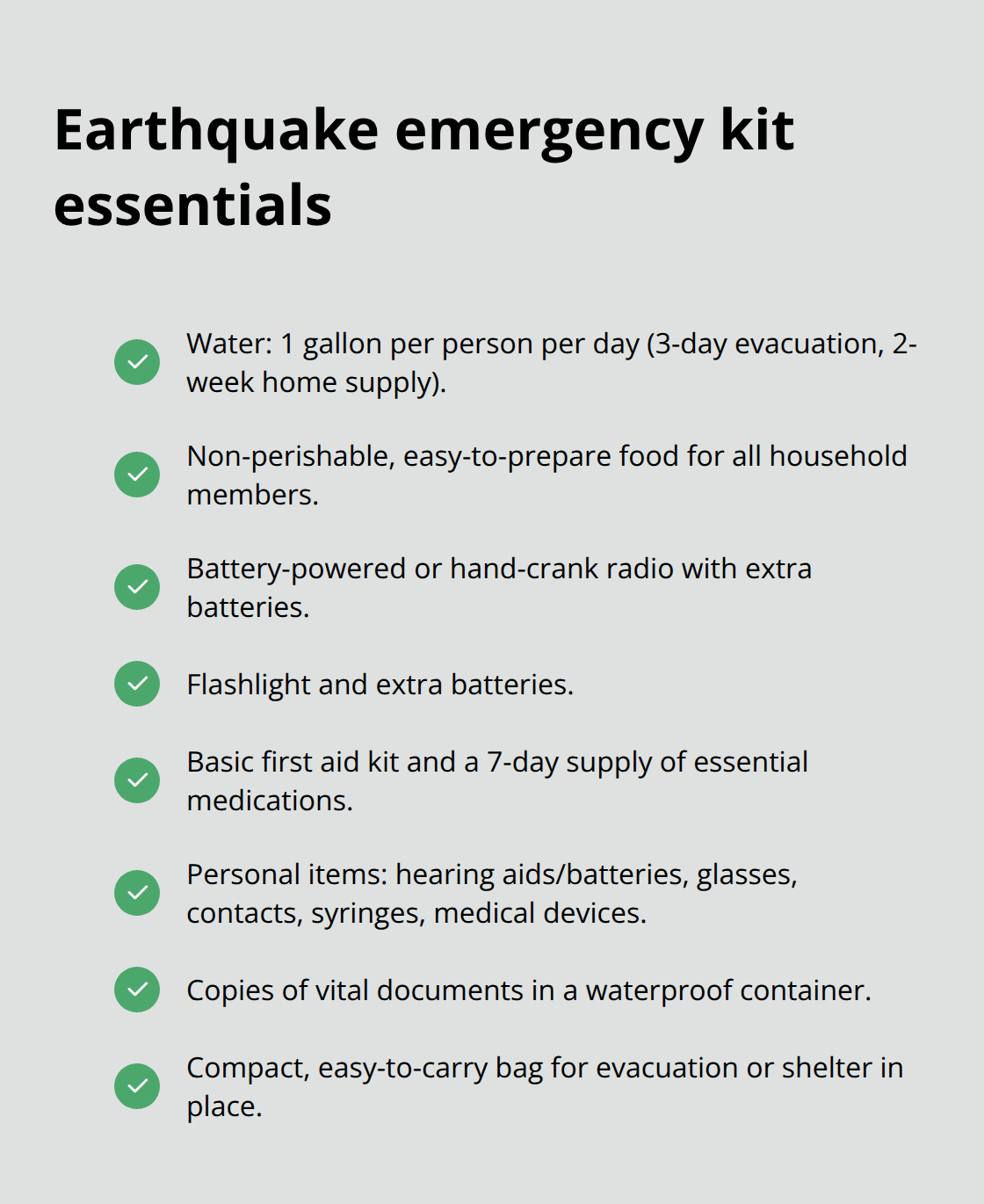
Your emergency supply kit must be accessible and portable. The Red Cross recommends keeping one gallon of water per person per day, with at least a three-day evacuation supply and a two-week home supply. Include non-perishable, easy-to-prepare food, a battery-powered or hand-crank radio with extra batteries, a flashlight, a basic first aid kit, and a seven-day supply of essential medications. Add items specific to your family members (hearing aids with extra batteries, glasses, contact lenses, syringes, or medical devices). Store copies of vital documents in a waterproof container: medication lists, proof of address, deeds or leases, passports, birth certificates, and insurance policies.
Prepare your family communication plan
Keep extra cash in an accessible place because ATMs and card readers won’t work after a major earthquake. Develop a family communication plan that designates an out-of-state contact person and establishes a meeting place if family members are separated. Two-way radios allow family communication when cell networks are overloaded or down. Your kit should fit in an easy-to-carry bag so you can grab it quickly during evacuation or shelter in place. Once your home is physically reinforced and your family has a communication strategy, you’re better prepared to weather an earthquake.
Why Standard Homeowners Insurance Won’t Cover Your Earthquake Losses
Your homeowners insurance policy does not cover earthquake damage. This is the hard truth that catches most Kitsap homeowners off guard. Standard homeowners insurance doesn’t cover earthquake damage, treating it as a separate peril that requires its own coverage. If your home suffers foundation damage, structural failure, or contents loss from an earthquake, your standard policy pays nothing. The Washington State Insurance Commissioner requires insurers to explicitly exclude earthquake coverage from homeowners policies, so this isn’t a loophole or an oversight-it’s standard across the entire industry. Kitsap County’s high seismic risk makes this exclusion particularly dangerous for homeowners who assume their existing coverage protects them. You should review your current policy right now to confirm the earthquake exclusion language. Most homeowners discover this gap only after an earthquake hits, which is far too late to act.
How Earthquake Insurance Works in Washington
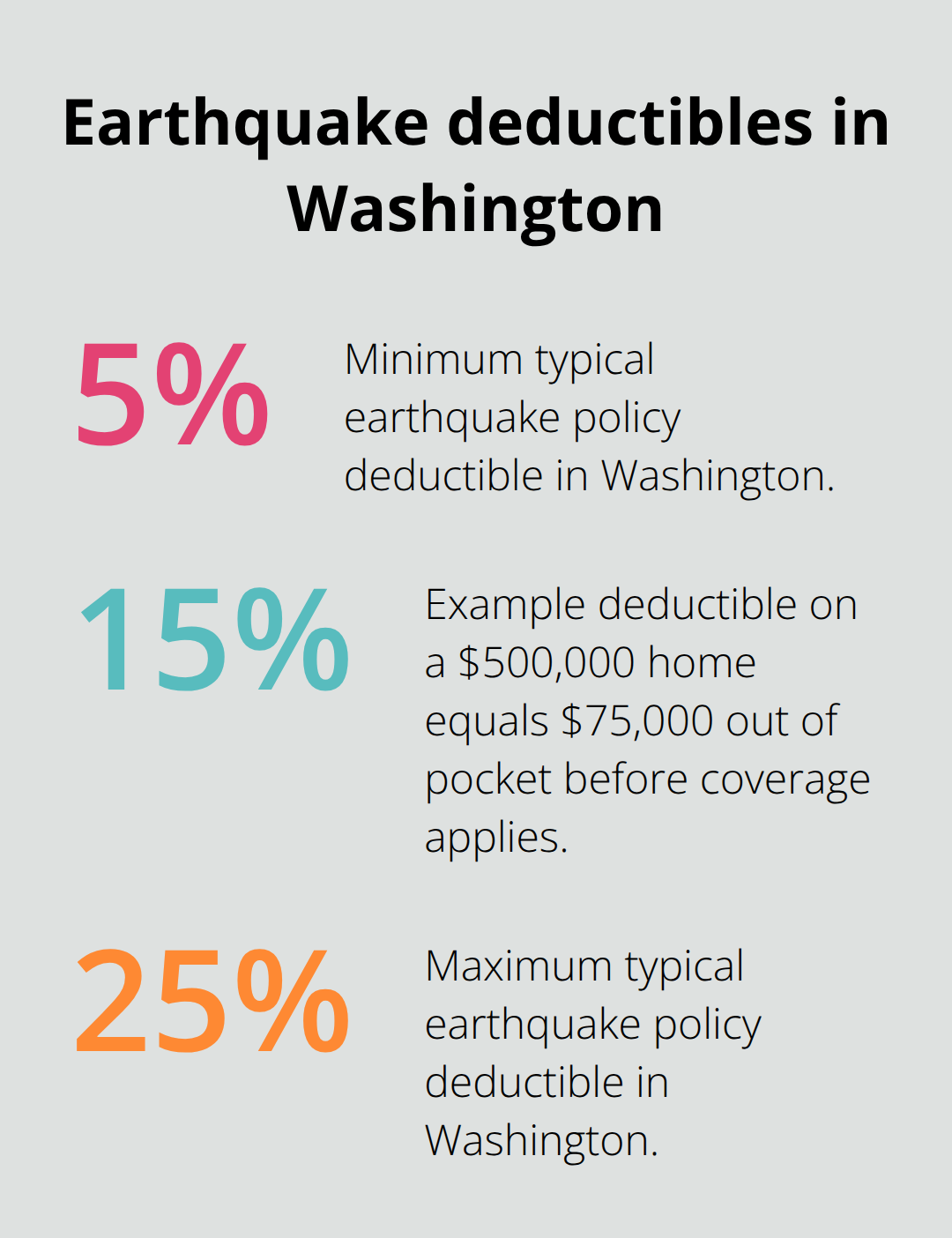
Earthquake insurance in Washington operates as a separate policy that sits alongside your homeowners coverage and protects against damage caused directly by ground shaking, landslides triggered by earthquakes, and some secondary effects like fires started from earthquake damage. The coverage typically includes structural damage to your home, damage to permanently installed fixtures, and loss of personal property inside your home. Deductibles for earthquake policies in Washington usually range from 5 percent to 25 percent of the replacement cost of your home, meaning a home worth $500,000 with a 15 percent deductible would require you to pay $75,000 out of pocket before insurance kicks in. This high deductible structure reflects the catastrophic risk that a major Cascadia subduction zone earthquake could trigger-insurers price earthquake coverage to account for the possibility of simultaneous claims across thousands of homes.
What Earthquake Coverage Costs
The premium for earthquake insurance in Washington typically costs $300 to $800 annually, depending on your home’s age, construction type, location within the county, and the deductible you select. Older homes built before 1985 without foundation reinforcement pay substantially higher premiums because they face greater damage risk. Homes that have completed retrofits like foundation bolting and cripple wall bracing often qualify for premium discounts, making retrofits a financially smart investment before purchasing earthquake coverage. Earthquake insurance costs vary significantly between insurers based on their risk models and underwriting standards. Some carriers offer coverage only in certain parts of Kitsap County or impose stricter requirements on older homes. Shopping multiple quotes takes time but saves money-differences of $200 to $400 annually for identical coverage from different insurers are common.
How Your Deductible Affects Your Premium
Your deductible choice matters enormously: selecting a 20 percent deductible instead of 10 percent typically reduces your annual premium by 25 to 35 percent, so if you have savings available for a major earthquake event, the higher deductible makes financial sense. Once you purchase earthquake insurance, coverage typically begins immediately with no waiting period, unlike some disaster coverages that include delays. You should document your home’s contents and structural condition now by taking photos and video, then store this documentation securely with copies of your insurance policies. After an earthquake, this documentation proves what you owned and the condition of your home before damage occurred, making claims settlements faster and more complete.
Final Thoughts
Earthquake risk for Kitsap homeowners is not theoretical-the seismic threats facing our region are real, measurable, and demand action now. You’ve learned that standard homeowners insurance won’t protect you, that your home’s foundation determines its vulnerability, and that retrofitting combined with earthquake insurance creates a complete defense strategy. A structural engineer should evaluate your home’s earthquake resilience, especially if it was built before 1985 or sits on a raised foundation.
Assemble your emergency supply kit with water, food, medications, important documents, and communication tools so your family can survive the first critical days after a major quake. The Kitsap Department of Emergency Management runs the Bolt It, Brace It, Do It retrofit program and hosts CERT trainings and community preparedness events that help you take these steps. The Washington Department of Natural Resources provides the Homeowners Guide to Earthquakes with region-specific guidance, and the Red Cross offers detailed checklists and preparedness resources.
At H&K Insurance Agency, we help Kitsap homeowners find earthquake coverage that fits their budget and protects their homes. We represent multiple carriers and compare rates so you get the right protection at competitive prices. Contact us at handkinsurance.com to discuss your earthquake insurance options and get personalized quotes for your situation.
