
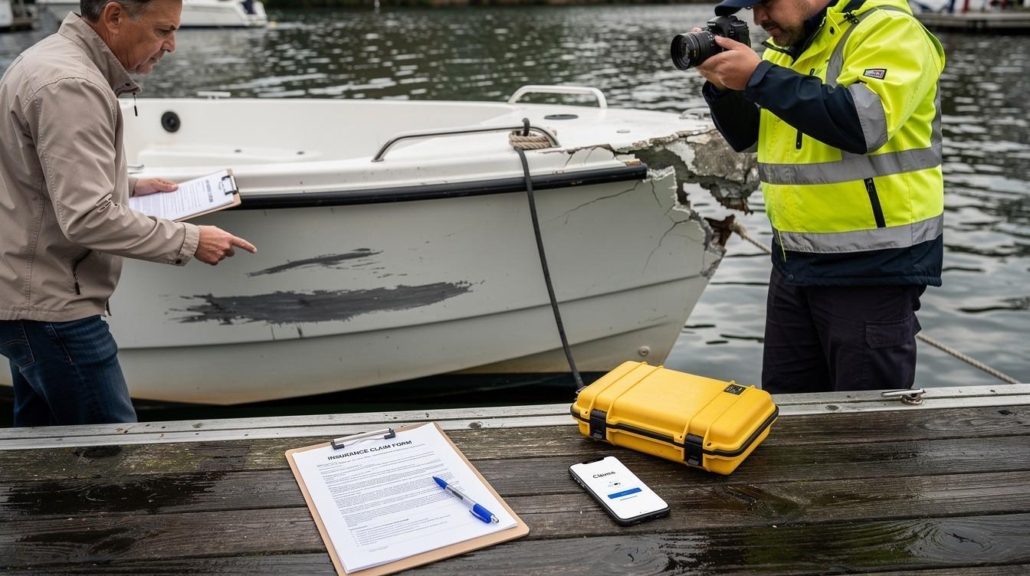
Boat Insurance Claims Process: Step-By-Step To Faster Settlements
A denied boat insurance claim can derail your season and drain your wallet. We at H&K Insurance Agency see boat owners lose thousands because they don’t understand the boat insurance claims process or miss critical deadlines.
The good news: most denials are preventable. Follow the right steps from day one, and you’ll get your settlement faster.
Why Boat Insurance Claims Get Denied
Coverage gaps sink claims faster than anything else. We at H&K Insurance Agency regularly see boat owners file claims only to discover their policy doesn’t cover the damage they’re facing.
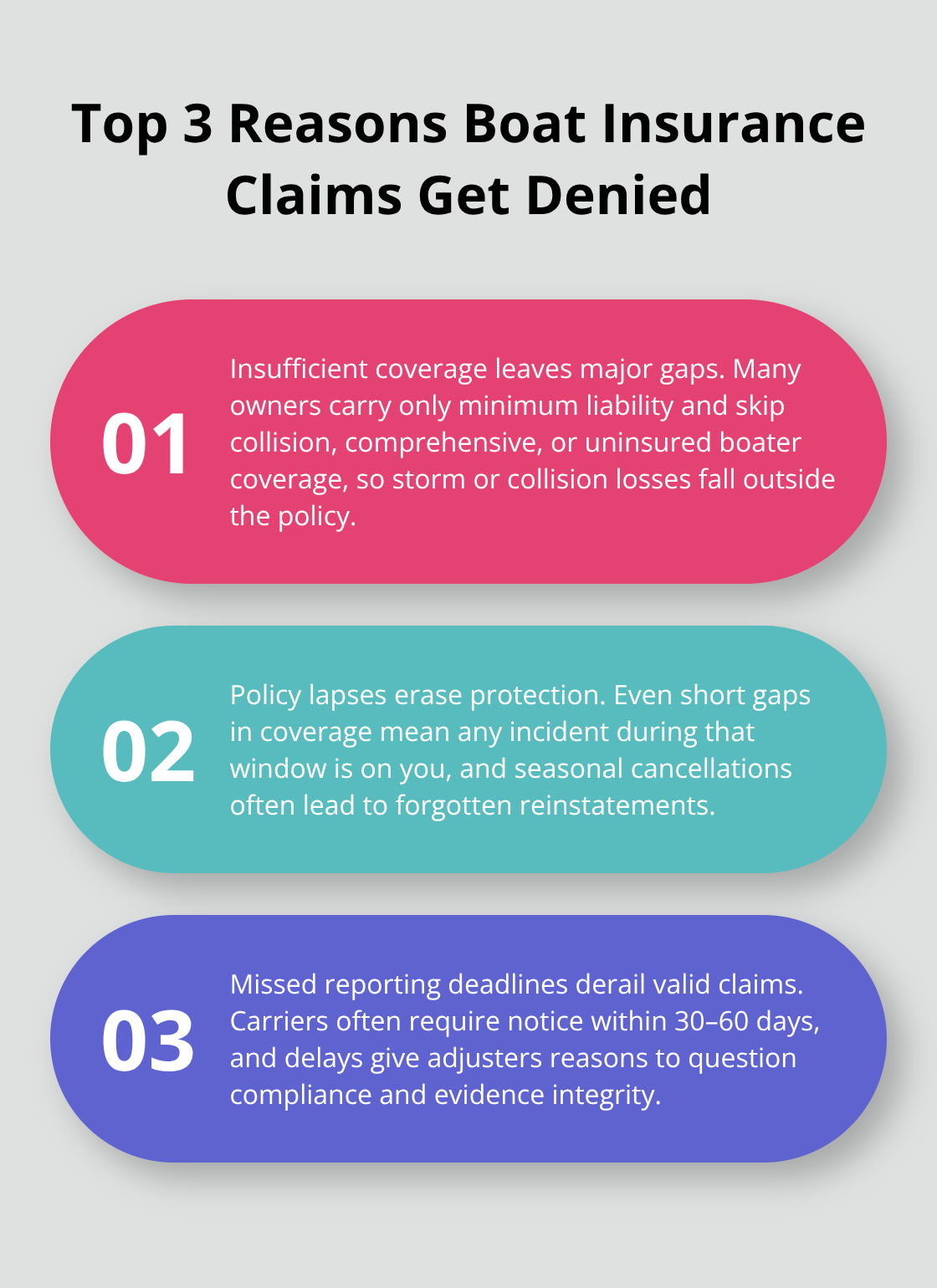
Insufficient coverage ranks among the top reasons insurers reject claims outright. Many boat owners purchase the minimum liability coverage required and skip optional protections like collision, comprehensive, or uninsured boater coverage. When a storm damages your boat or another vessel hits you, that bare-bones policy leaves you exposed.
Insufficient coverage exposes you to financial risk
Your policy’s coverage limits matter more than the premium you pay. If your boat is worth $75,000 but your policy only covers $25,000 in damage, you absorb the remaining $50,000 yourself. Review your current coverage limits against your boat’s actual value and the risks you face on the water. This simple step prevents the most common reason claims get denied: the damage exceeds what your policy actually covers.
Policy lapses create expensive gaps
Letting your coverage lapse, even for a few days, voids your protection completely. Some boat owners assume their auto insurance or homeowners policy covers boating accidents-it doesn’t. Others cancel coverage during winter months and forget to reinstate it when they launch in spring. The moment your policy lapses, any incident that occurs falls entirely on your shoulders. Check your renewal dates quarterly and set calendar reminders for 30 days before expiration.
Missed deadlines kill settlements
Most policies require notification within 30 to 60 days of an incident, though some carriers enforce tighter windows. Delays give insurers reasons to deny claims, arguing you didn’t follow policy terms or that evidence became compromised over time. Contact your agent immediately after an incident-not next week, not after you assess the damage yourself. This single action protects your claim from denial based on late reporting.
Maintenance records prove responsible ownership
Insurers expect boat owners to maintain their vessels properly. If your engine fails because you ignored recommended service schedules, or if corrosion damage occurred because you skipped routine inspections, the insurer will deny your claim. Keep detailed records of every service, repair, and maintenance check you perform (date, what was done, who did it, and the cost). Take photos of your boat regularly to establish its condition before damage occurs.
When you file a claim, these records prove you maintained your vessel responsibly and that the damage resulted from a covered peril, not negligence. Boats sitting unused for months without winterization or storage maintenance are particularly vulnerable to denial. Your insurer views poor maintenance as a sign you won’t follow other policy requirements either.
Now that you understand why claims get denied, the next step is learning exactly how to file a claim that insurers approve the first time.
Filing a Boat Insurance Claim That Gets Approved
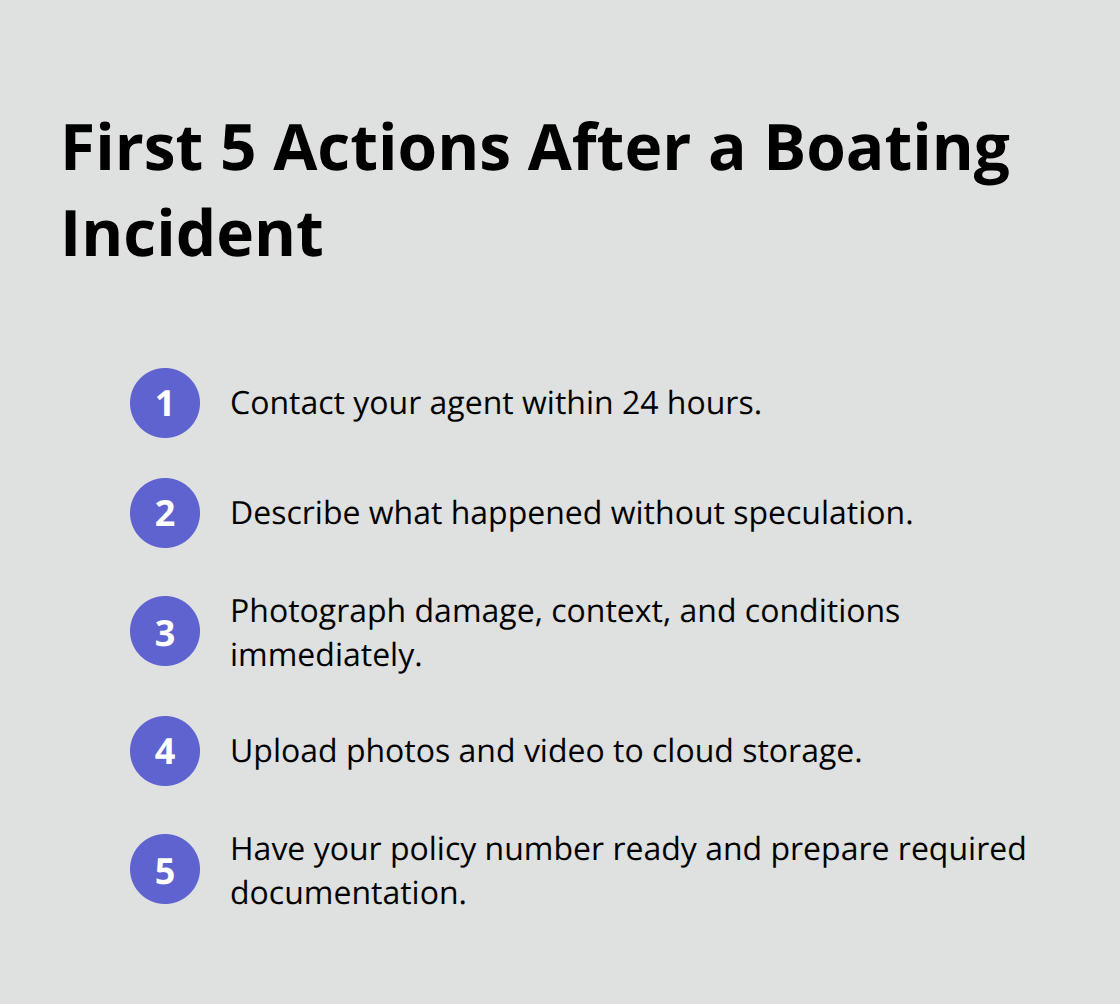
The moment damage occurs, speed matters more than perfection. Most boat owners wait days or weeks to contact their agent, thinking they need time to assess the situation or get repair estimates. This delay is a mistake. Contact your agent within 24 hours of any incident, even if you’re unsure about the full extent of damage. Your policy likely requires notification within 30 to 60 days, but waiting that long gives the insurer ammunition to question your credibility or claim the damage worsened due to negligence. When you call immediately, you demonstrate good faith and prevent the insurer from suspecting you delayed reporting to fabricate or exaggerate claims. Have your policy number ready and describe what happened clearly without speculation. Your agent will walk you through next steps and explain what documentation the insurer needs. This single phone call sets the tone for a smooth approval process.
Photograph everything before cleanup begins
Your phone camera is your strongest claim tool. Take wide shots showing the overall damage, close-ups of specific damage areas, and photos of the surrounding context so the adjuster understands what happened. Capture images from multiple angles in good lighting. If weather or water conditions caused damage, photograph those conditions too. Don’t wait for sunlight or perfect conditions-shoot immediately while evidence is fresh. Many boat owners make the critical error of starting repairs or cleanup before documenting damage, which destroys the visual evidence adjusters need to approve claims quickly. Insurance adjusters handle hundreds of claims yearly and rely heavily on photographs to validate damage and approve settlements without site visits. Video footage works even better than still photos because it shows spatial relationships and damage extent in motion. Walk around your boat narrating what you see: the torn canvas, the water intrusion, the cracked hull. Upload all media to cloud storage immediately so you have backups if your phone gets lost or damaged.
Compile documentation that proves the incident occurred
Gather every piece of evidence connected to the incident. If another boat hit you, obtain the other owner’s contact information, insurance details, and photos from them. If weather caused damage, screenshot weather reports from that date showing wind speeds, rainfall, or storm warnings. For mechanical failures, collect service records showing maintenance history. If theft occurred, file a police report and obtain the report number. Medical reports matter if anyone was injured. Credit card receipts, invoices, and bank statements documenting the boat’s condition before damage strengthen your claim. Adjusters cross-reference this documentation against your photos to verify your account matches the evidence. The more documentation you provide upfront, the fewer follow-up questions the adjuster needs to ask, which accelerates approval timelines significantly.
Work with an agent who responds quickly
Your agent acts as your advocate with the insurance company. An agent who returns calls within hours (not days) and proactively follows up with the adjuster can shave weeks off your settlement timeline. Local agents in the Puget Sound region understand the specific risks boat owners face here-from saltwater corrosion to winter storms-and know how to present claims in ways adjusters approve faster. We at H&K Insurance Agency represent multiple carriers, which means we can escalate claims through the channels most likely to result in quick approval. When you file a claim with an independent agent rather than calling an 800 number, you get a real person who knows your boat and your situation. That personal relationship matters when complications arise or when the adjuster needs clarification on details. Your agent can also advise you on whether to accept the initial settlement offer or push back if the amount seems low.
Now that you’ve filed your claim correctly and provided complete documentation, the next phase determines how fast you actually receive your settlement check.
How to Speed Up Your Boat Insurance Claim Settlement
The adjuster assigned to your claim processes dozens of cases simultaneously, and incomplete submissions sit at the bottom of the pile. We at H&K Insurance Agency see settlement timelines stretch from weeks into months when boat owners submit partial information and force adjusters to request missing documentation repeatedly. The fastest settlements happen when you provide everything the adjuster needs in your initial submission.
Complete documentation from the start
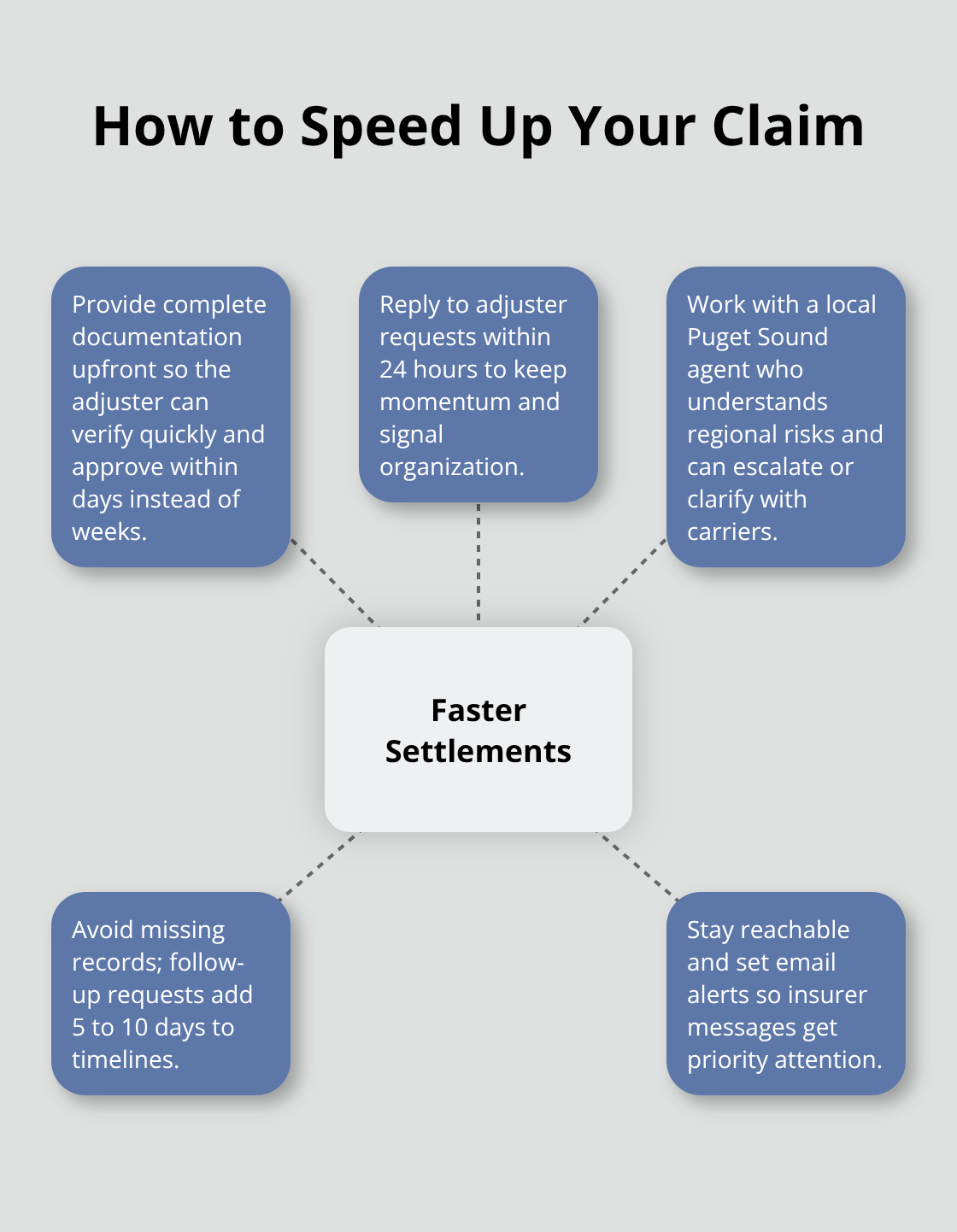
Gather receipts for recent maintenance, invoices from previous repairs, photos of damage from multiple angles, weather reports from the incident date, police reports if applicable, and any communications with witnesses. The adjuster’s job is to verify your claim matches the evidence, not to hunt for information you should have provided upfront. When your submission is complete and accurate, the adjuster can approve your claim within days rather than weeks.
Missing documents trigger follow-up requests that delay everything. If you provide a damaged engine photo but no maintenance records, the adjuster must request those records before determining whether the failure was covered or resulted from negligence. That request adds 5 to 10 days to your timeline alone.
Respond to Adjuster Requests Within 24 Hours
Speed wins settlements. Most boat owners wait several days to gather documents or take additional photos, which extends the entire process unnecessarily. Set your phone to alert you when emails arrive from your insurance company and treat those messages as urgent.
The adjuster works on your claim only when they hear from you, so fast responses keep momentum moving forward. A 24-hour turnaround on document requests signals that you take the claim seriously and have your information organized. Adjusters prioritize responsive claimants because they know the file will move to completion without extended back-and-forth delays.
Work With a Local Agent Who Knows the Region
Your local agent in the Puget Sound region accelerates settlements in ways national call centers cannot. When complications arise or the adjuster needs clarification on saltwater corrosion patterns or seasonal weather damage that only locals understand, a regional agent can speak directly to the adjuster and explain context that validates your claim.
An independent agent who represents multiple carriers can also advise whether your claim should be handled through a different carrier’s process if you have layered coverage, which sometimes results in faster payouts. These agents catch coverage issues before claims are denied, alerting you if your current policy has gaps that would have resulted in rejection. This proactive approach prevents denials entirely rather than fighting them after the fact.
Final Thoughts
The boat insurance claims process rewards speed and preparation. You now understand why claims get denied, how to file correctly from the start, and what accelerates settlements once you submit your claim. The three actions that matter most are documenting damage immediately with photos and video, providing complete information upfront, and responding to your adjuster within 24 hours.
Working with a local agent changes everything. National call centers treat your claim as a number in a queue, but a regional agent in the Puget Sound area understands the specific risks you face on the water and knows how to present claims in ways adjusters approve faster. An independent agent representing multiple carriers can also identify coverage gaps before damage occurs, preventing denials entirely rather than fighting them afterward.
We at H&K Insurance Agency serve boat owners throughout the Puget Sound region with personalized coverage that protects you when incidents happen. Visit H&K Insurance Agency to speak with an agent who knows your region and your boat.
