
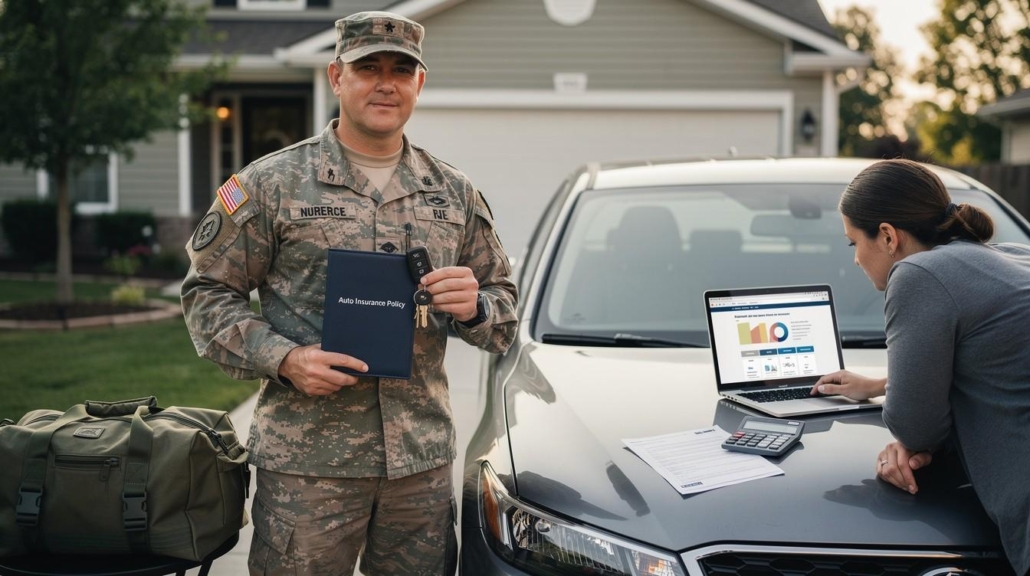
Auto Insurance for Military: Discounts, Deployments, and Peace of Mind
Military service comes with unique insurance needs that standard policies often don’t address. Auto insurance for military personnel requires special attention to deployments, relocations, and coverage gaps that civilian drivers never face.
We at H&K Insurance Agency work with military families to find discounts and protections tailored to your service. This guide covers the savings available to you, how deployments affect your coverage, and what your family needs to know.
Military Auto Insurance Discounts Available
Active Duty and Veteran Discounts
Active duty personnel and veterans qualify for discounts that go far beyond the standard safe driver reductions civilian insurers advertise. Military service discounts typically range from 5% to 15% off your base premium, but the real savings multiply when you stack multiple discounts together. USAA, widely considered the benchmark for military auto insurance, offers uniformed service discounts automatically, though you still need to ask about deployment and vehicle storage discounts to capture the full picture. Other major carriers like GEICO and Nationwide provide military discounts as well, but eligibility and discount amounts vary significantly by state and insurer.
Most military families accept the first quoted rate without asking whether deployment discounts apply or if your vehicle qualifies for storage coverage reduction during PCS moves. When you’re stationed overseas or deploying for extended periods, your vehicle may sit unused for months, yet many policies charge full premiums regardless. Asking your insurer specifically about deployment discounts can save hundreds of dollars annually-this is not automatic at most carriers, and you must request it explicitly.
Bundling Creates Compounding Savings
Combining auto insurance with homeowners, renters, or condo coverage generates additional discounts that stack on top of military rates. State Farm caps bundling discounts at 30% in New York, though other states allow higher combined reductions when you purchase multiple policy lines. The calculation matters: a military member with a 10% uniformed service discount plus a 15% bundling discount doesn’t get 25%-insurers typically apply bundling to your base rate, then add military discounts, creating different final amounts depending on the carrier’s formula.
Comparing bundled versus standalone policies on a spreadsheet forces you to see the actual dollar difference rather than relying on percentages that sound impressive but may not deliver. If you relocate frequently due to PCS orders, maintaining consistent coverage across multiple policy types through one insurer simplifies updates and reduces the chance of coverage lapses during transitions.
Safe Driver and Low Mileage Discounts Apply Differently During Service
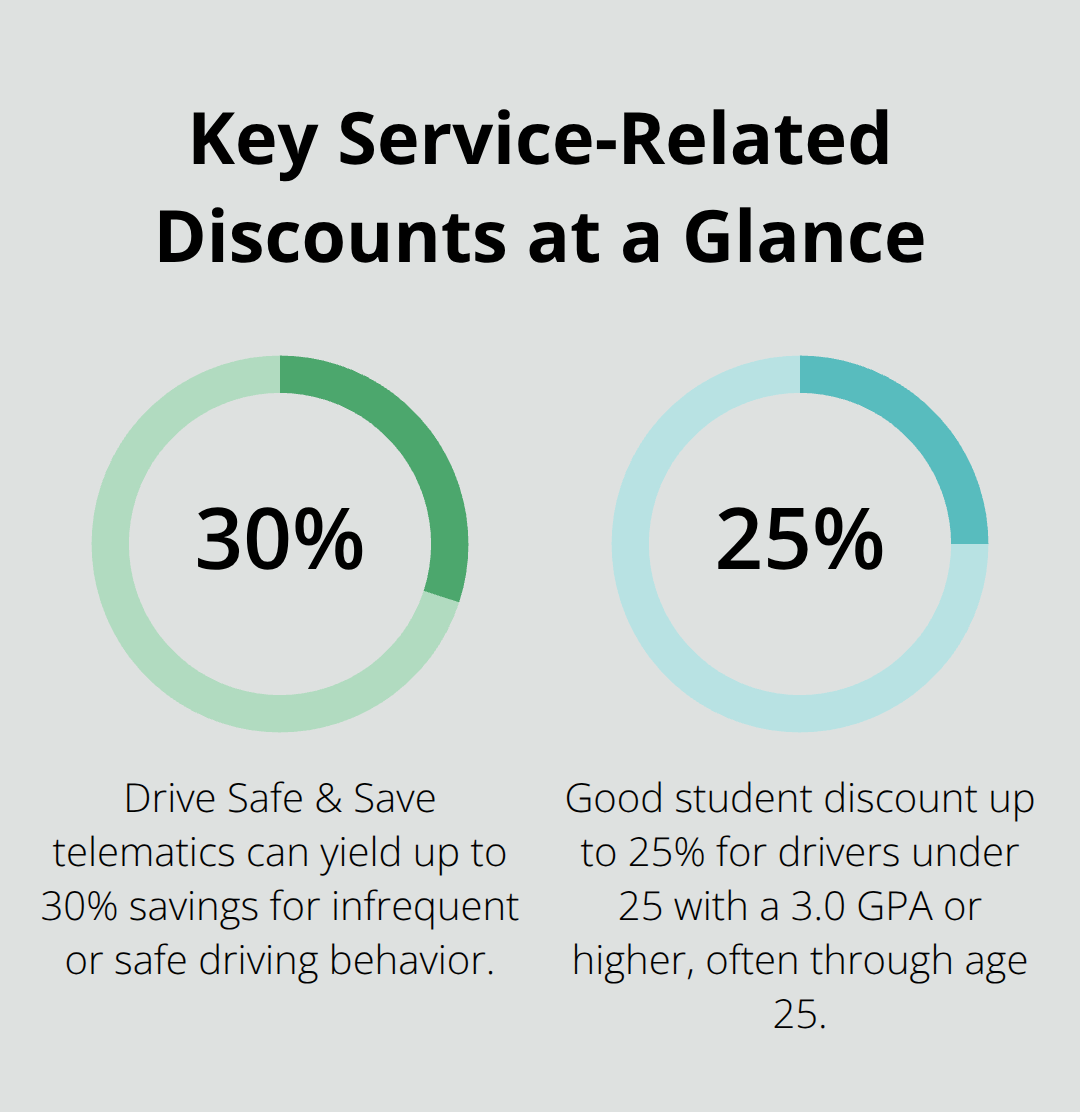
Military members often qualify for low mileage discounts when assigned to bases where they use public transportation or rely on shuttle services, yet many never report this change to their insurer. State Farm’s Drive Safe & Save program monitors actual driving behavior through a mobile app and can yield savings up to 30% based on how you drive-particularly valuable for service members who operate vehicles infrequently.
Taking an approved defensive driving course qualifies you for additional discounts in most states, and military bases often offer these courses free or at minimal cost through MWR or safety programs. The good student discount, available through many carriers for drivers under 25 with a 3.0 GPA or higher, can reach 25% and often extends until age 25, making it worthwhile to maintain academic records.
When your driving patterns change due to deployment or relocation, contact your insurer to adjust mileage estimates downward-failing to do this leaves money on the table every month.
How to Compare Discounts Across Carriers
Stacking discounts requires you to request them explicitly and compare how different insurers calculate their final rates. Ask targeted questions about fee waivers, how coverage adjusts during deployments, and what documentation is needed to verify military service. Since H&K Insurance Agency represents multiple top local and national carriers, we compare rates and customize packages so you see which combination of discounts and coverage actually saves you the most money.
The right approach means documenting key details like liability limits, deductibles, overseas provisions, and deployment-related adjustments across quotes. This groundwork prepares you for the next critical decision: understanding how your coverage actually functions when you deploy or relocate.
How Deployments Affect Your Auto Insurance Coverage
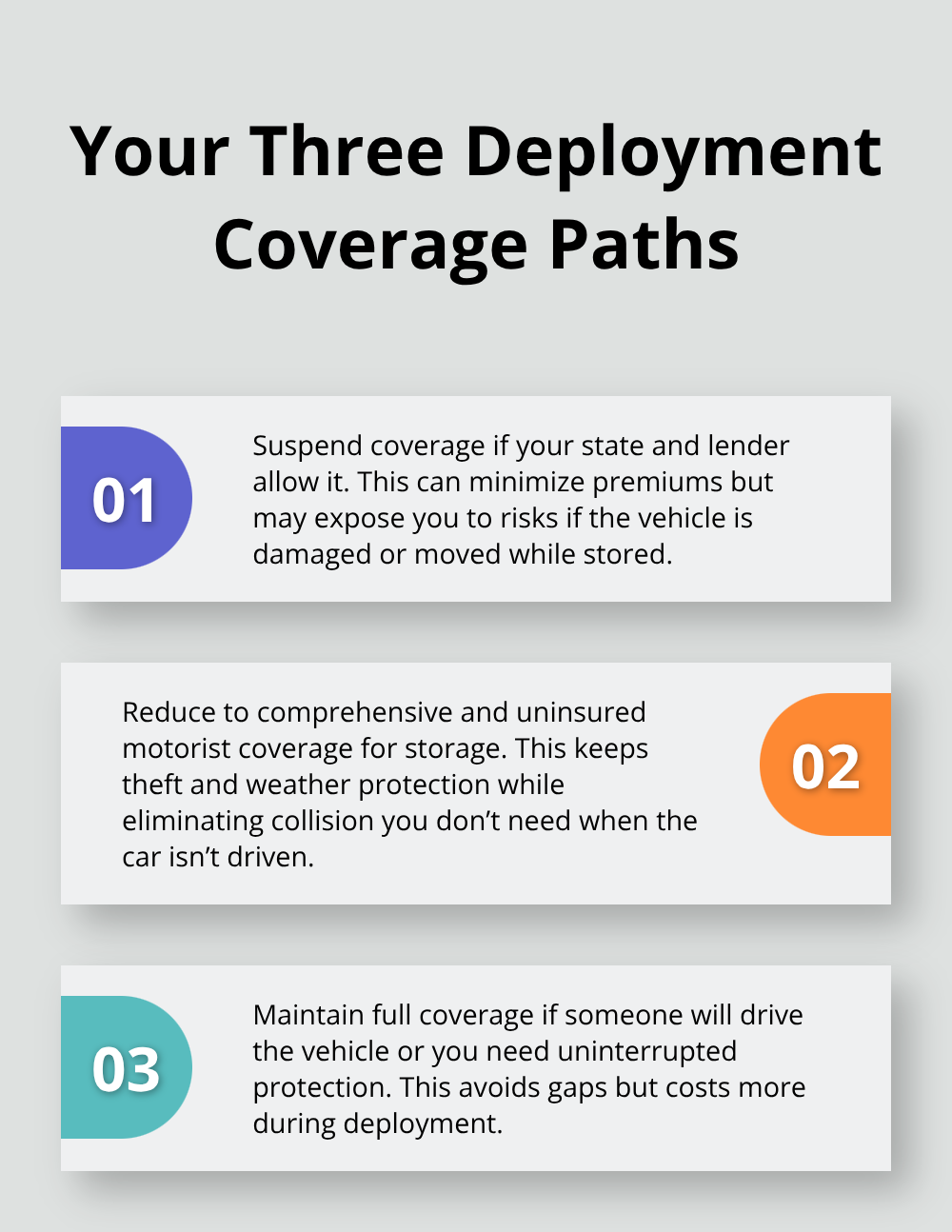
Deployment creates a coverage gap that most military families mishandle. Your standard auto insurance policy continues charging full premiums while your vehicle sits unused, whether parked at home, stored on base, or shipped overseas. The moment orders arrive, you face three separate decisions: whether to suspend coverage entirely, reduce it for storage, or maintain full protection. Most service members choose wrong because their insurer never explains the options clearly.
Understanding Deployment Discount Options
GEICO and Nationwide offer deployment discounts explicitly, but only if you contact them and provide documentation of your orders-the discount never applies automatically. If you are on active duty, retired from the Military, or a member of the National Guard or Reserves, you may be eligible for a military auto insurance deployment discounts of up to 15 percent. If you deploy for six months, you could waste $300 to $600 by keeping standard coverage active on a vehicle you won’t drive.
Conversely, if you drop coverage entirely and something happens to your stored vehicle-theft, weather damage, or liability if someone damages it while parked-you remain completely unprotected. When you deploy, your vehicle sits unused, the strategy involves reducing coverage to comprehensive and uninsured motorist protection only during deployment, which covers theft and weather but eliminates collision coverage you don’t need while the vehicle sits idle.
Storage Coverage and Vehicle Location
Your insurer must know your vehicle’s exact location, as this directly affects your rates. If you store it stateside, rates drop significantly. If you ship it overseas or store it at an international location, some carriers won’t cover it at all without special arrangements. You must contact your carrier with specific storage details before your deployment begins to lock in the correct rate and confirm coverage applies to your vehicle’s location.
Managing Temporary Relocations for PCS Orders
Temporary relocations for PCS orders demand immediate policy adjustments because your liability limits, deductibles, and available discounts change when you move to a new state or country. The moment your orders show a new duty station, contact your insurer with your move date and confirm whether your current coverage remains valid in the new location.
Some states cap liability limits lower than others-California, for instance, has different minimum requirements than Washington-so a policy rated for one state may not meet legal requirements in another. If you relocate overseas, you must verify whether your current carrier covers driving in that country; most US policies don’t extend to overseas driving, and you’ll need a separate international auto policy or local coverage. Direct General and Progressive handle overseas coverage better than some competitors, but you must ask specifically.
Reinstating Coverage After Return from Deployment
After you return from deployment, reactivate coverage quickly without facing penalties by contacting your insurer immediately with proof of return and requesting full coverage restoration, providing your new stateside address if you’ve relocated. Some carriers charge a reinstatement fee or require updated documentation of your vehicle’s condition after storage.
The gap between deployment end and coverage restoration is where claims get denied-if you drive your vehicle before calling to restore full collision and comprehensive coverage, an accident leaves you exposed to massive out-of-pocket costs. Keep your deployment orders, storage location receipts, and return documentation organized in a folder so you can provide this instantly when coverage changes occur.
Your family’s protection during your service depends on these coverage adjustments, but the real complexity emerges when multiple drivers and vehicles enter the picture.
Special Considerations for Military Families
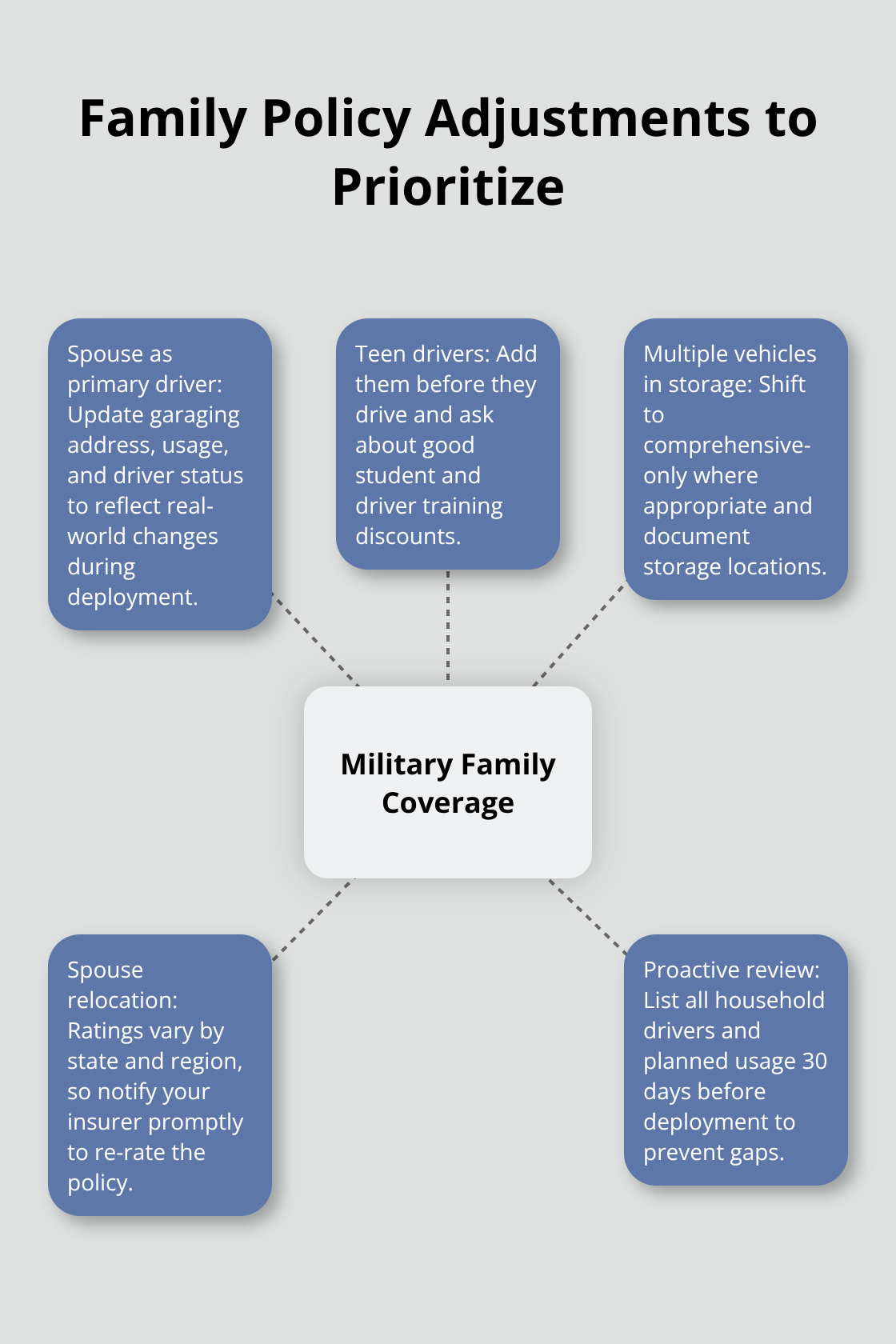
Military families face coverage decisions that single-vehicle civilian households never encounter. When you deploy, your spouse becomes the primary driver, dependent children reach driving age, or multiple vehicles sit unused simultaneously. Each situation demands specific policy adjustments that most standard insurers handle poorly because they lack military experience. Your spouse’s driving record, age, and location all affect premiums and available discounts, yet many families discover coverage gaps only after an accident occurs.
Coverage for Spouse and Dependent Drivers
Dependent drivers under 25 qualify for good student discounts up to 25% through carriers like State Farm if they maintain a 3.0 GPA or higher, but you must request this explicitly and provide documentation. Your spouse’s relocation to stay with family during your deployment while you’re stationed overseas triggers a policy recalculation because insurance rates vary dramatically by state and region. Some spouses reduce their driving to minimal use during deployment, which qualifies them for low mileage discounts that could save annually, yet they never inform their insurer about the change.
You should review your policy with all household drivers listed at least 30 days before deployment begins, ensuring each driver receives applicable discounts and coverage reflects actual usage patterns. Your insurer must know if a teenage dependent will drive during your absence, as this increases premiums significantly but also opens access to teen-specific discounts and driver training reductions available through most carriers.
Vehicle Storage During Deployment
A vehicle sitting unused for six to twelve months still faces theft, weather damage, vandalism, and liability exposure, yet many service members maintain full collision coverage on a parked vehicle while paying zero dollars in driving costs. The correct approach involves reducing coverage to comprehensive and uninsured motorist protection during storage, which eliminates expensive collision coverage you don’t need while the vehicle sits idle and cuts your premium by 30% to 50% depending on your carrier.
Your insurer must know the exact storage location because rates differ between home garage storage, base storage, and overseas shipping, and some carriers refuse to cover vehicles stored in certain locations without prior approval. When you return from deployment, you must contact your insurer within 48 hours of arrival and request full coverage restoration, providing proof of return and your vehicle’s condition.
Reinstating Coverage After Deployment
The gap between deployment end and coverage restoration creates serious exposure because driving an uninsured vehicle exposes you to liability claims, collision damage, and legal penalties. Base legal resources and military support organizations like the VFW and DAV can answer specific questions about coverage requirements in your duty location, but your insurer remains your primary contact for policy adjustments.
Documentation matters enormously during this process-keep deployment orders, storage location receipts, and return documentation organized so you can provide them instantly when coverage changes occur, preventing delays that could leave your family unprotected.
Final Thoughts
Military service demands auto insurance that adapts to deployments, relocations, and family changes that civilian policies ignore. The discounts available to you-uniformed service reductions, deployment savings, bundling benefits, and safe driver credits-can cut your premiums by 40% or more when stacked correctly, but only if you ask for them explicitly and compare rates across carriers that understand military needs. Your coverage must shift when you deploy, adjust when your family relocates, and restore quickly when you return, yet failing to contact your insurer about storage discounts, overseas provisions, or spouse relocation leaves hundreds of dollars on the table annually and creates dangerous coverage gaps.
Auto insurance for military personnel requires more attention than standard policies because your circumstances change faster than civilian drivers experience. Your spouse’s driving record, dependent children reaching driving age, multiple vehicles in storage, and state-by-state liability variations all demand specific policy adjustments that most insurers handle poorly without military experience. The vehicle sitting unused for six months still needs comprehensive protection against theft and weather, but collision coverage becomes unnecessary expense you can eliminate temporarily.
Contact H&K Insurance Agency today to review your current coverage and capture the military discounts and deployment protections you qualify for right now. Our team compares rates across multiple top local and national carriers to identify which combination of coverage and discounts actually saves you the most money while protecting your family completely. Your family’s financial security during service depends on getting this right.

