

Rental Property Insurance Basics for Landlords
Owning rental property comes with real financial risk. Without proper coverage, a single tenant dispute or weather event can wipe out your profits for the year.
At H&K Insurance Agency, we’ve seen landlords lose thousands because they didn’t understand their rental property insurance basics. The good news is that the right policy protects your investment and your income.
What Your Landlord Policy Actually Covers
Your landlord insurance policy protects three critical areas that directly impact your rental income and liability exposure. First, building coverage pays for damage to the structure, roof, exterior walls, and permanent fixtures like built-in appliances or flooring when a covered peril strikes. This differs from homeowners insurance because it ignores the tenant’s personal belongings entirely. Second, liability coverage protects you when a tenant or visitor gets injured on your property or their belongings suffer damage because of your negligence.
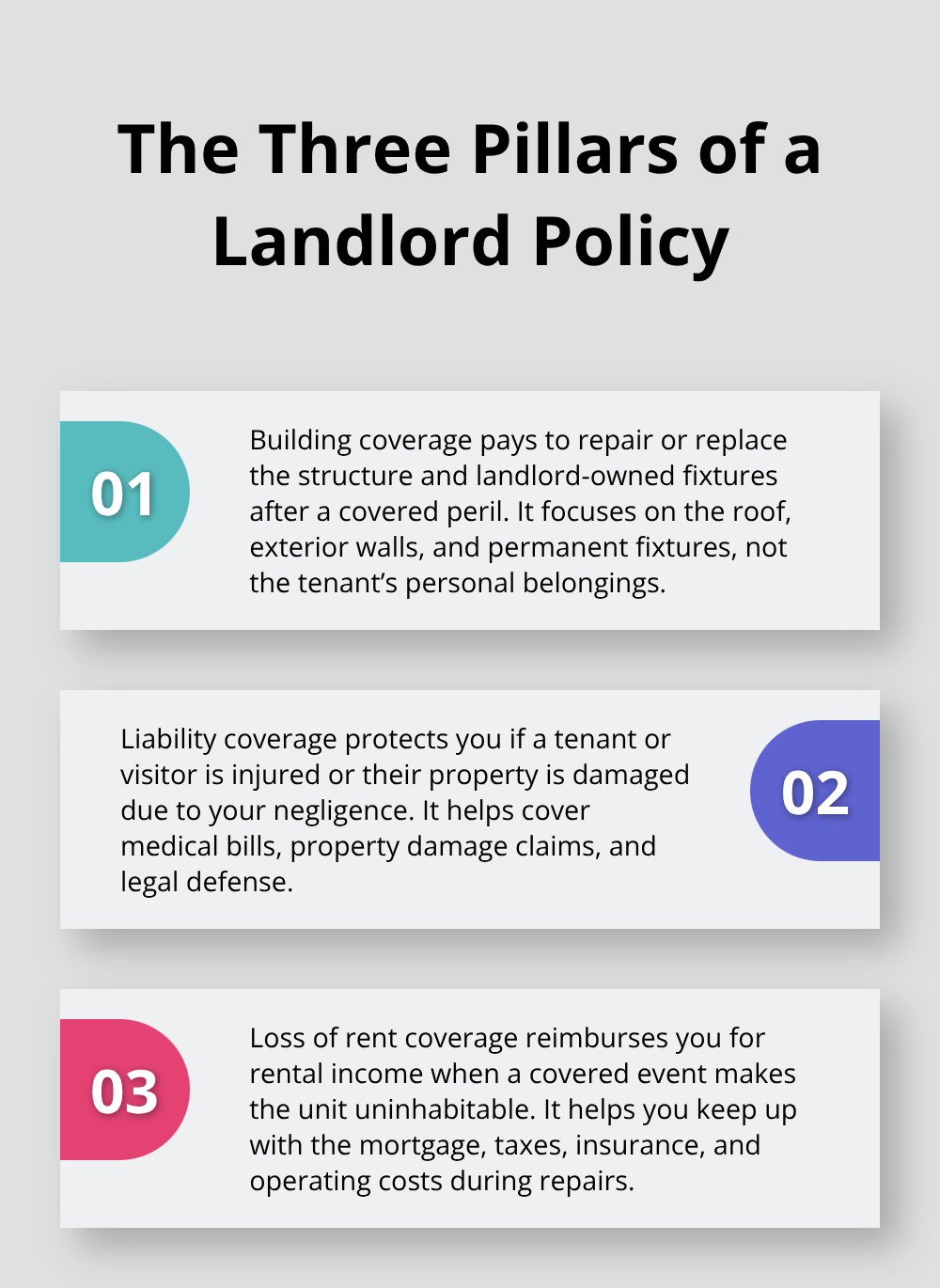
Legal defense costs can reach $50,000 even for unsuccessful lawsuits. Third, loss of rent coverage reimburses you for income you lose when a covered event makes the unit uninhabitable. If a fire damages your rental and the tenant moves out for three months while repairs happen, this coverage pays your mortgage, property taxes, and operating expenses during that gap, keeping your cash flow intact when you need it most.
Building Damage and Structural Protection
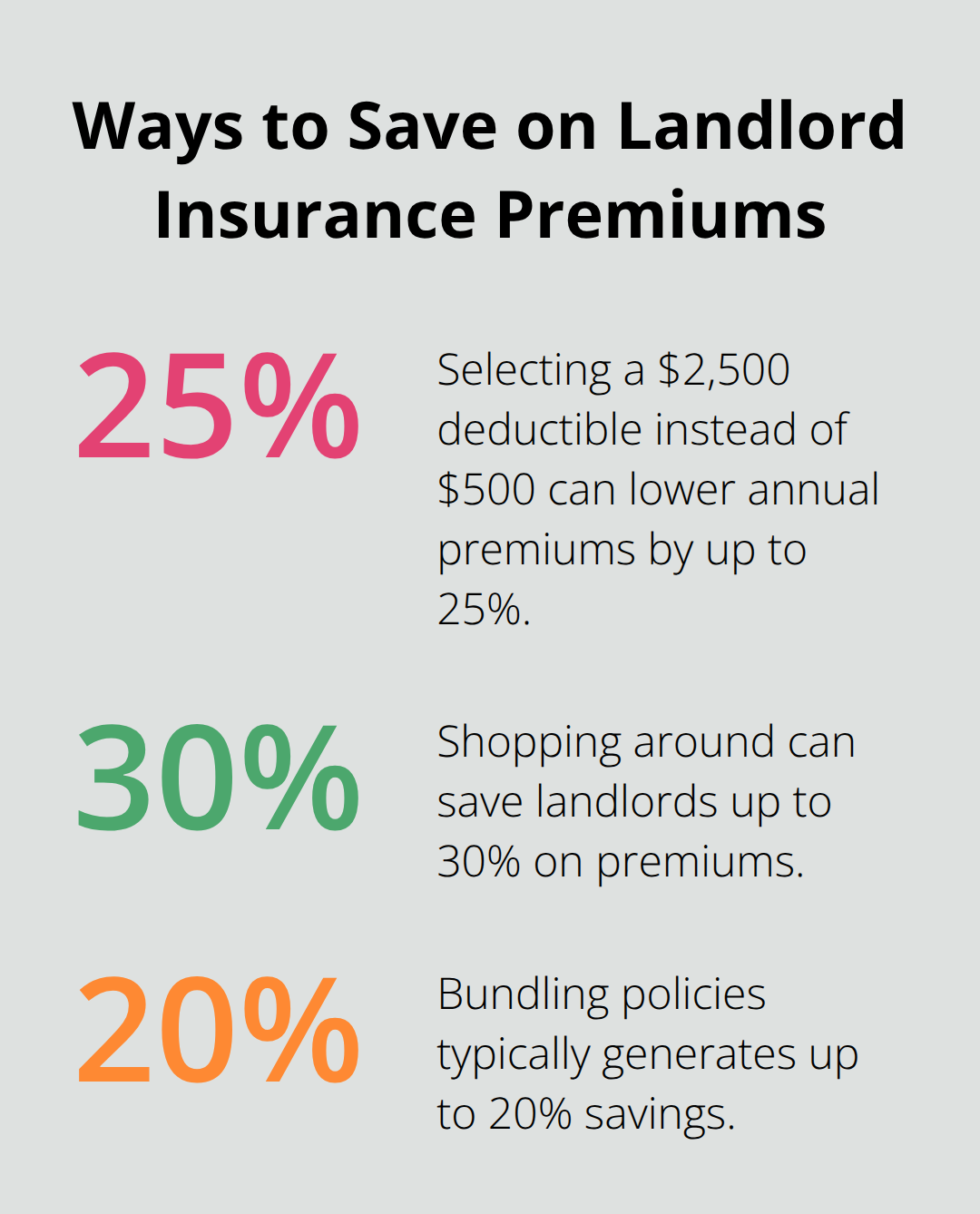
Your building coverage reimburses repair or replacement costs for the physical structure and landlord-owned fixtures. Most policies offer either named-peril coverage, which lists exactly which events are covered, or all-risk coverage, which covers everything except explicitly excluded perils like floods or earthquakes. Named-peril policies typically cover wind, hail, fire, theft, and vandalism but exclude weather events like floods. All-risk policies cost more but offer broader protection. The deductible you choose directly affects your premium; selecting a $2,500 deductible instead of $500 can lower your annual premium by 15 to 25 percent. However, you must have that deductible amount available when a claim occurs.
Many landlords underestimate their building value, which leads to underinsurance that leaves them exposed. A professional assessment of your property’s replacement cost matters more than its market value, because reconstruction costs often exceed what you could sell the building for today.
Liability Protection When Things Go Wrong
Liability coverage defends you when someone claims you caused them harm. This includes medical bills if a tenant slips on an icy walkway you failed to maintain, property damage claims if your negligence breaks a tenant’s belongings, or legal defense costs if a visitor sues. Standard liability limits range from $100,000 to $300,000 per occurrence, but this varies by carrier and policy.
Properties in high-traffic areas or with multiple tenants face higher exposure. Liability claims involving serious injuries can exceed standard policy limits, which is why some landlords add umbrella coverage for an extra $200 to $400 annually to protect assets beyond the base policy limit.
Loss of Rent Keeps Income Flowing
Loss of rent coverage is the protection most landlords overlook until disaster strikes. When a covered event makes your rental uninhabitable, this coverage pays your lost rental income for a set period, typically 12 months. It covers your mortgage payment, property taxes, insurance premiums, and maintenance costs while the property is being repaired.
Without this coverage, you still owe these expenses even though your tenant has moved out and you’re earning zero rent. Most carriers require you to carry this coverage for at least 12 months of potential income loss, which means they calculate your monthly rent and multiply it by 12. If you charge $1,500 per month, you’d have $18,000 in loss of rent coverage.
This protection matters most for landlords with tight cash flow or those without significant savings to cover expenses during a lengthy repair period. Understanding what your policy covers sets the foundation for identifying gaps that could expose you to unexpected costs-gaps that many landlords don’t spot until they file a claim.
What Your Landlord Policy Won’t Cover
Most landlords discover their coverage gaps only after filing a claim, and by then it’s too late. Standard landlord policies have significant blind spots that leave your income and assets exposed, especially when tenant disputes or environmental disasters occur.
Tenant-Caused Damage Falls Outside Your Coverage
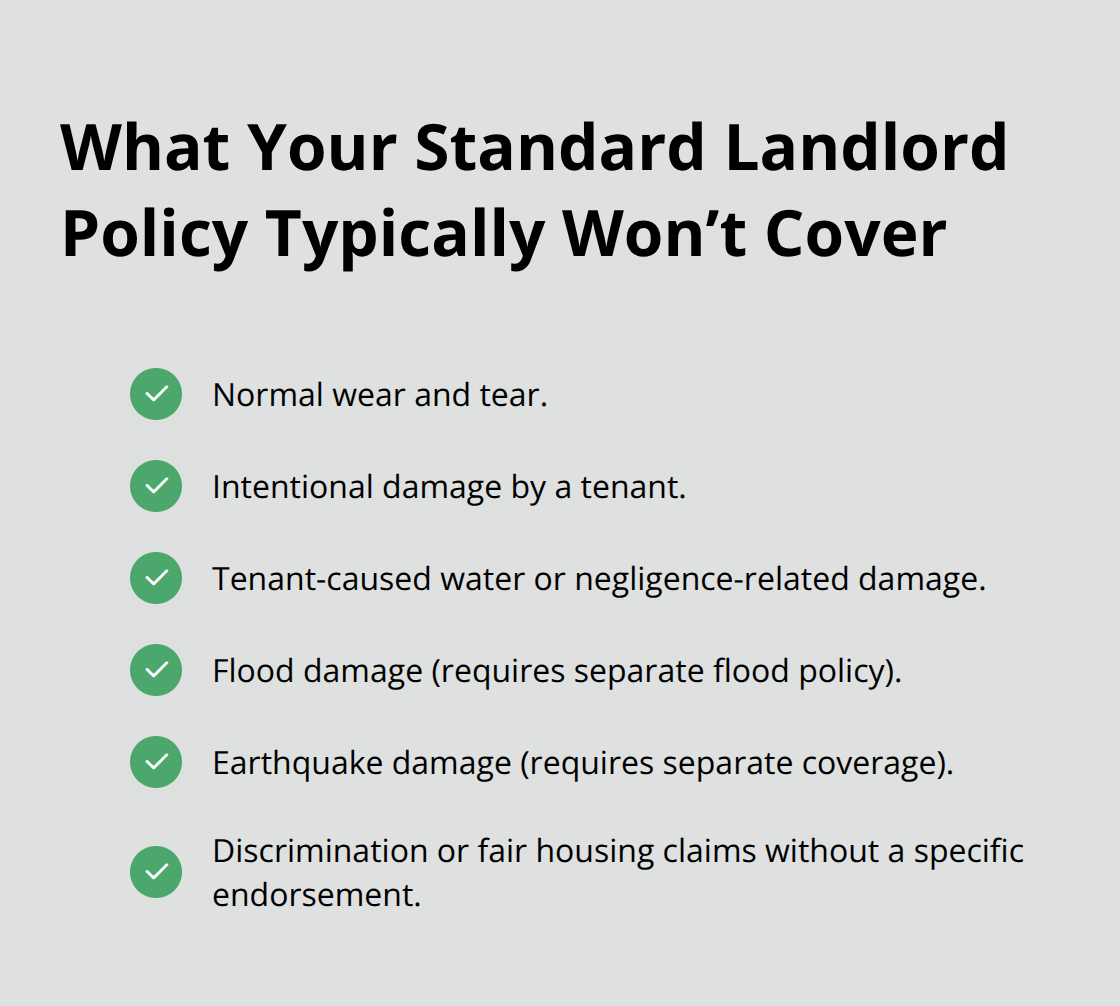
Your policy covers damage from external events like storms or theft, but it explicitly excludes damage from normal wear and tear or intentional destruction by the tenant. If a tenant punches a hole through drywall, floods the bathroom by clogging the toilet, or causes damage through neglect, you cannot recover these costs through your landlord policy. You must pursue the tenant directly through small claims court or deductions from their security deposit, which rarely covers the full cost.
Many landlords assume their policy will compensate them for tenant-caused damage, but this false belief leads to thousands in unrecovered losses annually. Your only real protection here is requiring tenants to carry renters insurance and documenting pre-move-in conditions with photos and video.
Floods and Earthquakes Leave You Exposed
Standard landlord policies exclude flood damage entirely, yet the Federal Emergency Management Agency reports that nearly 20 percent of flood insurance claims occur in low-to-moderate-risk zones where landlords often skip this extra coverage. If your property sits in or near any flood-prone area, flood insurance through the National Flood Insurance Program costs between $400 and $900 annually for preferred risk policies in low-risk areas, but it’s non-negotiable if you have a mortgage.
Earthquake coverage is similarly excluded from standard policies, and in regions like the Pacific Northwest where you face legitimate seismic risk, this gap can be catastrophic. When you compare carriers and customize your coverage, make sure you address both flood and earthquake protection explicitly rather than assuming your base policy handles them.
Fair Housing Claims Require Separate Protection
Discrimination and fair housing claims represent a blind spot that many landlords overlook entirely. If a tenant or prospective tenant alleges you violated fair housing laws by refusing to rent based on protected characteristics like race, disability, or family status, your standard landlord policy will not defend you. Fair housing violations can result in damages ranging from $16,000 to $75,000 or higher, plus legal defense costs that insurers won’t cover under a standard policy.
Specialized fair housing liability endorsements exist but require you to request them explicitly, and many carriers won’t offer them without additional underwriting. The reality is that your standard landlord policy covers only the most obvious perils while leaving you exposed to the disputes and disasters that actually cost landlords the most money. Understanding these gaps is the first step toward identifying which additional coverages and endorsements you actually need for your specific property and tenant situation.
Picking the Right Policy for Your Rental
Calculate Your Actual Replacement Cost
Start by calculating your actual replacement cost, not the price you paid for the property years ago. Contact a local contractor or use the Marshall & Swift cost estimator to determine what it would actually cost to rebuild your structure today. Construction costs have risen significantly, and underestimating this number means you’ll face underinsurance penalties when you file a claim. Once you know your replacement cost, add 10 to 15 percent as a buffer for inflation and unexpected structural issues discovered during repairs. This number becomes your building coverage limit, and it should be non-negotiable when comparing quotes.
Next, inventory what the landlord actually owns versus what belongs to the tenant. Your policy covers only items you own, such as appliances you provided, window treatments, or flooring. Tenant belongings are their responsibility, which is why requiring renters insurance makes financial sense. Calculate your monthly rental income and multiply it by 12 to establish your loss of rent coverage limit. If you own multiple properties or have significant debt, seriously consider umbrella coverage starting at $1 million. The additional premium typically runs $200 to $400 annually but protects your personal assets if a judgment exceeds your base liability limit.
Request Quotes From Multiple Carriers
Request quotes from at least three different insurers using identical property details and coverage limits. This prevents apples-to-oranges comparisons that waste your time. Different carriers price risk differently based on their claims history and underwriting philosophy, so a property one carrier charges $1,200 annually to insure might cost $950 with another carrier. The Insurance Information Institute reports that shopping around can save landlords 15 to 30 percent on premiums.
When you receive quotes, verify that each one includes the same deductible, liability limits, and endorsements. Many landlords focus only on the premium price and miss that one quote includes flood coverage while another doesn’t.
Ask each carrier explicitly whether they offer fair housing liability endorsements and what the additional cost would be. Some carriers bundle this protection into their standard landlord policy, while others charge $150 to $300 annually for the endorsement. Confirm whether earthquake and flood coverage are available and what the premiums would be for your specific property. Don’t accept vague answers about availability. If a carrier seems reluctant to discuss these coverages, that’s a red flag that they may not support them adequately. Check the carrier’s financial strength rating through AM Best to verify they can actually pay claims years down the road.
Bundle Policies and Customize Coverage Strategically
Bundling your landlord policy with auto, home, or other policies typically generates 10 to 20 percent savings on your total insurance spend. However, bundling only makes sense if the bundled carrier offers competitive rates on each individual policy. A carrier offering a great landlord rate but expensive auto insurance might not save you money overall. Request a complete bundled quote that shows the individual premium for each policy before and after the bundle discount. This transparency lets you calculate whether the bundle actually delivers value or if you’d pay less by splitting policies across two carriers.
Customizing your policy beyond the base coverage is where most landlords waste money or leave themselves exposed. Avoid paying for coverages you don’t need while missing critical ones you do. If your property is nowhere near a flood zone and doesn’t have a mortgage lender requiring it, skip flood insurance. If you’re in California, Oregon, or Washington, earthquake coverage becomes far more important than if you’re in the Midwest. If you rent to a single tenant in a single-family home, your liability exposure differs significantly from a landlord managing a four-unit building. Work with an agent who takes time to understand your specific situation rather than selling you a one-size-fits-all package. Since we at H&K Insurance Agency represent multiple carriers, we compare rates and customize coverage based on your actual risk exposure and financial situation rather than pushing you toward any single option.
Final Thoughts
Landlord insurance protects your rental income and personal assets from the financial damage that tenant disputes, property damage, and liability claims create. The rental property insurance basics we’ve covered throughout this guide reveal that standard policies have real gaps, and those gaps cost landlords thousands annually. Building coverage, liability protection, and loss of rent coverage form the foundation, but flood insurance, earthquake coverage, and fair housing liability endorsements fill the holes that leave you exposed.
Your coverage needs depend entirely on your property location, tenant situation, and financial capacity to absorb losses. A single-family rental in a low-risk area requires different protection than a multi-unit building in an earthquake zone or flood-prone region. The deductible you select, the liability limits you choose, and the endorsements you add should reflect your actual risk exposure, not a generic template that works for everyone.
Review your policy annually, especially after major life changes like acquiring additional properties, refinancing your mortgage, or increasing rents. Insurance carriers adjust rates yearly, and your coverage limits may no longer match your current replacement costs or rental income. Contact us at handkinsurance.com to get quotes that address your actual coverage gaps and protect your rental investment properly.
