

Homeowners Insurance Cost Factors: What Impacts Your Premium
Your homeowners insurance premium isn’t random. It’s calculated based on specific factors that insurers evaluate to determine your risk level.
At H&K Insurance Agency, we’ve helped countless Washington homeowners understand why their rates are what they are. This guide breaks down the main cost drivers-from your home’s value and condition to your location and claims history-plus practical ways to reduce what you pay.
What Drives Your Home’s Insurance Cost
Your home’s replacement cost is what insurers actually care about, not what you could sell it for tomorrow. This distinction matters enormously for your premium. According to the Washington State Office of Insurance Commissioner, the cost to reconstruct your home is a primary driver of your homeowners insurance premium. If your home sits in an area where construction labor and materials are expensive, your premium will reflect that reality.
Regional Rebuild Costs Shape Your Premium
Washington State experiences significant regional variation in rebuild costs. Coastal areas around the Puget Sound and Seattle metro region typically see higher construction expenses than rural eastern Washington, which means homeowners near population centers pay more for the same square footage elsewhere. Home size directly multiplies this cost factor.
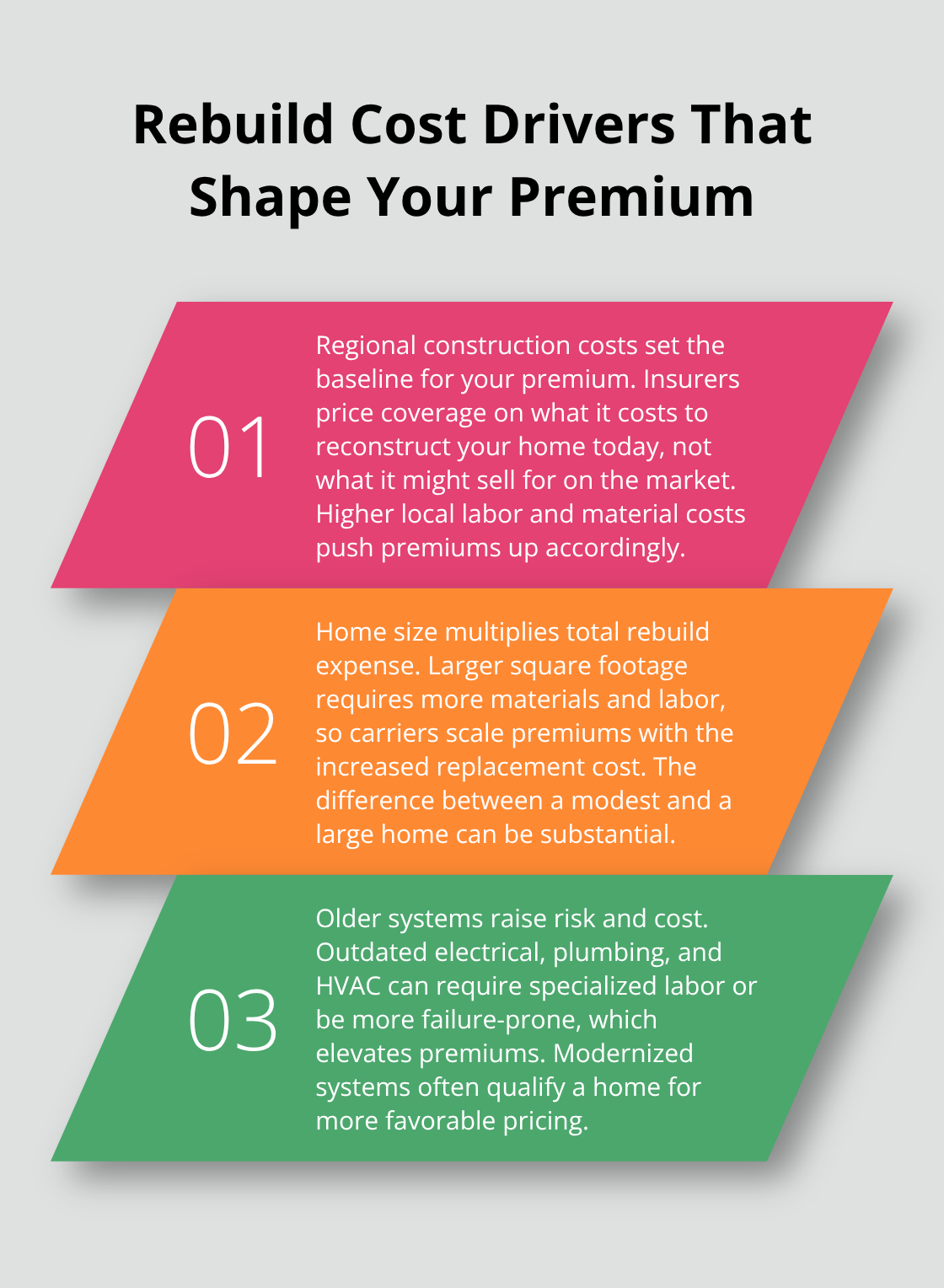
A 3,000-square-foot home costs substantially more to rebuild than a 1,500-square-foot home, so your premium scales with that difference.
Older homes often cost more to insure because they may require specialized labor and materials to match original construction, or because outdated electrical, plumbing, and HVAC systems increase risk. A home built in 1970 with original wiring will almost certainly cost more to insure than a comparable 2010 home with modern systems. This isn’t about the home’s market value-a charming older home in a desirable neighborhood might sell for $600,000 while costing only $400,000 to rebuild, yet your insurance premium bases on that $400,000 figure, not the sale price.
Roof Age and Material Drive Significant Cost Differences
Your roof’s age and material rank among the highest-impact cost factors insurers evaluate. A composition shingle roof at 20 years old signals higher claim risk than a new metal roof, and insurers price that difference directly into your premium. If you shop for a policy on a home with an aging roof, expect higher costs until you replace it. After replacement, contact your insurer immediately to report the upgrade-many will reduce your premium once they verify the new roof’s age and material.
The Washington State Office of Insurance Commissioner notes that regular coverage reviews catch situations where home improvements reduce costs while maintaining protection. Home square footage and construction type also shift your premium meaningfully. A wood-frame home costs more to insure than a brick or concrete structure in the same location, since wood presents greater fire risk.
Special Features Add Both Cost and Liability
Homes with special features like fireplaces, detached garages, or swimming pools increase your premium because they add both replacement cost and liability exposure. These aren’t small adjustments-a pool can noticeably raise your annual cost due to the injury liability risks it creates. Understanding these feature-based costs helps you make informed decisions about what coverage levels you actually need. Your location and the specific risks your home faces will determine whether these added costs make sense for your situation.
Where You Live Shapes Your Insurance Cost
Your location is the single most controllable factor that determines whether your premium stays reasonable or climbs steeply. Insurers analyze the specific risk profile of your neighborhood and region, not just your street address. According to the Washington State Office of Insurance Commissioner, areas with higher natural disaster or weather risk tend to have higher homeowner premiums, and local crime rates directly influence what you’ll pay. A home in a low-crime neighborhood near a fire station costs substantially less to insure than an identical home ten miles away in a higher-crime area without fire protection nearby.
Fire Station Proximity Affects Your Premium More Than You Think
Distance from a fire hydrant or fire station matters more than most homeowners realize. Proximity to fire hydrants and stations can affect your insurance pricing. If you shop for a home, request the fire station distance from your real estate agent before closing-this single factor can influence your annual premium depending on location.
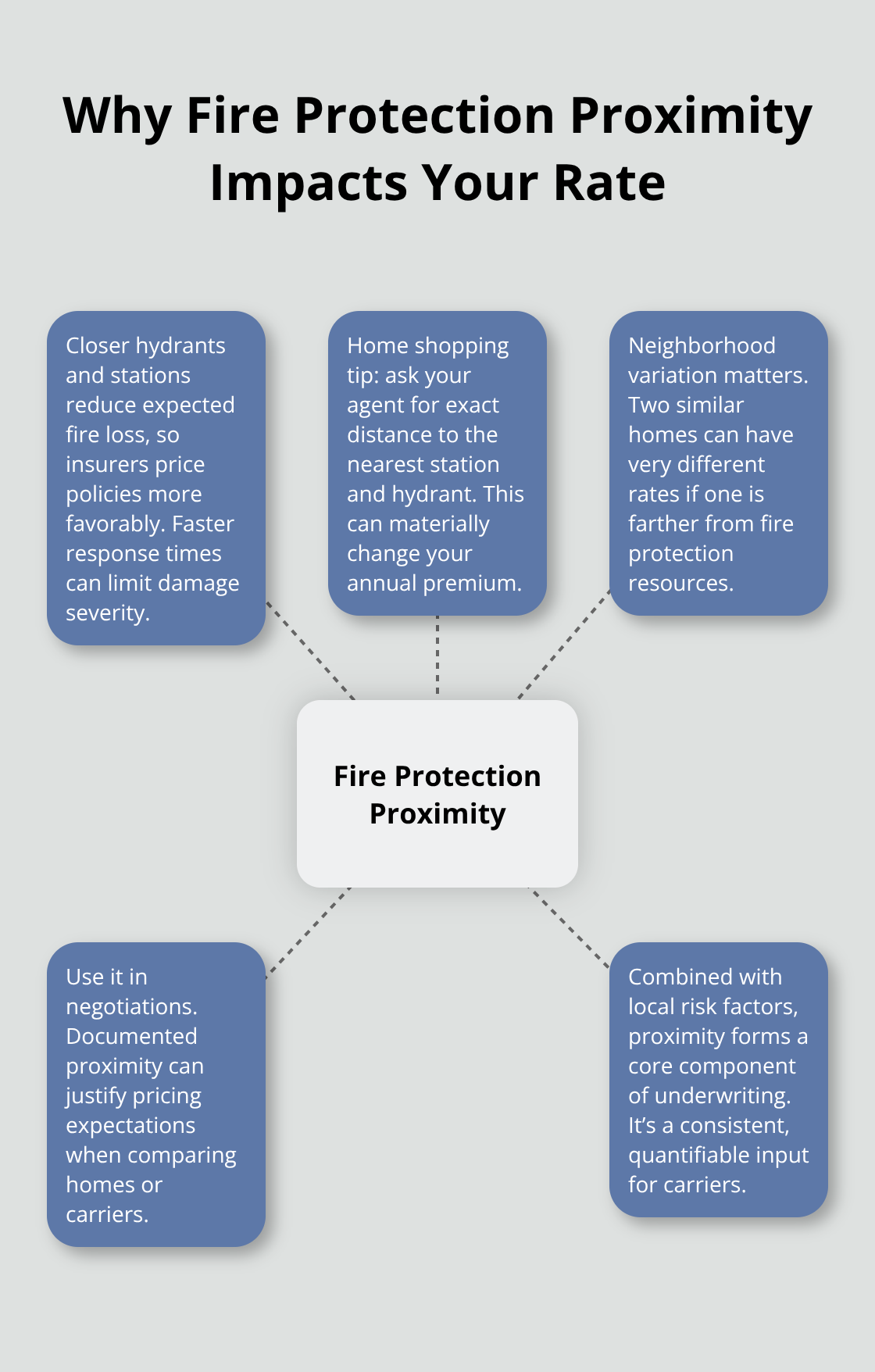
The Washington State Office of Insurance Commissioner emphasizes that proximity to fire hydrants and stations significantly affects pricing, making this a legitimate negotiation point during home purchase discussions.
Home Age and System Condition Create Risk Markers
Your home’s age and condition create the foundation for how insurers assess future claim risk. A 1980s home with original plumbing, electrical systems, and HVAC equipment presents measurably higher risk than a 2015 home with modern code-compliant systems. Insurers often require a home inspection before issuing a policy, and they specifically look for outdated wiring, corroded pipes, and aging mechanical systems that increase failure likelihood. If your inspection reveals these issues, your premium reflects that risk until you address them.
Roof Material and Age Drive the Biggest Premium Swings
Roof material and age rank among the most visible risk markers insurers evaluate. A 25-year-old composition shingle roof on a home where the warranty expired five years ago signals imminent failure risk, and insurers price accordingly. Metal roofing, concrete tiles, and architectural shingles command lower premiums than basic composition materials because they last longer and resist weather damage better. If your roof approaches the end of its serviceable life, replacement before shopping for insurance will reduce your premium more effectively than any other single home improvement.
After replacement, contact your insurer within 30 days with proof of the new installation-many carriers apply immediate premium reductions once they verify the upgrade. These roof improvements, combined with your location’s risk profile, form the foundation of how insurers calculate what you’ll pay. The next section examines how your personal claims history and the specific safety features you install further shape your final premium.
How to Cut Your Premium Without Cutting Coverage
Bundling Auto and Home Insurance Delivers Immediate Savings
Consolidating your auto and home insurance with the same carrier produces the most straightforward savings available to most Washington homeowners. Insurers offer bundling discounts when you have an auto policy and homeowners, condo, renters, or manufactured home insurance with the same carrier. If you currently insure your car with one company and your home with another, moving to a single insurer typically pays for itself within months. The math works because insurers reward customer loyalty and reduce their acquisition costs when they write multiple policies for the same household.
Contact your current auto insurer first to request a homeowners quote, then compare that bundled rate against your existing home insurance premium. Many homeowners discover their bundled total costs less than what they pay for home insurance alone with their current provider. Consolidating also simplifies your life by combining renewal dates, billing statements, and claims reporting into one relationship with a single agent who understands your complete coverage picture.
Safety Features Lower Your Premium Through Reduced Risk
Safety features installed in your home create measurable premium reductions because they directly lower your claim risk. A monitored alarm system typically qualifies you for a 5% to 15% discount depending on your insurer, while smoke detectors and deadbolts generate smaller but cumulative savings. Leak detection sensors and water shut-off devices appeal specifically to insurers because water damage claims rank among the costliest homeowners losses, so these devices can reduce your premium by 5% to 10%.
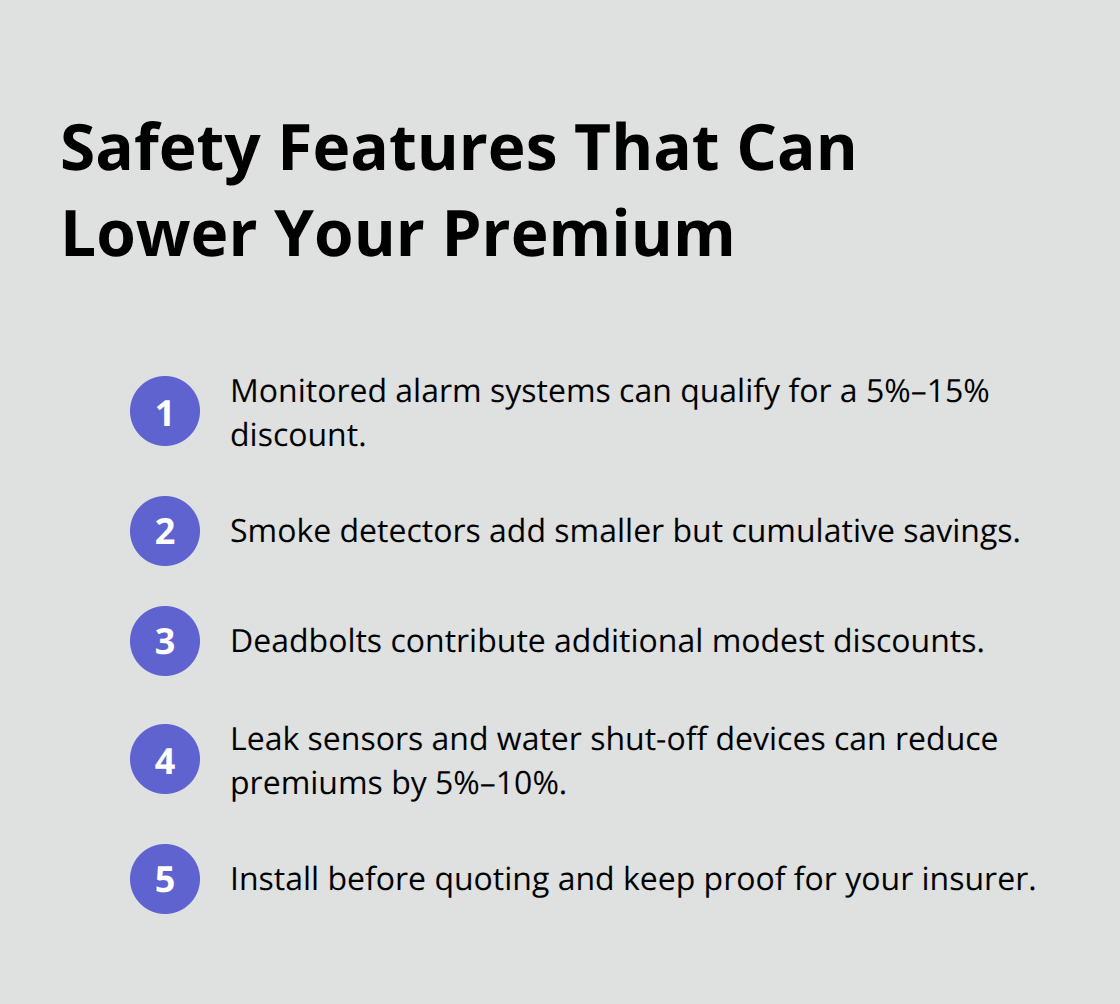
Prioritize monitored systems over passive features since insurers value real-time response capability. Install these devices before you shop for insurance so your quote reflects the discounts, and maintain proof of installation for your insurer.
Claims History Determines Your Rate at Renewal
Your claims history significantly influences your premium at renewal, making it worthwhile to avoid filing small claims whenever possible. A single claim can raise your rate by 10% to 40% depending on the claim type and your insurer’s underwriting rules, while two claims within five years often trigger much steeper increases or non-renewal.
If a roof leak costs $2,000 to repair and your deductible is $1,000, you’ll pay $1,000 out of pocket but filing the claim could increase your premium by $300 annually for three years, creating a $900 total cost increase that exceeds your out-of-pocket expense. Run this calculation before filing any claim under $5,000.
Raising Your Deductible Cuts Annual Costs Substantially
Increasing your deductible from $500 to $1,000 typically reduces your annual premium by 10% to 15%, while jumping to a $2,500 deductible can save 20% to 30% annually. Only raise your deductible if you can comfortably cover that amount from savings when a claim occurs, since a deductible you cannot afford defeats the purpose of having insurance.
Washington homeowners with strong claims-free records for five or more years should ask their insurer about loyalty discounts, which some carriers apply automatically while others require you to request them explicitly.
Final Thoughts
Your homeowners insurance cost factors converge to determine what you pay annually. The replacement cost of your home, your location’s risk profile, your roof’s condition, distance to fire protection, and your claims history all shape your premium together. Understanding these elements gives you concrete ways to reduce your annual cost without sacrificing the protection you need.
Start by reviewing your current policy and checking your roof’s age and material-replacement before your next renewal will deliver the largest premium reduction available. Verify your distance to the nearest fire station and hydrant, since this location factor directly influences your rate. Confirm that your coverage amounts reflect your home’s actual rebuilding cost, not its market value, so you avoid both underinsurance and overpaying for excess protection.
Compare your current premium against bundled rates from other carriers, since consolidating your auto and home insurance with one company typically saves hundreds annually. Install monitored safety features like alarm systems or leak detection sensors before shopping for quotes so your new premium reflects these discounts immediately. When you’re ready to find better rates, visit H&K Insurance Agency to request personalized quotes and discover how much you might save through bundling and coverage optimization tailored to your situation.

