
Puget Sound Boat Policy Essentials
Boating on Puget Sound brings incredible freedom, but it also comes with real risks. From sudden weather changes to collisions with other vessels, accidents happen faster than you’d expect.
A solid Puget Sound boat policy protects your investment and shields you from liability claims that could drain your savings. We at H&K Insurance Agency help boat owners navigate coverage options so they get the protection they actually need, not just what sounds good.
What Coverage Do You Actually Need on Puget Sound
Hull Coverage Protects Your Boat from Regional Hazards
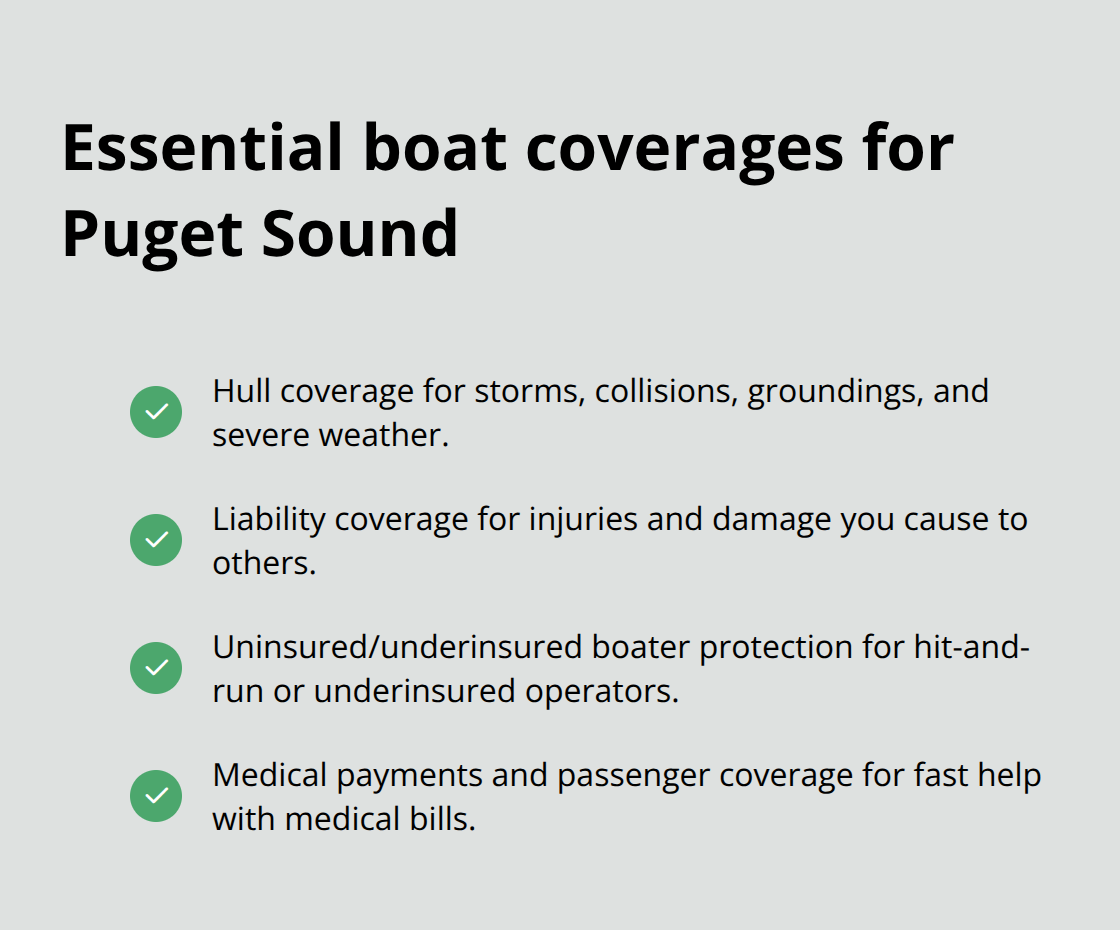
Hull coverage pays for damage to your boat from storms, collisions, groundings, and weather events that occur regularly in these waters. Puget Sound’s rapidly changing conditions-strong currents, shifting tides, and unpredictable weather-make this protection essential rather than optional. Your hull coverage activates when nature strikes hard or when another vessel makes contact with your boat, covering repair or replacement costs that would otherwise come straight from your pocket.
Liability Coverage Shields You from Catastrophic Claims
Liability coverage protects you when your boat damages someone else’s property or injures another person, and the costs can be staggering. A single accident involving another vessel or swimmer can result in significant medical bills, legal fees, and property damage claims. Without adequate liability limits, you personally absorb everything above your coverage amount.
Most Puget Sound boaters carry liability limits between $100,000 and $500,000, but if you own a larger vessel or frequently entertain guests, higher limits make sense. The traffic density and activity levels in these waters mean accidents happen faster than you’d expect, and one incident can wipe out years of savings.
Uninsured Boater Protection Covers Gaps in Other Policies
Uninsured boater protection covers your boat and medical expenses when another vessel hits you and that operator lacks sufficient insurance or vanishes from the scene. Enforcement of boating insurance requirements varies across the region, and some operators navigate without proper coverage. This coverage prevents you from absorbing losses caused by uninsured boaters yourself.
Medical Payments and Passenger Coverage for Your Guests
Medical payments coverage and passenger coverage round out your protection by handling medical bills for you and your guests if someone gets injured aboard your boat, regardless of who caused the incident. These coverages typically range from $1,000 to $5,000 per person and activate quickly without requiring fault determination. Injured passengers receive treatment paid for immediately rather than waiting through liability disputes.
On Puget Sound where rescue operations and emergency medical transport can cost thousands of dollars alone, this coverage protects both your guests and your finances. The right policy combines all these elements into one comprehensive package that addresses the specific risks you face on these waters. Your next step involves assessing which coverage limits match your boat type, your boating habits, and the conditions where you actually operate.
What Drives Your Boat Insurance Costs on Puget Sound
Boat Type, Age, and Value Set Your Premium Foundation
Your boat’s characteristics determine how much you pay for coverage, and the differences between quotes can be substantial. Insurers assess vessel type first-a 20-foot sailboat costs far less to insure than a 40-foot powerboat because repair costs and liability exposure scale dramatically with size and horsepower. A newer fiberglass powerboat with modern safety systems qualifies for better rates than an older wooden vessel, partly because newer boats have documented reliability data and built-in safety features that reduce accident frequency. Your boat’s value matters too; a $50,000 vessel requires different coverage limits and premiums than a $200,000 yacht, and insurers price accordingly based on what they’d need to replace if total loss occurs.
Your Boating Experience and Safety Training Impact Rates
Your boating experience and safety credentials move premiums in your favor or against you depending on what you’ve actually done to reduce risk. Completing a Washington Boater Education Card proves you understand state regulations and basic seamanship, and most insurers discount policies for cardholders by 5 to 15 percent. Operators who take advanced courses through organizations like the United States Power Squadrons or American Sailing Association demonstrate serious commitment to safe operation, and some insurers offer additional discounts for completing these programs. Conversely, if you’re new to boating or haven’t taken formal training, expect to pay more because insurers view inexperience as a liability risk.
Claims History and Credit Score Affect Your Rates
Your claims history tells insurers whether you’ve had accidents, collisions, or insurance claims in the past-a clean record keeps premiums competitive, while previous claims signal higher risk and trigger rate increases that can persist for three to five years. Your credit score influences premiums too, though this varies by insurer; some carriers weight credit heavily while others focus primarily on boating history. If your credit took a hit, shop around because different insurers apply different scoring models, and you might find better rates with carriers that emphasize claims history over credit metrics.
Bundling and Multi-Policy Discounts Lower Your Total Costs
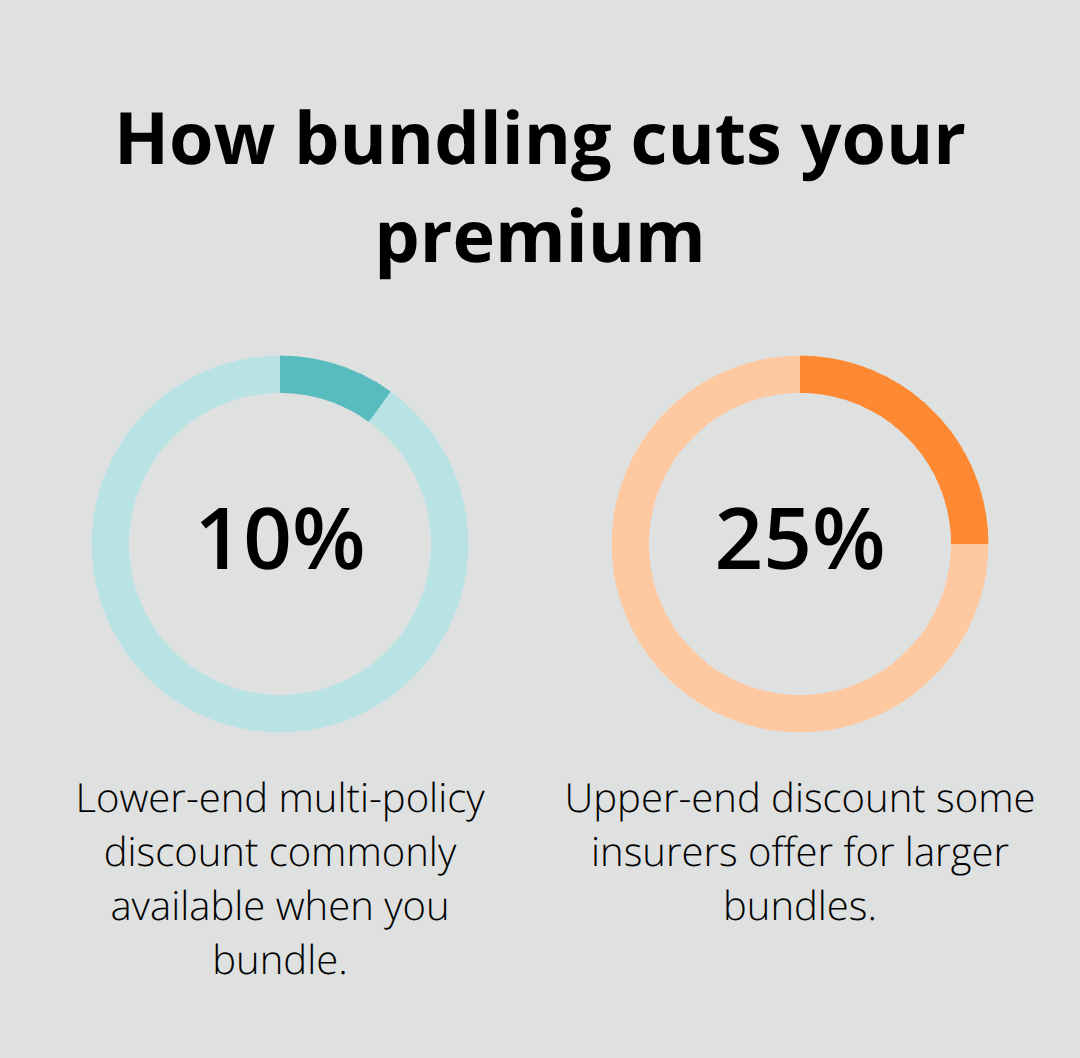
Bundling your boat policy with auto, home, or RV coverage through the same insurer typically unlocks discounts of 10 to 25 percent, making it worth evaluating your total insurance picture rather than shopping boat policies in isolation. When you combine multiple policies, you reduce administrative costs for the insurer, and they pass those savings to you. As a locally owned, independent agency serving the Puget Sound region, H&K Insurance Agency represents multiple top local and national carriers, which means we compare how each one prices your specific situation and identify combinations that lower your overall costs through bundling strategies tailored to your needs. The right carrier match depends on your boat type, boating habits, and whether you want to consolidate coverage across your vehicles and property.
How to Match Your Policy to Your Actual Boating Habits
Document Your Real Boating Patterns
Start with what you actually do on the water, because generic coverage limits fail when your boating patterns differ from standard assumptions. Track where you operate-do you stay within Puget Sound’s protected waters, or do you venture into the Strait of Juan de Fuca where conditions turn severe? Note your typical trip duration and distance from help, your passenger count on average trips, and whether you operate seasonally or year-round. A boater who launches occasionally near Bremerton faces different risks than someone who regularly navigates remote anchorages or operates during winter months when storms intensify. Puget Sound’s strong currents, shifting tides, and unpredictable weather create distinct seasonal hazards; summer brings increased traffic density and collision risk while winter generates severe weather exposure that demands higher hull coverage. Once you understand your actual usage pattern, match coverage limits to that reality instead of accepting default numbers that might leave you exposed or paying for unnecessary protection.
Set Liability Limits That Reflect Your Exposure
Liability limits deserve particular attention because undershooting here creates catastrophic financial exposure. Most Puget Sound boaters carry $100,000 to $500,000 in liability coverage, but that range only works if your boat size and guest count align with the lower end. If you own a powerboat over 30 feet, regularly entertain groups, or operate near high-traffic areas like Seattle’s Elliott Bay, carrying $500,000 minimum makes financial sense-a single medical flight by helicopter costs $15,000 to $50,000 alone, and property damage claims against another vessel can easily exceed $200,000.
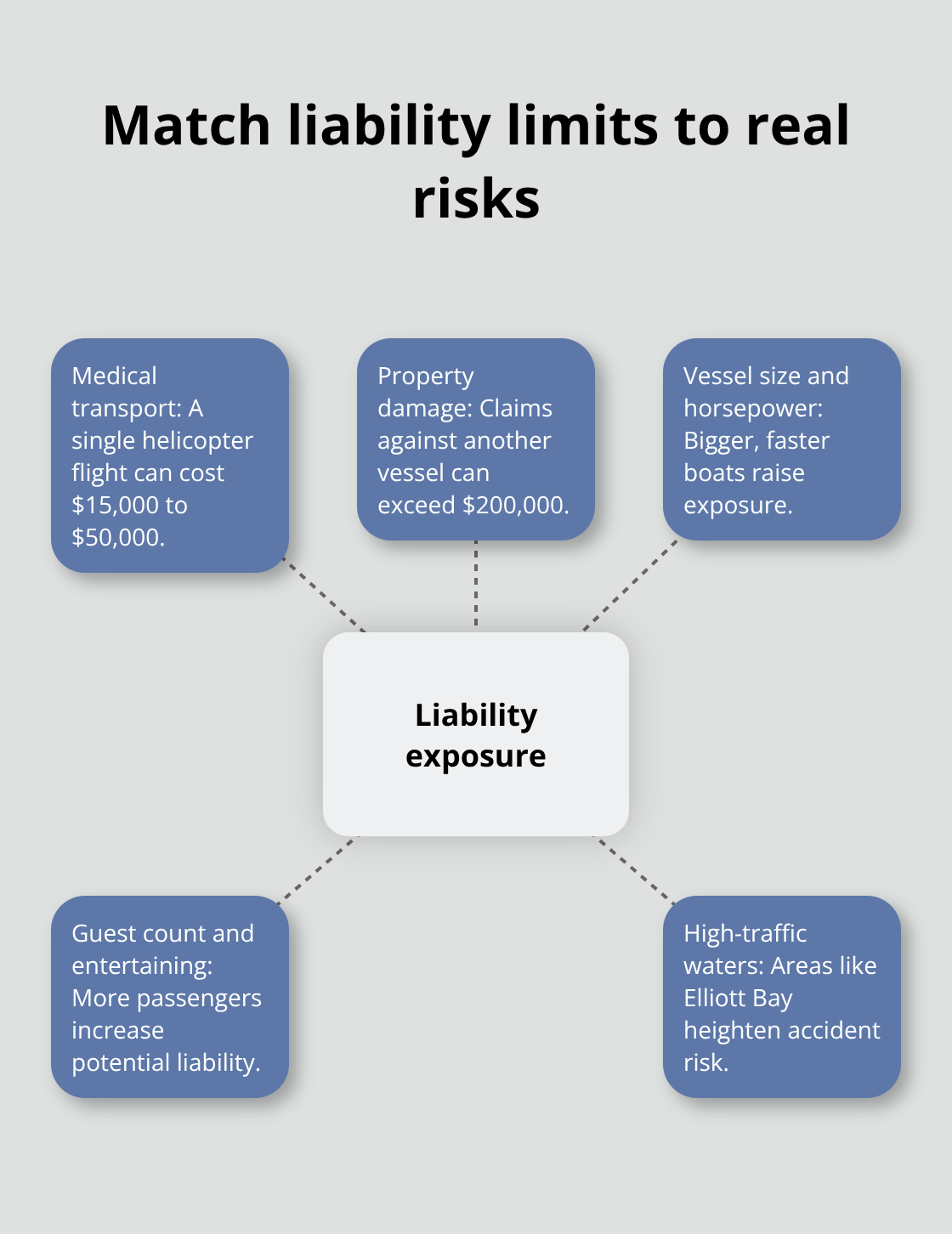
Your liability exposure scales directly with your boat’s size, horsepower, and how many people you invite aboard.
Choose Deductibles Based on What You Can Afford
Deductibles function differently in boat policies than auto policies; a $500 deductible on hull coverage means you absorb the first $500 of any claim, while a $1,000 deductible saves you 10 to 15 percent in premiums but requires you to cover that amount yourself when damage occurs. Choose deductibles based on what you can actually pay out-of-pocket without financial strain, not on what sounds cheapest. A lower deductible costs more upfront but protects your cash reserves when accidents happen.
Bundle Policies to Lower Your Total Costs
Bundling your boat policy with auto, home, or RV coverage through one carrier typically reduces your total premium by 10 to 25 percent because insurers discount multi-policy customers significantly. Different carriers price bundling differently, so comparing how each one discounts your specific combination of coverages often reveals savings that isolated boat policy quotes never show. As a locally owned, independent agency serving the Puget Sound region, we represent multiple carriers that allow you to see how bundling affects your total costs across different insurance companies.
Final Thoughts
A solid Puget Sound boat policy combines hull coverage, liability protection, uninsured boater coverage, and medical payments into one comprehensive package that addresses the specific risks you face on these waters. The coverage limits you select should match your actual boating habits, your boat’s size and value, and the conditions where you operate, not generic defaults that leave gaps or waste money on unnecessary protection. Your claims history, boating experience, and safety training directly influence what you pay, which means completing a boater education course or bundling with other policies can lower your premiums significantly.
Working with a local agent who understands Puget Sound’s unique hazards makes a real difference in how well your coverage actually protects you when accidents happen. A local partner knows the regional risks, the seasonal weather patterns that intensify exposure, and which coverage combinations work best for boaters operating in these specific waters-they explain what your policy covers during storms, near-shore hazards, and remote operations in plain language instead of insurance jargon. When you file a claim, a local agent with marine expertise handles the process faster and advocates for you with the carrier.
Contact H&K Insurance Agency today to get a personalized quote for your Puget Sound boat policy and see how much you can save. We represent multiple top local and national carriers, which means we compare rates across different companies and show you how bundling your boat policy with auto, home, or RV coverage lowers your total costs. We customize your coverage to match your boat type, your boating patterns, and your financial situation, then review your protection annually as your needs change.

